

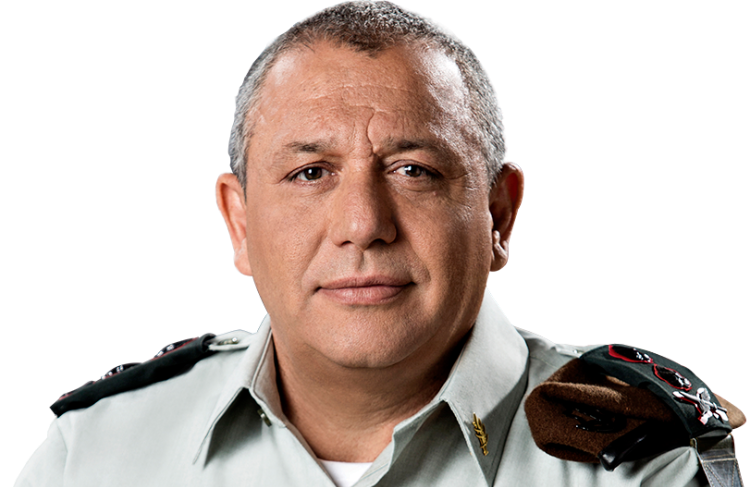
Israeli President Isaac Herzog announced Saturday, November 7, 2026, that opposition leader Gadi Eisenkot will receive the first opportunity to form a new government following an inconclusive parliamentary election. The decision puts Prime Minister Benjamin Netanyahu's main political rival in charge of coalition negotiations, although Eisenkot faces major obstacles to securing a majority.
Eisenkot, the 66-year-old former military chief who leads the centrist Yashar party, will formally receive the mandate at the president's residence in Jerusalem on Sunday, November 8. He will have 28 days to assemble a governing coalition, with a possible extension of another 14 days.
The October 27 election left Israel's 120-seat parliament, known as the Knesset, divided among competing political blocs. Netanyahu's Likud party won the most seats of any individual party, but his broader alliance lost its parliamentary majority.
Herzog's decision followed consultations with political parties representing the newly elected Knesset. Representatives of parties holding 67 seats recommended Eisenkot, compared with 46 seats supporting Netanyahu.
The president's announcement does not mean Eisenkot has become prime minister or secured enough votes to govern. He must negotiate agreements among parties with sharply different positions on national security, religion and the role of Arab political parties.
Election Results Leave Both Sides Short of a Majority
Likud won 27 seats in the election, making it the largest individual party in parliament. Netanyahu's wider religious-nationalist bloc secured 53 seats, eight short of the 61 needed for a majority.
Eisenkot's Yashar party finished second with 21 seats. His four-party opposition alliance, which includes groups ranging from the political center to the right and left, won 48 seats.
Two Arab-led parties, Ra'am and the Joint List, captured a combined 19 seats. Their support for Eisenkot during the presidential consultations gave him the recommendations of 67 lawmakers, enough to persuade Herzog to offer him the first opportunity to form a government.
However, the 67 recommendations do not represent an agreed governing coalition. Several parties supporting Eisenkot's nomination have refused to participate in a government that includes the Arab-led parties.
This distinction has become the central problem facing Eisenkot. He has enough political backing to receive the mandate but has not established a coalition capable of governing.
According to Reuters, possible arrangements include forming a minority government supported by Arab lawmakers, negotiating with ultra-Orthodox parties or reaching a broader agreement with Netanyahu's Likud party. Each option presents significant political difficulties.
Disagreements Over Arab Parties Complicate Negotiations
One of the biggest obstacles is the refusal of some Jewish-led opposition parties to govern alongside Arab political representatives. Although the Arab parties supported Eisenkot's nomination, their involvement in a future coalition remains disputed.
Yisrael Beiteinu leader Avigdor Liberman has opposed joining a government dependent on Arab parties. His position makes it harder for Eisenkot to unite the opposition factions that backed his candidacy.
Eisenkot's Yashar party has also established security-related conditions for potential coalition partners. Among them are recognizing Hamas as a terrorist organization and supporting the dismantling of its military and governing capabilities.
These requirements create disagreements with some Arab political leaders, who hold different positions on the Israeli-Palestinian conflict. The parties have not reached an agreement resolving those differences.
At the same time, Liberman has reportedly expressed a willingness to consider cooperation with ultra-Orthodox parties previously excluded from his preferred political alliances. Such a partnership could create another route toward a majority but would require negotiations over military service and religious policy.
The ultra-Orthodox United Torah Judaism party, which won seven seats, did not recommend either Eisenkot or Netanyahu during Herzog's consultations. Its decision left both candidates searching for additional support.
The Times of Israel reported that Herzog recognized the difficulty of converting parliamentary recommendations into a workable government. The president continued meeting party leaders after the consultations to determine which candidate had the strongest chance of success.
Netanyahu Calls for National Unity
Netanyahu responded to the political situation by urging Israel's Jewish-led parties to form a broad national unity government. He argued that cooperation across political divisions was necessary to address the country's security challenges.
The prime minister also criticized the possibility of a government supported by Arab parties. He claimed such an arrangement would weaken Israel's ability to confront Hamas and other regional threats.
Eisenkot's party rejected Netanyahu's criticism and accused him of contributing to political divisions. Yashar said Likud could participate in a government led by Eisenkot if Netanyahu ended his alliance with far-right parties and accepted Yashar's governing principles.
The exchange demonstrated how difficult a unity agreement could become. Eisenkot has previously ruled out serving in another Netanyahu-led government, while Netanyahu has sought to remain prime minister despite his coalition losing its majority.
Netanyahu has also alleged foreign interference involving Arab countries during the election. Israeli election officials have said there is no basis for claims that the integrity of the vote was systematically compromised.
Herzog's decision represents a political setback for Netanyahu, who has served longer as Israel's prime minister than anyone else. Nevertheless, he will remain in office in a caretaker capacity until a new government is formally established.
Eisenkot's Military Background Shapes His Politics
Eisenkot served as chief of staff of the Israel Defense Forces from 2015 to 2019. He built his public reputation around military leadership and national security before entering politics in 2022.
Following the Hamas-led attack on Israel on October 7, 2023, Eisenkot joined an emergency wartime government led by Netanyahu. He later returned to the opposition after disagreements over the government's handling of the war in Gaza.
His personal life was deeply affected by the conflict. His son and two nephews were killed during Israeli military operations in Gaza, losses that became widely known during his political career.
Eisenkot has criticized Netanyahu's management of the war and opposed some of the prime minister's far-right political allies. He has also condemned violence by Israeli settlers against Palestinians in the occupied West Bank.
His security policies remain firmly focused on Israeli military strength. He has defended aggressive military responses to threats from Hezbollah and other armed groups while calling for changes in the country's political leadership.
During the election campaign, Eisenkot presented himself as a candidate capable of rebuilding confidence in government institutions. His Yashar party emphasized responsible leadership, national security and reforms intended to address political divisions.
If he succeeds, Eisenkot would also become Israel's first prime minister from the Mizrahi Jewish community, whose ancestral roots are in the Middle East and North Africa. His parents immigrated to Israel from Morocco.
What Happens if Eisenkot Cannot Form a Government?
Under Israel's government formation process, Eisenkot will initially have 28 days to secure the necessary parliamentary backing. Herzog may grant an additional 14 days if negotiations show sufficient progress.
If Eisenkot fails, the president may assign another eligible lawmaker the task of forming a government. Netanyahu could then receive an opportunity, depending on the political circumstances and the president's decision.
Further parliamentary procedures could follow if another candidate also fails to form a coalition. If no government emerges through the constitutional process, Israel could face another election.
For now, Netanyahu remains caretaker prime minister while Eisenkot prepares to negotiate with potential partners. The new Knesset is scheduled to be sworn in on November 10, adding another important date to the political transition.
Eisenkot's immediate challenge is to turn the support he received during presidential consultations into agreements among parties that have repeatedly rejected cooperation with one another. His formal appointment on November 8 will begin the next stage of negotiations, but the composition of Israel's next government remains unresolved.