

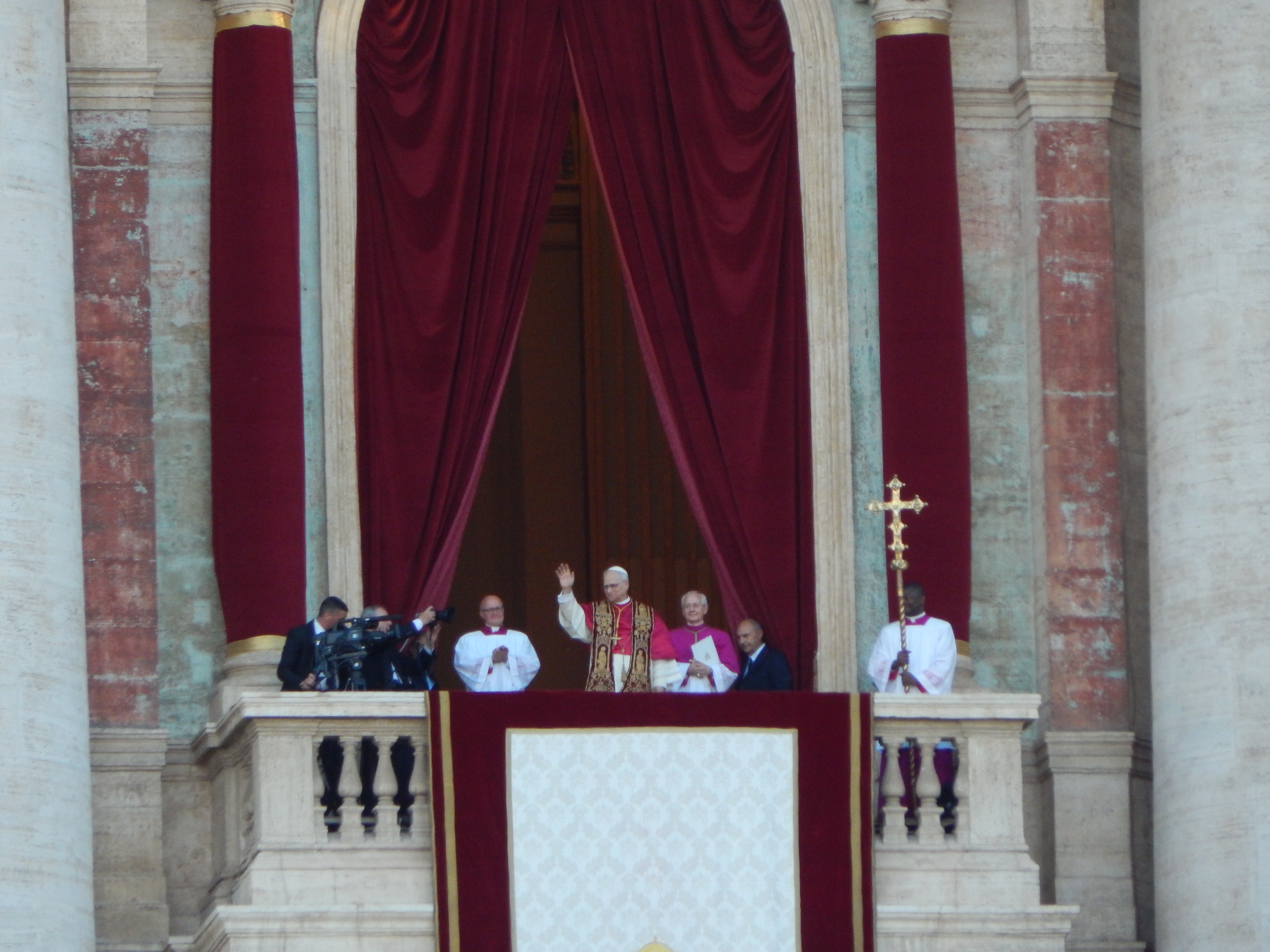
Pope Leo XIV arrived in Uruguay on Friday, November 6, 2026, beginning a 12-day tour of South America just over three weeks after undergoing surgery for lung cancer. The 71-year-old pontiff is scheduled to visit Uruguay, Argentina and Peru in one of the most demanding international journeys of his papacy.
The trip follows an October 13 operation to remove part of his right lung after doctors discovered a malignant tumor. Vatican officials say his recovery has progressed well and that he can complete the journey without special medical precautions beyond those normally provided during papal travel.
Leo also addressed his historic decision to vote in the recent U.S. midterm elections while speaking to journalists aboard his flight from Rome. The Chicago-born pope confirmed that he had exercised his voting rights as an American citizen, becoming the first sitting pontiff known to have participated in a U.S. election.
Pope Leo Returns to Public Duties After Lung Cancer Surgery
The Vatican announced in October that doctors had diagnosed Leo with lung adenocarcinoma, a common form of lung cancer. The condition was detected during a routine medical examination, leading surgeons to remove the lower lobe of his right lung on October 13.
The operation was successful, and subsequent medical evaluations found no immediate need for chemotherapy or other additional cancer treatment. His doctors nevertheless advised continued monitoring and a gradual return to normal activities.
On October 26, Vatican officials confirmed that medical examinations showed no reason to cancel the upcoming South American journey. The announcement ended speculation that the pope might have to postpone the trip because of his recovery.
Speaking to reporters during the flight to Montevideo, Leo said he had never doubted that he would be able to travel. He expressed gratitude for the medical professionals who treated him and said he was feeling well enough to fulfill his commitments.
The pope also encouraged people facing serious illnesses not to lose hope. He emphasized the importance of regular medical examinations and early detection, drawing on his recent experience.
The demanding itinerary nevertheless presents logistical challenges. The journey includes approximately a dozen flights, two helicopter trips and visits to ten cities across three countries.
One destination is Cusco, Peru, which sits more than 3,300 meters above sea level. High altitude can create additional physical demands, although Vatican medical staff have said the pope is fit to undertake the scheduled activities.
Uruguay Welcomes the Pope With Large Crowds
Leo arrived at Montevideo's Carrasco International Airport on Friday afternoon after a transatlantic flight lasting approximately 13 hours. His arrival marked the beginning of the first papal visit to Uruguay since Pope John Paul II traveled there in 1988.
Thousands of people gathered along the pope's route through the capital. Local authorities estimated that approximately 30,000 people welcomed him during the opening events.
The pontiff traveled through Montevideo before meeting President Yamandú Orsi and other political leaders. He also participated in an evening religious service at the Metropolitan Cathedral.
Uruguay is widely regarded as one of Latin America's most secular countries. Its long history of separating religious institutions from government makes the visit particularly significant for the Catholic Church.
During his opening remarks, Leo emphasized human dignity, solidarity and the responsibility of governments to protect vulnerable people. He also spoke about respecting human life through its natural end, comments that reflected Catholic teaching on abortion and assisted dying.
The pope's schedule includes a visit to Casavalle, a working-class neighborhood of Montevideo that has experienced persistent poverty and public safety problems. He is expected to meet residents and community representatives during his stay.
Other events include a Mass in Paysandú, a prayer vigil at Montevideo's Centenario Stadium and a visit to the National Shrine of Our Lady of the Thirty-Three in Florida, Uruguay.
The three-day visit is intended to strengthen ties with local Catholic communities while encouraging social engagement in a country where religious participation has declined over time.
Pope Makes History by Voting in U.S. Midterm Elections
The South American journey follows an unusual political development involving the first American-born pope. On October 30, the Vatican confirmed that Leo had submitted a mail-in ballot for the November 3 U.S. midterm elections.
The pope, born Robert Francis Prevost in Chicago, remains a U.S. citizen despite leading the Catholic Church and serving as sovereign of Vatican City.
According to Reuters, officials in Will County, Illinois, confirmed that he had requested an absentee ballot. The Vatican subsequently acknowledged that he had voted, describing his participation as consistent with his longstanding belief in civic responsibility.
Asked about his decision aboard the papal flight, Leo said he was proud of his American citizenship and his ability to exercise the right to vote.
His ballot choices have not been disclosed.
The participation was historically unusual because previous popes have generally avoided voting in national elections while serving as head of the Catholic Church. Leo's decision has prompted discussion about the relationship between personal citizenship and the political neutrality traditionally associated with the papacy.
The Vatican has defended his participation as an exercise of an individual civic right rather than an endorsement of a particular political party or candidate.
Illinois election records show that Prevost participated in several previous elections before becoming pope. He requested ballots in both Democratic and Republican primaries over the years, although choosing a primary ballot does not establish a voter's long-term party affiliation.
When journalists asked Leo about the results of elections in Texas, he declined to comment. His response was consistent with his effort to separate personal civic participation from public endorsement of electoral outcomes.
Argentina Visit Carries Special Significance
After completing his activities in Uruguay, Leo will travel to Argentina on November 8. The visit is especially meaningful because Argentina was the homeland of his predecessor, Pope Francis.
Francis, who served as pope from 2013 until his death in 2025, never returned to Argentina during his pontificate. Leo's visit will therefore carry both religious and historical significance for Catholics who had hoped to welcome Francis back to his native country.
The pope is scheduled to visit Buenos Aires, Córdoba and Luján. His activities include meetings with government officials, religious leaders, workers and young people.
One of the most significant events will be a visit to a federal prison complex in Buenos Aires on November 11. The stop reflects the Catholic Church's longstanding emphasis on prison ministry, rehabilitation and the dignity of incarcerated people.
Leo will also celebrate Mass near the Basilica of Our Lady of Luján, one of Argentina's most important Catholic pilgrimage destinations.
Speaking to journalists, the pope acknowledged the personal significance of visiting Francis's homeland. However, he explained that the primary purpose of his journey was to support local churches and communicate the Christian message.
The visit will mark the first papal trip to Argentina since John Paul II traveled there in 1987.
Peru Offers a Personal Homecoming
The final and longest portion of Leo's journey will take place in Peru, where he spent more than two decades working as a missionary priest and later as a bishop.
Born in the United States, Leo developed lasting ties to Peru and eventually became a Peruvian citizen. His years in the country shaped his religious career and helped establish the relationships that remain important to his ministry.
His scheduled arrival in Lima on November 11 will begin a series of meetings with government officials, church leaders, students and local communities.
On November 13, the pope will travel to Chiclayo, where he previously served as bishop. He is expected to celebrate Mass, meet members of the clergy and share a private meal with priests from his former diocese.
He will also visit the San Óscar A. Romero Chapel, a location connected to his earlier pastoral work in the region.
The itinerary includes Cusco and Pucallpa, where Leo plans to meet representatives of Indigenous Amazonian communities and missionaries. Those meetings are expected to address environmental concerns, cultural traditions and the challenges facing remote communities.
Peru's Catholic population has been preparing for his arrival with religious celebrations and commemorative merchandise. Vendors have offered clothing, rosaries and other items featuring his image.
For many Peruvian Catholics, the journey represents the return of a religious leader who knows their communities personally rather than only through official visits.
Demanding Journey Continues Through November 17
The Vatican has described the trip as an opportunity to promote peace, Christian unity and solidarity with people experiencing poverty or social exclusion. The pope's appearances will also provide opportunities to address issues affecting the countries he visits.
His recent health challenges have added particular attention to the schedule. Although doctors say he is recovering well, the extensive travel and numerous public appearances will test his ability to maintain the demanding routine associated with his office.
Leo has expressed confidence in his recovery and has emphasized that the journey should remain focused on the people and communities he will meet.
The pope is scheduled to conclude his South American activities in Lima on November 16 before returning to Rome on November 17. His remaining itinerary includes major religious services, meetings with vulnerable communities and a visit to the Amazon region.