

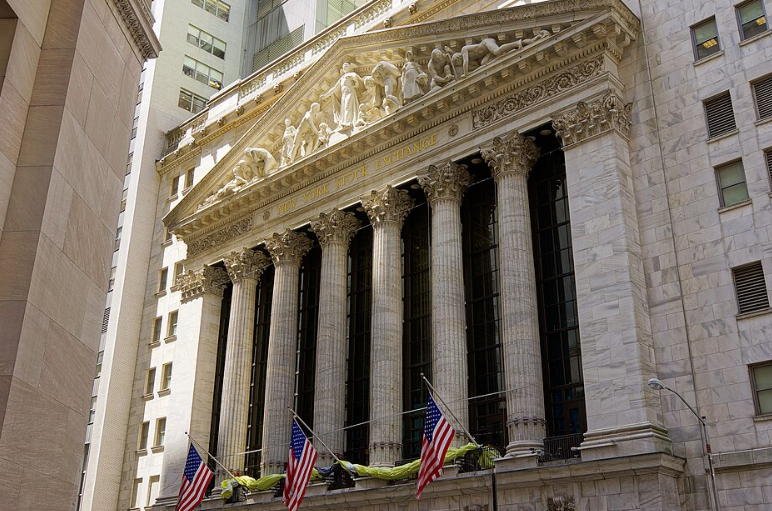
Wall Street faces another test on Tuesday, November 10, 2026, as investors prepare for the latest U.S. inflation report and comments from Federal Reserve officials. The economic updates arrive after a sharp stock market rebound that lifted the Dow Jones Industrial Average more than 1,100 points on Monday.
The October Consumer Price Index report is scheduled for release at 8:30 a.m. Eastern Time. However, the government will not publish several closely watched annual inflation comparisons because a federal shutdown in October 2025 left gaps in the historical price data.
The missing figures will complicate efforts to determine whether inflation is accelerating or easing. Investors will instead focus more heavily on monthly price changes and remarks from Federal Reserve policymakers as they assess the outlook for interest rates.
October Inflation Report Faces Unusual Data Gaps
The Bureau of Labor Statistics confirmed that the October 2026 report will be affected by missing information from the previous year. The agency suspended most price collection activities during the federal government shutdown that lasted from October 1 through November 12, 2025.
Although statisticians later recovered some information, they could not reconstruct every missing October price index. As a result, the agency cannot calculate official 12-month changes for categories without a valid October 2025 comparison.
The limitation affects the overall Consumer Price Index and the widely followed core measure, which excludes food and energy. Both are important indicators used by investors and policymakers to evaluate inflation.
The monthly figures will still be available. Those readings compare October 2026 prices with September 2026 and therefore do not require the missing information from a year earlier.
This distinction is important because a missing annual inflation rate does not mean the government has stopped measuring inflation. It means certain year-over-year comparisons cannot be calculated using the agency's established statistical methods.
The shutdown's effects are expected to be temporary, but the October report presents an unusual challenge for economists accustomed to comparing monthly and annual inflation figures together.
Economists Expect Slower Monthly Price Increases
Economists surveyed by FactSet expect headline consumer prices to rise approximately 0.3% in October. Core inflation is forecast to increase 0.2% from the previous month.
Both estimates would represent slower monthly increases than those recorded in September. However, forecasts are not official results, and even a small difference from expectations could influence financial markets.
The most recent completed CPI report showed that consumer prices increased 0.6% in September. Annual inflation reached 3.7%, up from 3.4% in August.
Energy costs contributed heavily to that increase. Gasoline prices climbed 9.1% in September, accounting for more than half of the month's overall inflation.
Shelter costs also continued to rise, increasing 0.4% during September. The index excluding food and energy advanced 0.3% for the month and 2.6% over the preceding year.
Those figures indicate that inflation remained above the Federal Reserve's longer-term 2% goal, which is measured using a different price index called the Personal Consumption Expenditures Price Index.
MarketWatch reported that economists expect annual headline inflation to have reached approximately 4% in October. That figure is a private estimate rather than an official government measurement and should not be confused with the 3.7% reading for September.
Dow Rallies More Than 1,100 Points
Investors entered Tuesday's economic calendar following a strong recovery across major U.S. stock indexes.
On Monday, November 9, the Dow Jones Industrial Average gained 1,104.02 points, or 2.2%, to close at 52,389.75. The increase marked another unusually large daily move during a period of elevated market volatility.
The S&P 500 rose 173.08 points, or approximately 2.3%, finishing at 7,549.94. The Nasdaq Composite climbed 673.71 points, or 2.7%, to 25,253.14.
Smaller companies also participated in the recovery. The Russell 2000 gained 3.1%, outperforming the three major large-company indexes.
The broad advance represented Wall Street's strongest session since April, according to the Associated Press. Declining oil prices helped support the recovery following steep losses during the previous week.
Brent crude fell approximately 5.8%, providing some relief to investors concerned about inflation and higher energy costs.
Despite Monday's gains, recent trading has been unusually turbulent. The Dow moved more than 1,000 points in three of four trading sessions, including a gain of 1,569.40 points on November 4 and a decline of 1,833.06 points on November 5.
Such large moves illustrate how quickly sentiment has changed as investors assess economic conditions, political developments and the outlook for technology stocks.
Stock Market Gains Spread Beyond Big Technology
Another important market development has been the stronger performance of companies outside the largest technology stocks.
Over the past month, the equal-weighted S&P 500 has outperformed the traditional market-capitalization-weighted version by its widest margin since 2009, according to MarketWatch.
The difference reflects how the indexes are constructed. In the traditional S&P 500, companies with greater market values receive larger weights, allowing the biggest technology businesses to have an outsized influence on overall performance.
The equal-weighted version gives each company approximately the same influence. That makes it a useful measure of whether gains are concentrated among a few major businesses or spread more widely throughout the market.
Recent weakness in semiconductor stocks has contributed to the difference. Investors have questioned the expense of developing artificial intelligence infrastructure and how quickly companies will earn returns on their investments.
The selloff has also reflected concerns about possible restrictions on AI development and data center construction. Those questions have affected some of the companies that previously helped lead Wall Street's gains.
Meanwhile, investors have increased their exposure to healthcare, consumer staples, real estate, materials and energy companies.
A broader rally can indicate that more businesses are benefiting from investor demand. However, it does not eliminate the risk of further declines if inflation or interest-rate expectations change sharply.
Federal Reserve Officials Face Questions About Interest Rates
Tuesday's economic calendar includes scheduled appearances by several Federal Reserve policymakers, adding another potential source of market volatility.
Federal Reserve Governor Christopher Waller is scheduled to discuss the economic outlook early in the day. Vice Chair for Supervision Michelle Bowman also has scheduled appearances later Tuesday.
Investors will examine their remarks for clues about future interest-rate decisions. Particular attention will focus on whether policymakers believe inflation remains too elevated to justify lower borrowing costs.
Market expectations have shifted toward the possibility of another rate increase at the Federal Reserve's December meeting. However, no decision has been announced, and officials will continue assessing economic conditions before voting.
Higher interest rates generally make borrowing more expensive for households and businesses. They can also place pressure on stock valuations, particularly for companies whose expected earnings are concentrated further into the future.
Technology companies can be especially sensitive to these changes because investors often value them based on expectations of substantial future growth.
At the same time, lower rates could provide relief to borrowers and support economic activity. The challenge for policymakers is balancing the need to control inflation against the risk of weakening employment and growth.
What Investors Will Watch Next
Tuesday's inflation release will provide an updated picture of how consumer prices changed in October, even without several official annual comparisons.
If monthly inflation exceeds economists' forecasts, investors may increase their expectations for tighter Federal Reserve policy. A weaker reading could encourage hopes that price pressures are easing, although the response will also depend on comments from central bank officials.
Attention will then turn to the Producer Price Index report scheduled for Friday, November 13. That release measures prices received by domestic producers and can provide additional information about inflation pressures earlier in the supply chain.
The Federal Reserve's next policy meeting is scheduled for December, giving officials additional economic reports to consider before making their decision.
For Wall Street, the immediate question is whether Monday's broad recovery can continue when confronted with new inflation figures and central bank commentary. The October CPI report will be released Tuesday morning, with investors evaluating its monthly readings against expectations and the data limitations left by last year's shutdown.