

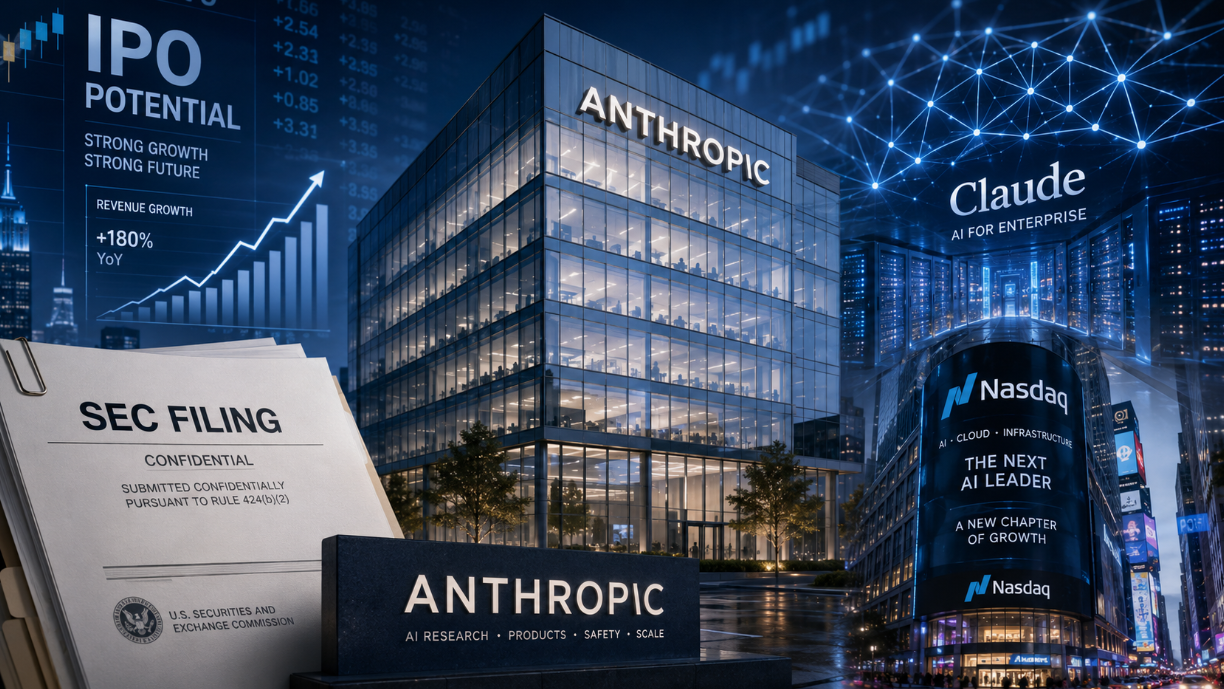
Anthropic made stock market history on Thursday, November 19, 2026, with the largest initial public offering ever recorded, but its successful debut could not prevent a broader decline in U.S. technology shares. The artificial intelligence company behind the Claude chatbot opened at $111.50 per share on the Nasdaq, 34% above its $83 offering price. Its shares later surrendered much of that gain as investors continued questioning the enormous financial commitments supporting the AI industry.
The San Francisco-based company raised approximately $81.3 billion through the offering, briefly reaching a fully diluted valuation of about $2 trillion. Meanwhile, the S&P 500, Dow Jones Industrial Average and Nasdaq Composite all fell more than 2% during Thursday's trading. The contrasting performances showed that strong demand for Anthropic shares had not eliminated concerns already affecting technology stocks.
Anthropic Makes Stock Market History
Anthropic became the first leading frontier AI developer to trade publicly, opening a new chapter for an industry largely dominated by privately held research companies. Its shares began trading under the ticker symbol ANT shortly before noon Eastern time. Strong demand pushed the stock as high as $115 before the initial excitement began to fade.
The company closed its first trading session at $97.17, representing a gain of approximately 17% over the offering price. Although substantially below its opening surge, the closing price still delivered significant gains to investors who purchased shares during the IPO. The company also established a new fundraising record for the U.S. stock market.
Anthropic's $2 trillion valuation requires an important distinction. The figure included employee stock options and restricted stock units that had not yet become outstanding shares. Based only on shares already outstanding, its market value reached approximately $1.5 trillion during trading.
The offering included 980 million shares sold at $83 each, above the company's previously advertised price range of $70 to $78. Anthropic also arranged a separate $26 billion private placement involving major technology companies. Together, the transactions represented more than $107 billion in financing commitments associated with the listing.
Why Wall Street Declined Despite the IPO
The broader market was already experiencing a difficult period before Anthropic began trading. Investors had been selling technology and semiconductor shares amid concerns about high valuations, borrowing costs and the enormous investments required to develop advanced AI systems. Anthropic's public debut was initially viewed as a possible opportunity to restore confidence.
Thursday's market decline continued those existing trends rather than establishing that Anthropic's IPO caused the selloff. The S&P 500 fell approximately 2%, extending its losing streak to six sessions. The Dow Jones Industrial Average dropped 1,101 points, while the Nasdaq Composite declined approximately 2.3%.
Semiconductor companies were among the businesses affected. Nvidia shares fell 3.3%, extending their decline to a sixth consecutive session despite the company's encouraging revenue outlook. Micron Technology and Broadcom each lost 2.1%, while the Philadelphia Semiconductor Index finished 2.4% lower.
Advanced Micro Devices faced additional pressure unrelated to Anthropic's offering. Its shares fell 7.7% after an investigative report raised questions about whether certain chips had reached a Chinese company subject to U.S. restrictions. The report was accompanied by the disclosure of a short position taken by a related investment fund, giving investors another issue to consider.
Market analysts emphasized that Anthropic's successful fundraising did not resolve the industry's larger financial uncertainties. Some investors were also adjusting their portfolios to accommodate the newly listed company. That activity can affect trading patterns, but it does not establish that the IPO caused the broader market decline.
Anthropic's Financial Losses Attract Scrutiny
Anthropic's public listing provided investors with a more detailed picture of the company's financial performance. According to its regulatory filings, the developer recorded a net loss of approximately $104 billion during the first nine months of 2026. That figure was significantly larger than its reported revenue of $33.2 billion for the same period.
However, the reported loss requires careful explanation because most of it did not represent cash spent on developing AI technology. Approximately $94.3 billion reflected accounting adjustments associated with the rising value of convertible financing instruments. Those noncash charges were tied largely to changes in the company's valuation rather than direct payments for computing infrastructure.
Anthropic still faces substantial operating costs. Its filings showed approximately $18.8 billion in computing and infrastructure expenses during the first nine months of the year. The company also spent heavily on employees, marketing, partnerships and administrative operations as it expanded its business.
Revenue growth has been rapid, driven largely by businesses integrating Claude into their operations. However, profitability remains uncertain, particularly because developing more capable models requires continued investment in computing resources. Investors must consider whether future revenue can support those costs while delivering sufficient returns.
Claude and Enterprise Customers Drive Growth
Anthropic has concentrated much of its commercial strategy on selling artificial intelligence services to businesses. Its Claude models are used for software development, document analysis, research and other professional tasks. The company also offers Claude Code, which assists developers with writing, reviewing and maintaining software.
Businesses can access Anthropic's technology through direct subscriptions, application programming interfaces and partnerships with major cloud providers. These arrangements allow organizations to incorporate Claude into existing systems without developing their own advanced AI models. The company has sought to distinguish itself through reliability, enterprise features and an emphasis on AI safety.
Its revenue growth reflects increasing corporate interest in AI-powered tools. However, the company competes with other leading developers, including OpenAI and Google, which are also investing heavily in increasingly capable models. Maintaining a competitive position will require continued technological improvements while controlling costs.
Anthropic's public listing introduces additional expectations from shareholders. As a publicly traded company, it will face regular financial reporting requirements and greater scrutiny of its spending decisions. Investors will have more opportunities to compare its financial performance with that of established technology businesses.
AI Infrastructure Costs Remain a Concern
The financial demands of artificial intelligence development extend far beyond Anthropic itself. Major technology companies have committed hundreds of billions of dollars to new data centers, specialized processors and electricity infrastructure. Investors are increasingly questioning how quickly those investments will produce profits.
Anthropic has disclosed computing commitments approaching $900 billion involving partners that include Amazon and Google. Such arrangements demonstrate the scale of resources expected to support its future development. They also raise questions about financial flexibility if demand grows more slowly than anticipated.
The company benefits from growing interest in software capable of completing complex tasks, but the competitive environment remains expensive. Developing new models requires substantial computing power, while serving millions of users creates continuing operational costs. Businesses must generate enough revenue to justify both forms of spending.
Broader economic conditions could complicate those plans. Higher borrowing costs may make infrastructure expansion more expensive, particularly for companies relying on debt financing. Investors are also examining whether construction delays, electricity availability and regulatory changes could affect the expansion of AI data centers.
Safety Concerns Add Another Dimension
Anthropic's stock market debut also attracted attention because of the company's public warnings about potential risks from advanced artificial intelligence. Its regulatory filings described concerns about powerful AI systems being misused for harmful activities or contributing to dangerous outcomes. These disclosures form part of its broader approach to AI safety and governance.
The company has previously discussed risks involving cyberattacks, biological weapons and the misuse of AI by governments or other organizations. These are potential dangers rather than evidence that such outcomes have occurred because of Anthropic's products. The company says it develops safeguards and evaluates its models to reduce the likelihood of harmful applications.
Regulation could influence Anthropic's future operations, particularly as governments consider rules governing advanced AI systems and data centers. New requirements could increase compliance costs or affect the release of certain technologies. At the same time, clearer standards could provide businesses with greater certainty when adopting AI products.
The company's leadership must therefore balance rapid technological development, commercial expectations and public safety commitments. Those responsibilities are becoming more visible as investors gain direct exposure to the company's financial performance.
Investors Watch What Comes After the Debut
Anthropic's IPO demonstrated that investors remain willing to commit enormous amounts of money to leading artificial intelligence companies. The record fundraising total and strong opening price reflected substantial demand for exposure to the technology. Nevertheless, Thursday's broader market losses showed that confidence in individual businesses does not necessarily translate into optimism across the entire sector.
The company's future performance will depend on its ability to expand revenue, manage infrastructure spending and maintain its technological position. Shareholders will also examine whether its growing enterprise customer base can support sustainable profits. These questions will become more important as Anthropic begins publishing regular financial results as a public company.
For Wall Street, the next test will involve separating the commercial potential of AI from the high expectations already reflected in share prices. Anthropic's first trading session established an unprecedented fundraising record, but it did not resolve the industry's financial challenges. Investors will now look to the company's operating results for evidence that its rapid growth can support its extraordinary valuation.