

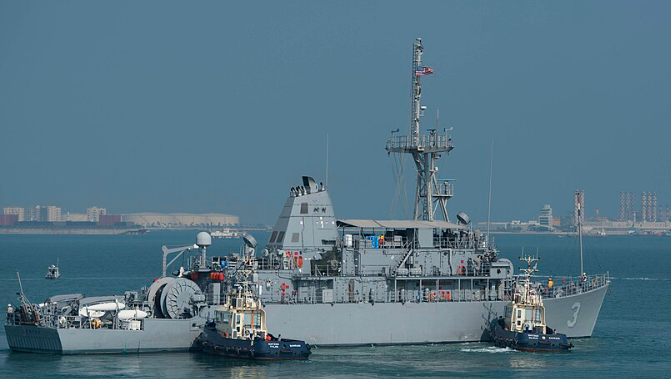
Iran launched missile and drone attacks against American military positions in Bahrain on Saturday, November 21, 2026, as fighting across the Persian Gulf intensified. Bahrain confirmed Iranian aerial attacks and reported that an industrial facility had caught fire. Iranian military officials claimed their forces struck American radar and missile defense systems, but the United States had not independently confirmed the reported damage.
The attacks came during a week of renewed military exchanges between Iran and the United States. Bahrain, which hosts the headquarters of the US Navy's Fifth Fleet, has repeatedly faced Iranian strikes since the regional conflict began in February. The latest attacks coincided with new incidents involving oil tankers near the Strait of Hormuz and renewed diplomatic efforts to prevent further escalation.
Iran Claims Strikes on American Military Facilities
Iran's Islamic Revolutionary Guard Corps said its aerospace forces conducted a combined operation using missiles and drones against American military positions in Bahrain. According to a statement carried by Iran's state news agency IRNA, the attacks targeted facilities at Al-Riffa and Awali.
Iran's semi-official Fars news agency separately identified Sheikh Isa Air Base and the American naval facility at Juffair among the reported targets. Other Iranian reports described two waves of attacks involving four American installations. The differing descriptions made it difficult to establish exactly which facilities were targeted or how many separate locations came under fire.
Iranian military officials claimed that the operation damaged Patriot air defense equipment and radar systems used by American forces. Those claims remained unverified. US Central Command had not immediately responded to requests for confirmation concerning the reported strikes.
The Revolutionary Guards described the operation as retaliation for American military activities, including alleged violations of Iranian airspace. Tehran has repeatedly accused Washington of using bases in neighboring Gulf countries to conduct operations against Iran. American officials have previously described US military actions in the region as responses to threats against American personnel and regional shipping.
Bahrain Reports Industrial Fire and Air Defense Interceptions
Bahrain's Interior Ministry issued an emergency warning during the attacks, advising residents to move to safe locations. Authorities later announced that the immediate danger had passed before issuing another alert as additional threats emerged.
The government confirmed that an Iranian attack had struck a civilian industrial facility, causing a fire and material damage. Emergency crews responded to contain the flames, and officials initially reported no injuries. The ministry did not immediately identify the facility or explain precisely how it had been struck.
Residents also reported hearing explosions, while accounts from Sitra Island described smoke rising above an industrial area. The island contains several important facilities, including energy infrastructure. However, the available information did not establish whether the reported industrial fire occurred at a particular refinery or another site.
Bahrain's Defence Force said its air defense systems intercepted several incoming Iranian attacks. Officials reported that falling fragments caused additional property damage but no casualties. The government condemned the strikes as acts of aggression against the kingdom.
The distinction between intercepted weapons and confirmed impacts remains important. Although Bahrain acknowledged the attacks and damage to civilian property, its statements did not establish that Iran had successfully destroyed the American military equipment described in Iranian reports.
Strait of Hormuz Tanker Incidents Raise Concerns
The latest fighting also coincided with attacks on commercial shipping near the Strait of Hormuz, one of the world's most important oil transportation routes. At least two incidents involving tankers were reported by British maritime authorities on Saturday, while Iranian officials separately described a vessel striking a naval mine.
The United Kingdom Maritime Trade Operations agency reported that a tanker traveling out of the Persian Gulf was struck near its stern approximately 11 nautical miles north of Khasab, Oman. A second report described a projectile hitting another tanker's engine room roughly 17 nautical miles east of Khasab.
Authorities reported no casualties from either incident. However, it was not immediately clear whether the two reports concerned separate vessels. The environmental consequences also remained uncertain.
Iran's navy separately claimed that an oil tanker caught fire after striking a mine in a restricted area east of the strait. Independent reporting could not establish whether that account involved one of the vessels identified by British maritime authorities.
The incidents renewed concerns about the safety of commercial shipping through the narrow passage connecting the Persian Gulf with international waters. Before the conflict began, nearly one-fifth of the world's crude oil supplies passed through the Strait of Hormuz.
Iran has attempted to restrict maritime traffic through the waterway, while the United States has maintained a naval blockade targeting Iranian shipping. American military protection has helped some commercial vessels continue operating despite repeated attacks and warnings.
Military Confrontation Continues Across the Gulf
The November 21 attacks followed several earlier incidents involving American facilities in Bahrain. On November 17, Iranian forces launched drones against a US radar installation, prompting an American retaliatory strike against an Iranian missile launch site on Qeshm Island.
American officials said the earlier Iranian attack had caused no injuries to US personnel or damage to American equipment. A US fighter jet subsequently struck the Iranian installation using precision weapons, according to officials familiar with the operation.
The latest confrontation also followed an Iranian claim that its forces had damaged an American F-16 fighter jet over the Gulf. US Central Command rejected that allegation and said American fighter aircraft in the region were accounted for.
Iranian military leaders have continued warning that further American attacks will produce additional retaliation. Brigadier General Mohammad Akraminia said Iran's armed forces were better prepared than in previous conflicts and would respond to new military action.
Iranian state television also broadcast footage of military personnel deployed along the country's southern coastline. The broadcasts appeared intended to demonstrate Iran's preparedness as tensions increased around its coastal military positions and shipping routes.
The ongoing conflict began on February 28, when the United States and Israel launched attacks against Iran. Since then, military operations have expanded beyond Iranian territory, affecting Gulf Arab states hosting American forces and commercial traffic throughout the region.
Qatar Pursues Diplomacy as Military Pressure Grows
Diplomatic efforts have continued despite the renewed attacks. Iranian Deputy Foreign Minister Kazem Gharibabadi said a Qatari delegation visited Tehran on Friday evening and met with Iranian officials for approximately two hours.
The discussions explored whether another opportunity existed for negotiations between Iran and the United States. Qatar has played an important intermediary role, maintaining contact with both sides as regional governments seek to prevent a broader confrontation.
Iranian officials have linked any potential agreement to their demands for relief from American economic restrictions. Tehran wants Washington to lift sanctions, release frozen Iranian assets and end the naval blockade of Iranian ports.
Iranian President Masoud Pezeshkian described the country's economic difficulties as another form of warfare. He argued that sustained financial pressure could be more damaging than direct military attacks, while expressing confidence that Iran could withstand the restrictions.
President Donald Trump also discussed the possibility of a negotiated settlement on Saturday. In comments reported from an interview with Fox News, Trump said he wanted a lasting agreement preventing Iran from developing nuclear weapons. He also said removing Iran's government was not his objective.
Those remarks suggested that diplomatic discussions remained possible, although major disagreements continued over sanctions, maritime access and security guarantees. No new agreement or ceasefire had been announced following the latest attacks.
For Bahrain, the immediate priority remained protecting residents and monitoring additional threats. For Washington and Tehran, the unresolved questions included the extent of damage to American military facilities, the safety of commercial shipping and whether negotiations could prevent another round of strikes.