

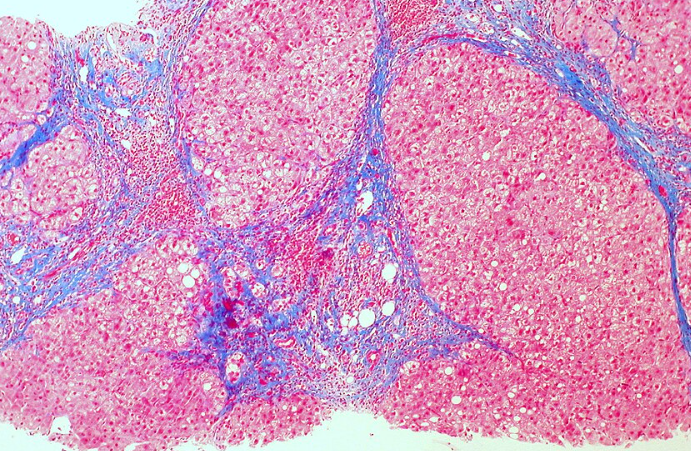
Scientists in Japan have identified a liver enzyme that may play an important role in the progression of severe liver fibrosis. Experiments involving mice and laboratory-grown cells suggest that suppressing the enzyme could help protect the liver from damage and reduce the accumulation of scar tissue.
The findings could also contribute to the development of blood tests that help doctors identify patients with advanced fibrosis before more serious complications develop.
The research was led by Dr. Hiroko Ikenaga and Associate Professor Tsutomu Matsubara of Osaka Metropolitan University's Graduate School of Medicine. The study was published on November 23, 2026, in the scientific journal JCI Insight.
Understanding How Liver Fibrosis Develops
Liver fibrosis occurs when repeated or prolonged injury causes excessive scar tissue to accumulate in the liver. Common causes include chronic viral hepatitis, alcohol-related liver disease and metabolic dysfunction-associated steatotic liver disease.
When the liver becomes injured, its natural repair mechanisms attempt to restore damaged tissue. However, persistent injury can cause these repair processes to produce excessive amounts of collagen and other substances that form scar tissue.
As fibrosis progresses, the accumulation of scar tissue can interfere with normal liver function. Advanced scarring can eventually develop into cirrhosis, increasing the risk of liver failure and other serious complications.
Researchers are investigating ways to interrupt this process before permanent damage occurs.
Researchers Identify an Enzyme Associated With Liver Damage
The Japanese research team focused on an enzyme known as microsomal epoxide hydrolase, or EPHX1.
The enzyme participates in metabolic processes that alter naturally occurring fatty acid derivatives. Some of these substances help regulate inflammation and protect tissues from damage.
Among the molecules investigated were epoxyeicosatrienoic acids, commonly referred to as EETs. These compounds have biological properties that may help protect liver tissue.
EPHX1 converts certain EETs into substances known as dihydroxyeicosatrienoic acids, or DHETs. This conversion can reduce the protective activity associated with the original molecules.
The researchers discovered elevated EPHX1 levels in liver tissue from mice and human patients with advanced fibrosis.
In particular, increased enzyme activity was associated with declining levels of a protective molecule called 11,12-EET and increasing levels of its corresponding metabolite, 11,12-DHET.
The findings suggest that changes in fatty acid metabolism may contribute to the worsening of liver fibrosis.
Mice Without EPHX1 Developed Less Liver Scarring
To investigate whether the enzyme directly contributes to fibrosis, researchers examined genetically modified mice that lacked EPHX1.
These animals maintained higher levels of 11,12-EET than mice with normal enzyme activity. They also developed less liver scarring and showed reduced signs of oxidative stress.
Oxidative stress occurs when potentially damaging molecules accumulate faster than the body's protective mechanisms can neutralize them. It can contribute to inflammation, cellular injury and the progression of chronic diseases.
The results provide experimental evidence that EPHX1 contributes to liver fibrosis rather than simply becoming more abundant as the disease progresses.
However, removing an enzyme through genetic modification is different from developing a medication that safely blocks its activity in humans.
The experiments establish a potential biological target, but they do not demonstrate that an effective human treatment currently exists.
Protective Molecules Reduce Activity in Fibrosis-Related Cells
The researchers also examined hepatic stellate cells, which are important contributors to the development of liver fibrosis.
These cells normally perform several functions within the liver, including storing vitamin A. When liver injury occurs, chemical signals can cause them to become activated.
Activated stellate cells produce collagen and other materials that contribute to scar formation. Continued activation during chronic liver injury can lead to excessive fibrosis.
In laboratory experiments, the researchers exposed hepatic stellate cells to 11,12-EET.
The treatment reduced oxidative stress and interfered with cell activation triggered by transforming growth factor beta, a signaling protein involved in tissue repair and fibrosis.
These findings provide another possible explanation for why maintaining adequate levels of 11,12-EET could help limit liver scarring.
Dr. Ikenaga identified both EPHX1 suppression and preservation of 11,12-EET activity as potential approaches for future treatment development.
Blood Tests Could Help Identify Advanced Fibrosis
The study also examined blood and liver tissue samples from patients with chronic hepatitis C and metabolic dysfunction-associated steatotic liver disease.
Researchers analyzed samples collected through Osaka Metropolitan University Hospital between 2007 and 2020.
Their findings suggest that measuring 11,12-DHET concentrations in blood could provide information about the severity of liver fibrosis.
A biological measurement associated with a disease or its progression is known as a biomarker. Doctors already use various biomarkers, imaging techniques and other assessments to evaluate liver health.
An additional blood-based indicator could potentially complement existing methods for identifying advanced liver disease.
However, researchers must establish how accurately this particular biomarker distinguishes between different stages of fibrosis. They must also determine whether it provides useful information beyond currently available diagnostic tests.
The study does not establish that elevated 11,12-DHET levels can reliably predict future cirrhosis or liver failure in individual patients.
Challenges Remain Before Human Treatments Become Available
Despite the encouraging experimental results, significant obstacles remain before the findings can be translated into clinical treatments.
Professor Matsubara explained that medications capable of effectively targeting EPHX1 in humans are currently lacking. Compounds intended to preserve or reproduce the protective activity of 11,12-EET also face stability problems.
A potential medication must remain effective long enough inside the body to produce its intended therapeutic benefit.
Researchers must additionally investigate whether suppressing EPHX1 could interfere with other important metabolic functions or cause unwanted side effects.
These questions would need to be addressed through further laboratory research, animal studies and eventually appropriately designed human clinical trials.
The study adds to the growing understanding of how changes in metabolism can influence chronic liver disease. It also identifies a specific biochemical process that researchers may be able to target before extensive liver damage develops.
For now, the findings represent an early step toward potential new treatments rather than an established therapy. Further research must determine whether blocking EPHX1 can safely slow liver fibrosis in human patients.