

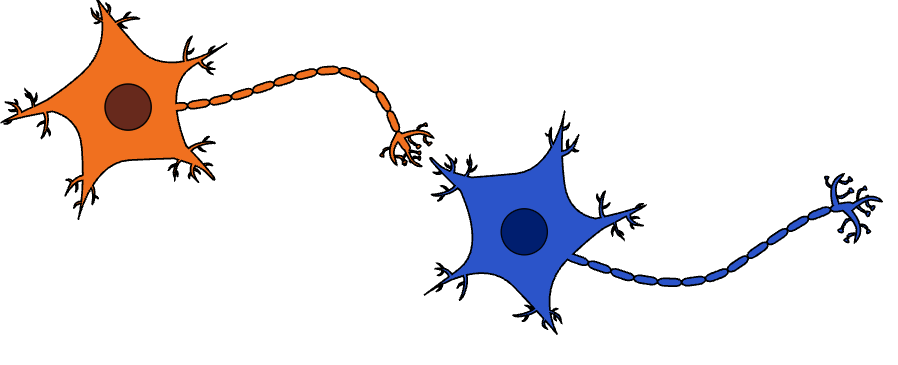
Scientists have discovered a way to restore communication between damaged nerve cells, offering a promising new approach to treating amyotrophic lateral sclerosis (ALS) and certain forms of dementia. The researchers corrected a genetic processing error that prevents neurons from communicating properly, restoring important functions in human nerve cells grown in a laboratory.
The findings were published November 11, 2026, in the scientific journal Nature. The international research team included scientists from University College London, King's College London, the Francis Crick Institute, and other research organizations.
The discovery is particularly significant because it targets a biological problem associated with approximately 97 percent of ALS cases. The researchers believe the same approach could also be relevant to about half of patients with frontotemporal dementia, a disorder that damages parts of the brain involved in behavior, language and decision-making.
The experimental treatment has not yet been proven to work in patients. However, a related drug targeting the same genetic problem has already entered early human clinical trials.
Nerve Cells Can Stop Communicating Before They Die
One of the study's most important findings concerns what happens to nerve cells before they degenerate.
Scientists have long known that ALS causes motor neurons to deteriorate and eventually die. These specialized nerve cells carry signals from the brain and spinal cord to muscles, making voluntary movement possible.
As motor neurons are lost, patients gradually develop muscle weakness and difficulties walking, speaking, swallowing and breathing. ALS is progressive and currently has no cure.
The new research found that neurons can suffer a serious communication failure while remaining structurally intact. In laboratory experiments, the cells were still present, but their ability to transmit signals to neighboring neurons had sharply declined.
This distinction could be important for future treatments. If doctors can restore communication while nerve cells are still alive, researchers may eventually find ways to preserve neurological function before permanent damage occurs.
The discovery suggests that some nerve cells affected by disease may become functionally impaired before they are physically destroyed.
Scientists Identify the Genetic Error Behind the Problem
The researchers focused on a protein called TDP-43, which helps cells process genetic instructions.
Under normal conditions, TDP-43 works inside the cell nucleus to regulate how RNA is assembled. RNA carries instructions that cells use to produce proteins necessary for normal functioning.
In most ALS cases, TDP-43 becomes displaced from its normal location in the nucleus and accumulates abnormally elsewhere in the cell. This disrupts the processing of genetic instructions and can interfere with hundreds of genes.
The research team discovered that one of these disrupted genes, UNC13A, plays an especially important role in nerve-cell communication.
UNC13A provides instructions for producing a protein that helps neurons release chemical messengers called neurotransmitters. These chemicals carry signals across the tiny gaps between nerve cells, known as synapses.
When TDP-43 stops functioning properly, an unwanted section of genetic material can be included in the RNA produced from UNC13A. Scientists refer to this as a cryptic exon.
The error prevents cells from making sufficient amounts of the functional UNC13A protein. Without that protein, neurons have difficulty releasing neurotransmitters and communicating with one another.
The team found that this single processing error was responsible for much of the communication breakdown observed in its experimental models.
Experimental Treatment Restores Neuron Communication
The researchers developed specialized molecules called antisense oligonucleotides, or ASOs, to correct the genetic processing error.
These molecules consist of short sequences of genetic material designed to attach to specific RNA targets. They can influence how RNA is processed, allowing cells to produce proteins more normally.
In this study, the experimental ASOs prevented the unwanted genetic sequence from being included in UNC13A RNA.
The results were striking. In laboratory experiments involving human neurons, the treatment corrected more than 90 percent of the abnormal RNA processing in some tests and restored substantial amounts of functional UNC13A protein.
The researchers then examined whether correcting the genetic error actually improved nerve-cell communication.
Using electrical recordings, they measured how neurons released neurotransmitters and coordinated their activity across networks.
The treatment improved spontaneous communication between neurons and their responses to stimulation. It also restored important aspects of synchronized activity across groups of nerve cells.
This was particularly encouraging because coordinated signaling is essential for normal nervous system function.
The experiments demonstrated that correcting one molecular problem could reverse several functional abnormalities caused by the loss of TDP-43 activity.
Researchers Were Surprised by the Results
Professor Pietro Fratta of University College London and the Francis Crick Institute was among the researchers leading the project. His earlier work helped establish that abnormalities involving UNC13A were associated with ALS progression.
The new experiments provided a clearer explanation of why the gene matters and how its malfunction contributes to the disease.
Professor Juan Burrone of King's College London, another senior researcher on the study, described the discovery as unexpected.
"We were surprised to see that restoring just one genetic event, out of the hundreds disrupted, was enough to allow neurons to talk to each other again," Burrone said in a university statement.
The finding is important because TDP-43 disruption affects numerous cellular processes. Scientists previously faced the challenge of determining which abnormalities were most responsible for nerve-cell dysfunction.
By identifying UNC13A as a major contributor to communication failure, the team has established a more specific target for drug development.
The researchers also tested their approach in a mouse model modified to reproduce the human UNC13A processing defect.
Treatment corrected the abnormal RNA processing in these mice, providing evidence that the approach can work beyond isolated laboratory-grown cells. However, the mouse findings did not establish that the treatment restores neurological function or prevents disease progression in living patients.
A Related Treatment Has Entered Human Trials
The discovery arrives as an experimental drug targeting the same biological pathway begins testing in people with ALS.
Trace Neuroscience, a biotechnology company co-founded by Fratta, is developing a treatment called TRCN-1023.
The drug is designed to correct abnormal UNC13A RNA processing and restore production of the protein needed for neuronal communication.
In June 2026, the company announced a clinical development program that includes early-stage studies in Europe and China. The first participant in the United Kingdom received treatment in October as part of the Phase 1/2 FUNCTION ALS clinical trial.
The research program is initially examining safety, tolerability and other measures that could help determine whether the treatment should advance to larger studies.
The Motor Neurone Disease Association reported in November that the early clinical trial involves approximately 30 people living with the disease.
TRCN-1023 uses a related approach to the experimental molecules described in the Nature paper, but the laboratory findings should not be interpreted as proof that the clinical drug will work in humans.
Researchers still need to establish whether treatment can slow muscle weakness, preserve movement, improve daily functioning or extend survival.
Why the Discovery Could Also Matter for Dementia
The implications of the research extend beyond ALS.
TDP-43 abnormalities are also found in approximately half of people with frontotemporal dementia and in some patients with Alzheimer's disease.
Frontotemporal dementia damages nerve cells in brain regions involved in personality, language, social behavior and decision-making. Symptoms can differ considerably from those of Alzheimer's disease, which often begins with memory problems.
Because TDP-43 malfunction can interfere with UNC13A production, researchers believe similar communication problems could occur in some forms of dementia.
The study demonstrated that correcting UNC13A processing can improve signaling in affected laboratory neurons. However, it did not establish that the treatment improves memory, behavior or cognitive function in people with dementia.
Researchers would need separate studies to determine whether the same approach could benefit patients with frontotemporal dementia.
Important Questions Remain Before Patients Can Benefit
Despite the encouraging results, the research remains at an early stage.
The experiments primarily involved human neurons grown from stem cells and a genetically modified mouse model. These systems allow scientists to examine specific biological mechanisms, but they cannot reproduce every aspect of a complex human neurological disease.
The researchers also do not yet know whether restoring communication between living neurons would be sufficient to prevent their eventual degeneration.
ALS involves several biological processes, and correcting UNC13A may not address all the damage associated with abnormal TDP-43 activity.
Another important question concerns timing. Treatment might be more effective before extensive nerve-cell loss occurs, but researchers have not established when intervention would provide the greatest benefit.
Clinical trials must also determine how safely the experimental molecules can reach the necessary nerve cells and whether their effects can be maintained.
Nevertheless, the research offers a new direction for scientists working on diseases that currently have few effective treatment options.
Instead of concentrating entirely on preventing nerve cells from dying, researchers may also be able to restore essential functions in cells that remain alive.
The next major test will come from clinical studies of UNC13A-targeting treatments. Those results will help determine whether the communication restored in laboratory-grown neurons can translate into meaningful benefits for people living with ALS.