

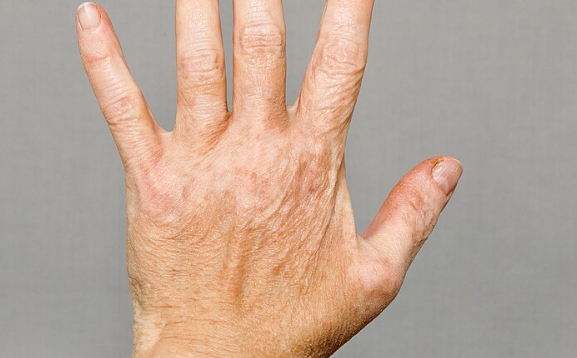
The U.S. Food and Drug Administration has approved upadacitinib as the first systemic therapy specifically authorized to treat nonsegmental vitiligo. Announced by pharmaceutical company AbbVie on November 23, 2026, the approval covers adults and children aged 12 and older with the chronic autoimmune skin condition.
Sold under the brand name Rinvoq, the medication offers an alternative to treatments applied directly to affected areas of skin. It works by interfering with immune system signals involved in the destruction of pigment-producing cells.
The approval follows two large clinical trials demonstrating that patients receiving upadacitinib were significantly more likely to experience improvements in skin pigmentation than those receiving a placebo.
Understanding Vitiligo and Its Effects
Vitiligo develops when the immune system attacks melanocytes, the cells responsible for producing melanin. This natural pigment gives skin, hair, and eyes their color.
When melanocytes are damaged or destroyed, patches of skin lose their pigmentation. These areas can appear anywhere on the body, including the face, hands, arms, and legs.
Nonsegmental vitiligo is the most common form of the condition. It frequently produces patches on both sides of the body and can progress unpredictably.
Although vitiligo is not contagious, its visible effects can create significant emotional and social challenges. People living with the condition may experience discrimination, reduced self-confidence, or psychological distress.
Treatment remains a personal decision. Some individuals seek to restore skin pigmentation, while others choose not to pursue repigmentation.
How Upadacitinib Works
Upadacitinib belongs to a class of medications known as Janus kinase inhibitors, commonly called JAK inhibitors.
These medications interfere with signaling pathways that help regulate immune responses. Upadacitinib preferentially inhibits an enzyme known as JAK1, which participates in transmitting signals associated with inflammation.
By modifying these signals, the medication can reduce immune activity involved in vitiligo and create conditions that allow pigmentation to recover.
The approved dosage for nonsegmental vitiligo is 15 milligrams taken orally once daily.
Upadacitinib was already available for several inflammatory conditions, including rheumatoid arthritis, psoriatic arthritis, and atopic dermatitis. Its approval for vitiligo expands the medical uses of an established medication.
However, targeting the immune response does not mean the drug permanently eliminates the underlying condition.
Clinical Trials Demonstrate Improved Repigmentation
The FDA approval was supported by two Phase 3 clinical trials known as Viti-Up-1 and Viti-Up-2.
The studies enrolled 614 participants across 90 research locations worldwide. Participants were randomly assigned to receive either upadacitinib or a placebo for 48 weeks.
Researchers measured facial pigmentation using the Facial Vitiligo Area Scoring Index. A treatment response known as F-VASI 75 represents an improvement of at least 75 percent from the patient's original facial depigmentation score.
Results published in The Lancet showed that 25 percent of participants receiving upadacitinib in Viti-Up-1 achieved this improvement, compared with 6 percent receiving a placebo.
In Viti-Up-2, the corresponding figures were 23 percent and 7 percent.
Researchers also measured changes in pigmentation across the entire body. Approximately 19 percent and 21 percent of patients receiving upadacitinib achieved at least a 50 percent improvement in their total body scores. Only 6 percent of placebo recipients reached that benchmark in each study.
Although the results demonstrate a treatment benefit, most participants did not achieve the primary facial repigmentation target during the initial 48 weeks.
Improvements Continued With Longer Treatment
Additional findings released in October suggest that some patients may experience greater improvements when treatment continues beyond the initial study period.
During the extension phase, participants receiving the medication continued to show improvements through week 76.
Among participants included in the available-data analysis, facial repigmentation response rates reached 55.1 percent in Viti-Up-1 and 47.4 percent in Viti-Up-2.
These longer-term results are encouraging but require careful interpretation. The extension was open-label, meaning participants and researchers knew which treatment was being administered.
The analysis also included patients with available measurements rather than every participant originally enrolled. Consequently, the later percentages cannot be directly compared with the original randomized trial results without accounting for those differences.
Dermatologist Seemal R. Desai, who participated in the clinical research, emphasized that repigmentation can take considerable time. Patients may require extended treatment before experiencing meaningful improvements.
Important Safety Concerns Remain
Despite its potential benefits, upadacitinib carries an FDA boxed warning, the agency's strongest type of medication safety warning.
The warning addresses risks including serious infections, certain cancers, major cardiovascular events, blood clots, and death.
Because JAK inhibitors modify immune system activity, patients receiving these medications may become more vulnerable to infections. Serious infections were documented during the vitiligo clinical trials.
Healthcare providers must assess individual medical histories and relevant risk factors before prescribing the medication. Laboratory monitoring and screening for certain infections may also be necessary before and during treatment.
The known safety risks make individual treatment decisions particularly important. An oral medication may be convenient for people with widespread vitiligo, but systemic treatment also exposes the entire body to its effects.
Expanding Treatment Options for Patients
The approval follows another important development in vitiligo treatment. In July 2022, the FDA approved ruxolitinib cream, marketed as Opzelura, for nonsegmental vitiligo in patients aged 12 and older.
That medication is also a JAK inhibitor, but it is applied directly to affected skin. Other approaches to managing vitiligo include phototherapy and topical medications.
Upadacitinib provides an additional option, particularly for patients whose circumstances warrant systemic therapy. However, its approval does not establish that it is superior to every existing treatment.
AbbVie sponsored the clinical trials supporting the approval. Desai has also disclosed professional and financial relationships with the company, an important consideration when evaluating his comments about the treatment.
Further research is examining the durability of repigmentation, long-term safety, and potential benefits of combining upadacitinib with phototherapy. These findings will help dermatologists determine how the newly approved medication fits into the broader management of vitiligo.