

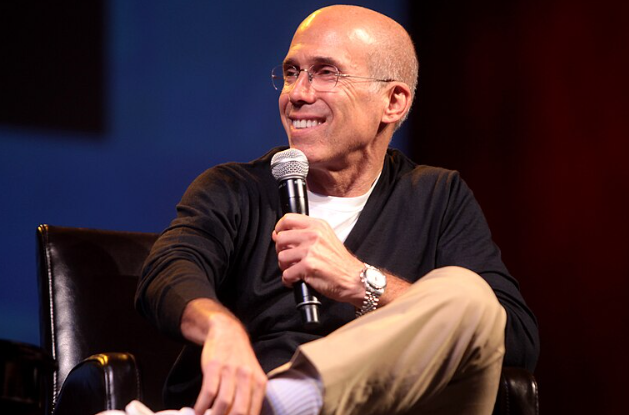
Artificial intelligence is becoming a larger part of Hollywood even as actors, writers and other creative workers push for limits on how it can be used. Former Disney executive and DreamWorks co-founder Jeffrey Katzenberg added to the debate this week, arguing that the entertainment industry should stop trying to make AI disappear and instead decide how the technology will be used.
Katzenberg published a lengthy essay Wednesday about AI and creativity. He compared the current changes to earlier technological shifts that transformed movies, animation and television.
His central argument was simple: AI is not going away. According to Variety, Katzenberg said Hollywood is spending too much energy resisting the technology instead of establishing the rules that should govern it. He argued that creative workers should have a major role in deciding how AI systems are brought into filmmaking.
Katzenberg has seen several major technological changes during his career. He worked at Walt Disney Studios during the company’s animation revival and later helped create DreamWorks SKG with Steven Spielberg and David Geffen.
Computer-generated animation was one of those major changes. Traditional animation once depended almost entirely on artists drawing images by hand. Computer tools gradually changed that process, and fully computer-animated movies became major theatrical releases during the 1990s.
Katzenberg has previously compared generative AI to that transition. He has argued that new technology can change jobs without eliminating the need for human creativity.
That comparison remains controversial. Generative AI can do much more than help an artist manipulate an existing image. Current systems can create pictures, voices, video, music and written material after receiving instructions from a user.
That means AI can potentially perform tasks that were previously given to writers, actors, illustrators, voice performers and visual-effects workers.
The Writers Guild of America has already negotiated specific rules covering AI. The guild says AI-generated material cannot be treated as literary material under its contract, meaning a studio cannot use an AI-generated screenplay to reduce the status or compensation of a human writer.
Writers also cannot be required to use AI when performing writing services. The WGA's 2026 agreement kept the protections established after the 2023 writers strike and added another requirement. Companies must give the guild written notice if they license writers' work to train a commercial generative AI system that creates new material. That issue is particularly important because modern AI systems are trained on enormous collections of text, images, audio and video.
Writers, artists and other copyright owners have questioned whether technology companies should be allowed to train commercial systems on their work without permission or payment. Several lawsuits involving AI training and copyrighted material are still moving through the courts.
Actors have their own concerns.SAG-AFTRA says its basic approach to AI is built around consent, compensation and control over performances. The union has negotiated protections involving digital replicas and synthetic performers.
An actor's face, voice and movements can now be copied digitally with increasing accuracy. That creates possibilities for filmmakers, but it also raises questions about whether a performer could lose control of his or her identity.
SAG-AFTRA members approved a new television and theatrical contract in June 2026. The union says the agreement expanded protections intended to prevent synthetic performers from replacing human performers without proper safeguards.
The issue has also moved beyond union contracts. California recently adopted requirements involving disclosure of AI-generated performances. Federal lawmakers have also considered legislation dealing with unauthorized digital replicas of real people. Meanwhile, Hollywood studios are already hiring people to work with AI.
The Los Angeles Times examined studio job postings this summer and found that more than one in 10 postings it reviewed appeared to have some connection to artificial intelligence. Studios were hiring workers to develop AI technology while also hiring people to protect intellectual property from unauthorized AI use.
That creates an unusual situation. Hollywood companies want access to technology that could make filmmaking faster or less expensive. At the same time, those same companies own valuable movies, television programs, characters and performances that could be copied or used to train AI systems.
Some studios have begun working directly with AI companies.
A24, the studio behind films including “Everything Everywhere All at Once,” has entered a research partnership with Google's DeepMind. The company has said it would rather participate in the development of AI than remain outside the process while the technology advances.
AI companies are also developing tools aimed specifically at filmmakers. Some systems can generate short video scenes from written instructions. Others can change backgrounds, create visual effects, translate dialogue, alter a performer's lip movements or produce temporary images used while planning a movie. The technology still has major limitations. AI-generated video can produce strange movements, inconsistent characters and objects that unexpectedly change between frames.
Those problems are becoming less obvious as the systems improve.
Cost may be one of the biggest reasons studios remain interested. Movies and television shows can require hundreds or thousands of people and take months or years to complete.
If AI can perform some repetitive production work more quickly, studios could reduce costs. Supporters also argue that inexpensive filmmaking tools could allow independent creators to make projects that would otherwise require large financial backing.
Workers see another side of that equation.
A production cost that disappears from a studio budget may represent a job that disappears for a writer, artist, animator or technician. That is why unions have focused heavily on ensuring that AI remains a tool used by people rather than a replacement for them.
The disagreement is therefore not simply about whether AI produces good movies. It is also about who owns creative work, who gets paid and who controls a person's likeness or voice.
Katzenberg argues that Hollywood has faced disruptive technology before. Sound changed silent movies, television changed the theatrical business, computer graphics changed visual effects and streaming changed how audiences watch entertainment.
Generative AI may become another major change, but its ability to imitate human work makes the debate different from many earlier technological shifts.
A computer-generated dinosaur does not claim to be a real dinosaur. An AI-generated actor, however, could look and sound like a living person.
That difference helps explain why Hollywood's labor organizations have focused on consent and control.
The industry is now moving in two directions at once. Studios are experimenting with AI because it offers new production tools, while unions and lawmakers are trying to establish limits before those tools become common.
Katzenberg believes resisting the technology itself is unlikely to work.
The larger question for Hollywood may instead be how much of filmmaking should be handed to machines and how much should remain firmly under human control. That argument is likely to continue as AI video, voice and image systems become more capable and much easier to use.