

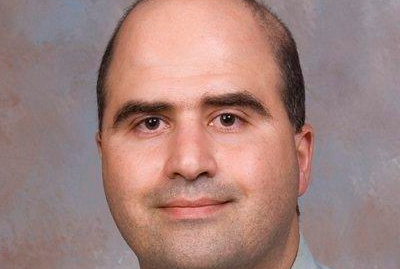
President Donald Trump has approved the execution of former Army Maj. Nidal Malik Hasan by firing squad for the 2009 mass shooting at Fort Hood, Texas, where 13 people were killed and more than 30 others were wounded. The Pentagon announced the decision Monday, October 5, after Defense Secretary Pete Hegseth recommended that Hasan be executed by that method.
Hasan, a former Army psychiatrist, was convicted by a military jury in 2013 of 13 counts of premeditated murder and 32 counts of attempted premeditated murder. The attack took place on November 5, 2009, at Fort Hood, the Army installation in central Texas.
According to Reuters, Trump approved the firing squad after Hegseth sent the recommendation to the president. The secretary of the Army will now be responsible for setting the time and place of the execution.
The Associated Press reported that Hasan remains on military death row at the U.S. Disciplinary Barracks at Fort Leavenworth, Kansas. He is one of four prisoners currently facing military death sentences.
The decision does not necessarily mean Hasan will be executed immediately.
Military death sentences follow a lengthy process that includes automatic appeals and presidential approval. An Army legal review published earlier this year said a military execution cannot move forward until the president personally approves the death sentence. Even after that step, a condemned prisoner may seek further review in federal court.
Hasan could still file a habeas corpus petition challenging his detention or sentence. Such litigation could delay the execution while federal courts review any remaining constitutional or procedural claims.
The case has already lasted more than 16 years.
Hasan opened fire inside the Soldier Readiness Processing Center at Fort Hood, where service members were preparing for deployments and other assignments. Investigators said he used a semiautomatic handgun and fired repeatedly inside and around the building before being shot by civilian police officers.
Thirteen people died in the attack, including 12 soldiers and one civilian. Thirty-two others were wounded.
During his court-martial, Hasan represented himself with standby military lawyers available to assist him. He did not deny carrying out the shooting. He told the court that he believed he was acting to protect Muslims and opposed U.S. military operations in Muslim countries.
Military prosecutors presented evidence that Hasan had planned the attack. He was convicted on all counts and sentenced to death in August 2013.
Hasan was wounded during the confrontation that ended the shooting and was left paralyzed from the waist down. He has remained in military custody since then.
The case became one of the most closely watched military prosecutions in decades. It also raised questions about extremism, internal warning signs and whether Army officials could have acted earlier based on concerns about Hasan’s conduct and communications before the attack.
Trump’s approval is significant because military executions are extremely rare.
The U.S. military has not carried out an execution since 1961, when Army Pvt. John Bennett was hanged at Fort Leavenworth after being convicted of rape and attempted murder. The military has not carried out an execution by firing squad since 1945.
An Army legal article published in May said modern military death penalty cases include multiple layers of review. After a death sentence is imposed, the case moves through military appellate courts and can eventually reach the president for final approval.
The president’s role is different from that of a governor in most state death penalty cases. Under military law, a death sentence cannot be carried out unless the president approves it.
Hegseth had asked Trump to approve Hasan’s execution in September 2025, according to the Army legal review. The formal approval announced Monday came more than a year later.
The choice of a firing squad also draws attention because lethal injection has been the most common execution method in the United States for decades. However, governments have faced increasing difficulty obtaining some lethal injection drugs, and several states have revived or expanded alternative execution methods.
The Trump administration has supported broader use of capital punishment. During Trump’s first presidency, the federal government resumed federal executions in 2020 after a 17-year pause and carried out 13 executions before he left office in January 2021.
Hasan’s case is separate from the civilian federal death penalty system because he was prosecuted under the Uniform Code of Military Justice.
The Fort Hood attack remains one of the deadliest shootings on a U.S. military installation. The victims included soldiers preparing to deploy, soldiers who had recently returned from overseas assignments and a civilian employee.
Families of those killed and wounded in the 2009 attack have followed the legal case for years. Some have argued that the lengthy appeals process has delayed accountability, while death penalty opponents have called for the sentence to be converted to life imprisonment.
The Pentagon’s announcement moves the case into a new phase, but the timing of any execution remains uncertain.
The secretary of the Army must establish the execution date and location, and Hasan may still pursue additional court challenges. Those steps could determine whether the military carries out its first execution in more than six decades.
If the sentence is ultimately carried out by firing squad, it would also mark the first military execution by that method in more than 80 years.
For now, Trump’s approval removes one of the most important legal barriers standing between Hasan and execution. The case now turns to the Army, the courts and any final challenges Hasan’s lawyers may bring.