

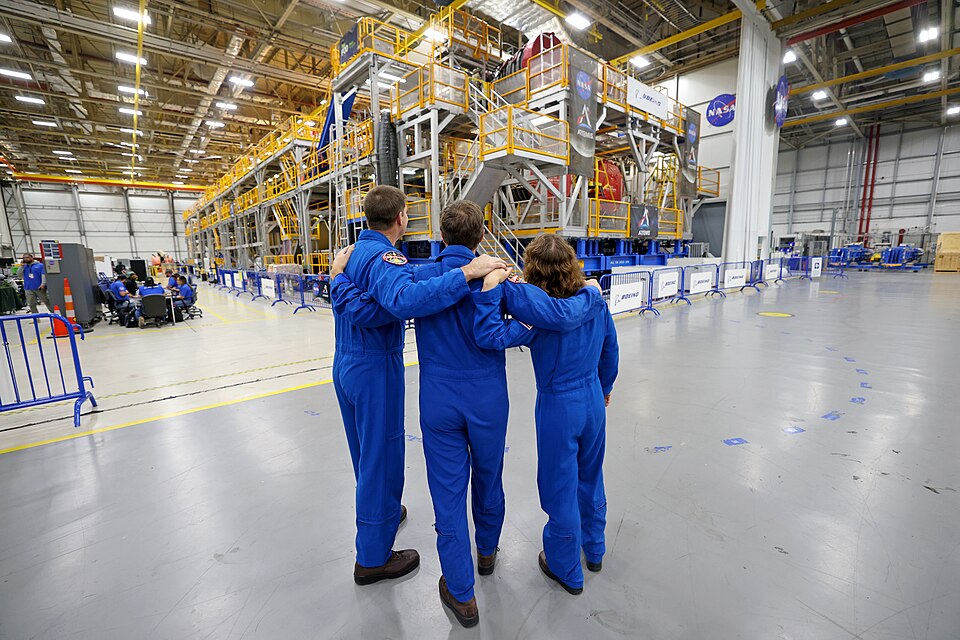
For the first time since the Apollo era, human beings have voyaged to the Moon and come home to tell the tale. NASA's Artemis II crew — commander Reid Wiseman, pilot Victor Glover, mission specialist Christina Koch, and Canadian Space Agency astronaut Jeremy Hansen — splashed down in the Pacific Ocean off the coast of San Diego at 5:07 p.m. PDT on April 10, 2026, concluding a nearly 10-day mission that marks a pivotal turning point in space exploration. The crew is expected to arrive at NASA's Johnson Space Center in Houston today.
The mission shattered records along the way. Over the course of their journey, the four astronauts traveled a total of 694,481 miles, reaching a maximum distance of 252,756 miles from Earth — surpassing the previous record set by the Apollo 13 crew in 1970. At their closest lunar approach, they passed just 4,067 miles above the Moon's surface, testing the Orion spacecraft and its systems in preparation for future missions that will attempt to land astronauts on the lunar surface.
Re-entry was among the most dramatic and nerve-wracking phases of the flight. Unlike crews returning from the International Space Station in low Earth orbit, the Artemis II astronauts hurtled back into Earth's atmosphere at approximately 24,600 mph — roughly 24 times the speed of a bullet. The Orion capsule's heat shield endured temperatures of up to 5,000 degrees Fahrenheit, about half the temperature of the Sun's surface. After six harrowing minutes of radio blackout, during which superheated plasma enveloped the capsule and severed all communications, Orion emerged intact against a near-cloudless sky. NASA described the landing as a "bullseye."
The mission's successful conclusion validates years of development on NASA's Space Launch System rocket and the Orion spacecraft, both of which carried a crew for the first time. Launching from Kennedy Space Center on April 1 with 8.8 million pounds of thrust, the SLS delivered Orion to orbit with what NASA called "pinpoint accuracy." The crew christened their spacecraft "Integrity" and spent the first day in orbit conducting thorough systems checks before firing Orion's main engine to set course for the Moon. Four CubeSats from international partners were also deployed during the early phase of the mission.
"I'm still at a loss for words," NASA Administrator Jared Isaacman said during the agency's livestream of the splashdown. The achievement carries deep symbolic weight: not since December 1972, when Apollo 17 returned from the lunar surface, had astronauts ventured beyond low Earth orbit. The half-century gap makes Artemis II not just a technical milestone but a generational one, proving that the hardware and expertise exist to sustain a new era of deep-space human exploration.
With Artemis II now in the books, NASA's attention turns to Artemis III, the mission designed to return astronauts to the lunar surface for the first time since the Apollo program. Agency officials have signaled ambitious plans not just to visit the Moon but to establish a lasting presence there. For now, though, the moment belongs to four astronauts who rode a column of fire to the Moon and came home through a wall of plasma — proving that, after more than 50 years, humanity is once again a spacefaring civilization with its eyes on the cosmos.