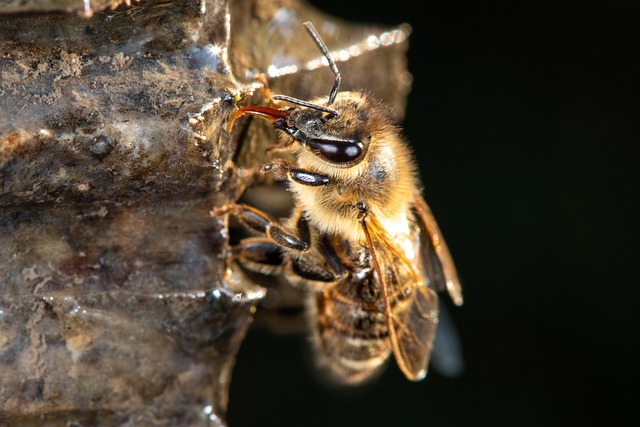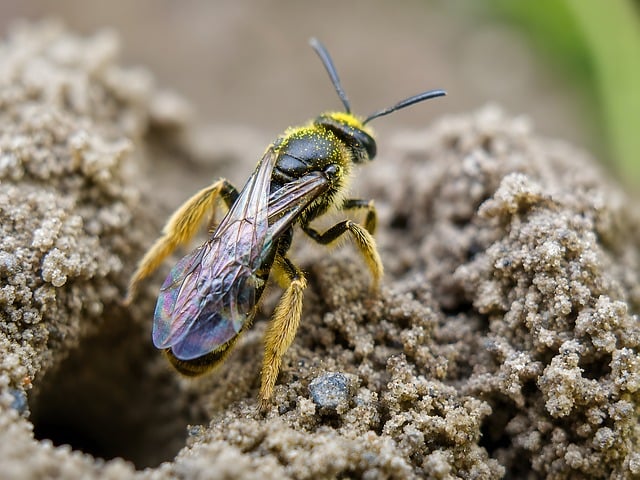
Female sweat bees face one of the most consequential decisions of their lives shortly after reaching adulthood: stay home and help raise siblings, or leave and start a family of their own. New research shows that the queen mother plays a direct chemical role in shaping that choice.
Scientists from the Smithsonian Tropical Research Institute and Princeton University identified for the first time that queens of the species Megalopta genalis use pheromones to signal to their daughters that staying in the nest is a worthwhile investment. The study was published in the Proceedings of the Royal Society B.
According to Phys.org, the research was conducted on Barro Colorado Island in the Panama Canal, where researchers placed hundreds of artificial nests in the bees' natural habitat over multiple years. They marked individual bees and recorded video of their behavior to track whether daughters stayed as workers, took over the nest from their mother, or left to reproduce elsewhere.
Postdoctoral fellow Callum Kingwell, who led the field work alongside STRI staff scientist Bill Wcislo, explained what drew the team to this question. "We are interested in the evolution of cooperation, and in this case, how sweat bees decide whether cooperation is worthwhile," Kingwell said. "Our observations provide a rare window into how insect societies may first evolve."
To find out whether chemical signals influenced the daughters' decisions, the team analyzed chemicals collected directly from the bees' bodies. They used gas chromatography coupled with mass spectrometry, two techniques that can identify and measure individual chemical compounds with precision.
The researchers found that queen pheromones work in two distinct ways. During a critical developmental window, rising pheromone levels in the queen suppressed ovarian development in her daughters, making them less likely to reproduce on their own. At the same time, higher pheromone levels appeared to signal that the queen was reproductively healthy, which made daughters more likely to stay and invest in the colony.
Kingwell pointed out what made the approach unusual for this kind of research. "A particularly novel aspect of this study was performing chemical analyses directly on Barro Colorado Island and repeatedly sampling live bees, allowing us to track chemical signaling in the same free-living individual bees throughout their lives," he said.
That repeated sampling of the same individual bees over time gave the team a clearer picture of how pheromone levels shifted alongside behavioral choices, rather than relying on snapshots from different individuals.
The findings add to a growing body of work on how cooperation first took hold in insect societies. Sweat bees like Megalopta genalis sit at an interesting evolutionary position because their social behavior is relatively simple compared to honeybees or ants. Some colonies are fully social, while others are semi-social or even solitary. That variation makes them useful for studying the early stages of social organization, before cooperation became locked in by evolution.