

Nature has spent billions of years refining solutions to engineering problems that humans are only beginning to tackle. Now, researchers across the globe are turning to the natural world for inspiration — and the results are stunning. A team at the Hong Kong University of Science and Technology has solved a decades-old mystery about how mussels glue themselves to rocks in under 30 seconds, while a Texas A&M professor is training the next generation of engineers to think like nature itself.
The HKUST breakthrough, published in Nature Communications, used large-scale molecular simulations to reveal why mussels can accomplish liquid-liquid phase separation — the molecular self-assembly process behind their adhesive — at speeds that dwarf anything achievable in a conventional lab. By mimicking nature's "flux pathway," where molecules mix at a target spot, the researchers found that assembly follows a power law of t^(2/3), far faster than the t^(1/3) predicted by classical theory. The practical difference is jaw-dropping: forming a half-centimeter adhesive droplet takes about 10 seconds using nature's method, compared to an estimated 47 years using standard laboratory techniques.
"Nature has been our ultimate inspiration," said Prof. Chen Shensheng, co-corresponding author of the study. "The disconnect between the slow pace in experimental labs and the ultrafast assembly in marine life was a critical problem we had to solve." The findings could pave the way for instant biocompatible surgical glues that work on demand.
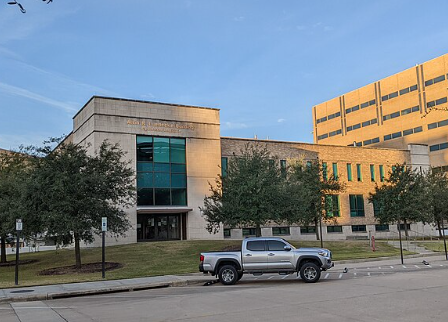
Meanwhile, at Texas A&M University, Dr. Charles Patrick is channeling the same philosophy into the classroom. His biomimicry course, detailed in the journal Biomedical Engineering Education, teaches biomedical engineering students to look to nature before reaching for a blank sheet of paper. The course uses scaffolded, inquiry-based learning — including hands-on exercises with LEGO sets — to build design competency throughout the semester. Patrick reported that students showed measurable gains in imagination competency and engagement.
"Nature has already optimized the energy and mechanics of processes while we're still struggling to make medical devices efficient," Patrick said. His department offers students three design frameworks, including the nature-inspired approach, a NASA space engineering framework, and a core biodesign model — all feeding into a capstone project where students work with companies on real devices.
The two efforts highlight a broader trend in science and engineering: the recognition that evolution has already prototyped many of the solutions researchers seek. Whether the goal is a surgical glue that sets in seconds or a wind turbine blade shaped like a whale fin, nature remains an unmatched engineer.