Fresh water is becoming one of the planet's most contested resources. With climate change intensifying droughts and population growth straining existing supplies, countries are increasingly turning to desalination — the process of stripping salt from seawater or brackish water — as a cornerstone of their water security strategies.
A new analysis from MIT Technology Review lays out the current state of desalination technology in hard numbers, underscoring just how rapidly the industry has expanded. Once considered prohibitively expensive and energy-hungry, desalination has benefited from decades of engineering improvements, particularly in reverse osmosis membranes, which force water through ultra-fine filters that block salt and other dissolved solids.
Today, more than 21,000 desalination plants operate in roughly 170 countries, collectively producing billions of gallons of fresh water every day. The Middle East remains the dominant market — Saudi Arabia and the United Arab Emirates alone account for a significant share of global capacity — but facilities are spreading to water-stressed regions in Africa, South Asia, and the American West.
Still, the technology faces real hurdles. Desalination remains far more energy-intensive than treating conventional freshwater sources, raising concerns about carbon emissions unless plants are powered by renewables. There is also the problem of brine, the hyper-salty waste byproduct that is typically discharged back into the ocean, potentially harming marine ecosystems.
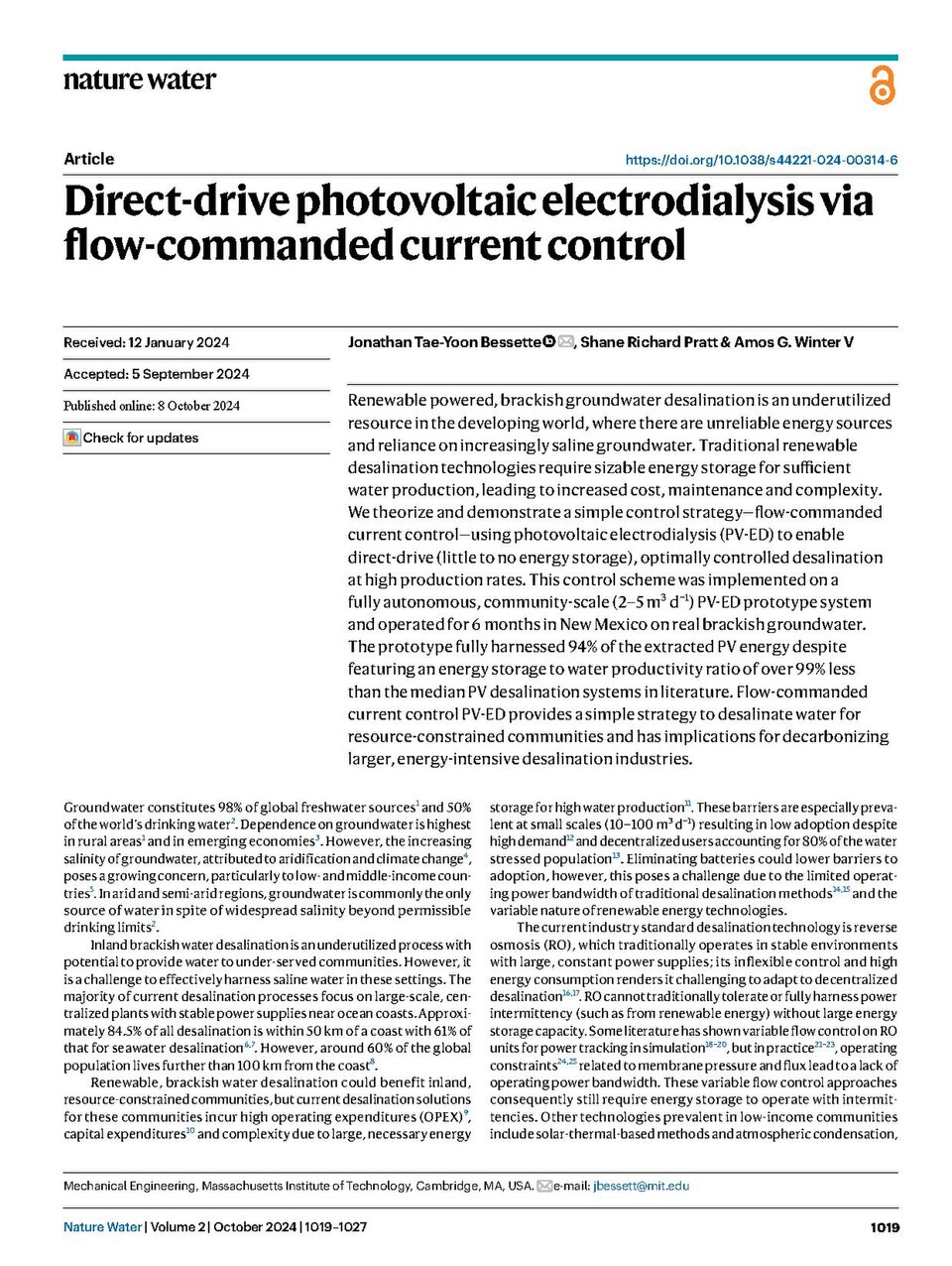
Researchers are working on next-generation approaches that could change the calculus. Solar-powered desalination, forward osmosis, and graphene-based membranes are all in various stages of development, each promising to reduce energy use or improve efficiency. As global demand for clean water accelerates, the race to make desalination cheaper, greener, and more accessible is becoming one of the defining engineering challenges of the decade.