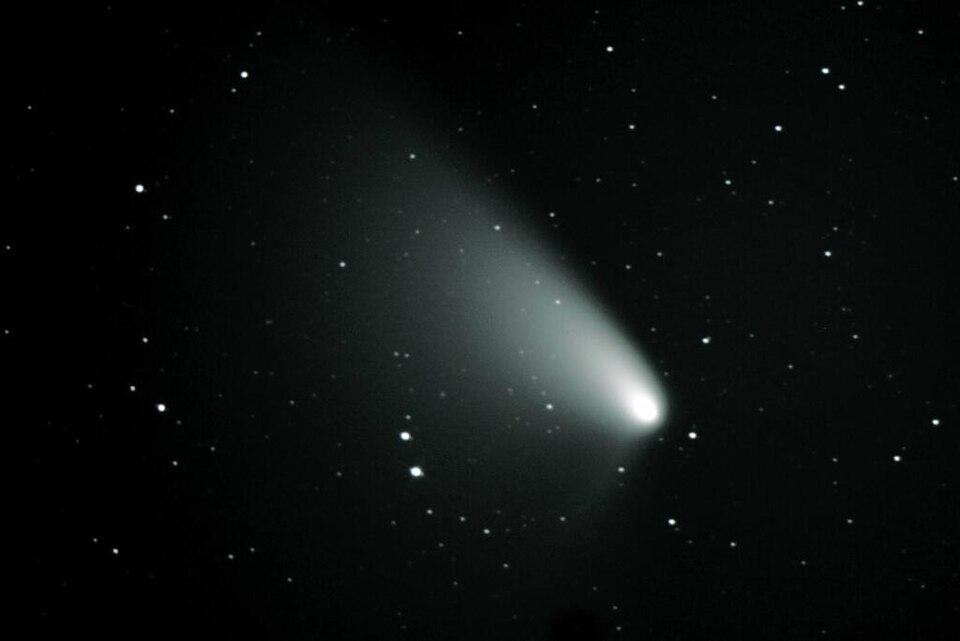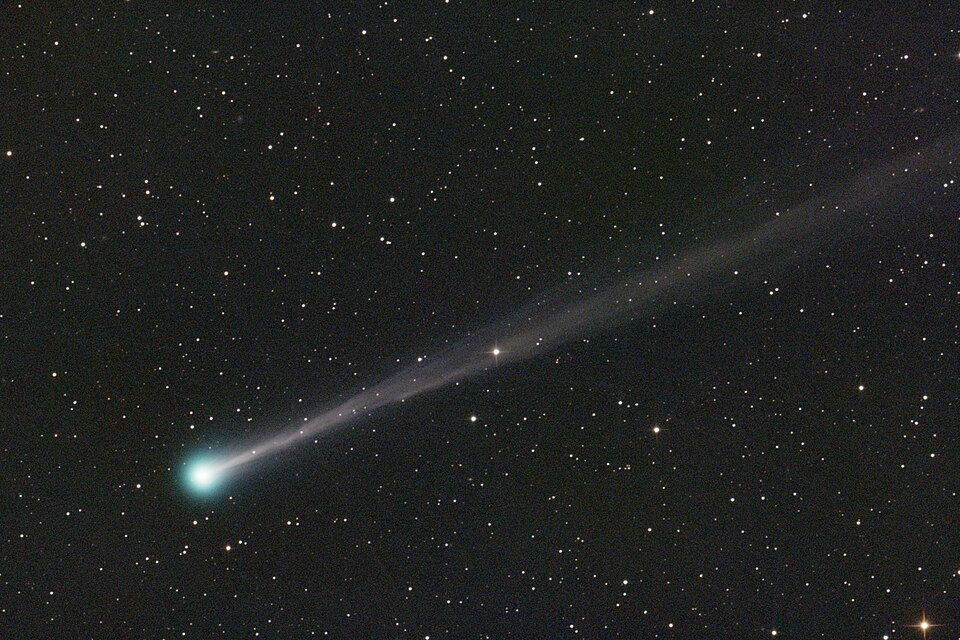
An incoming comet is giving early risers a reason to set their alarms this week, with the prospect of a rare naked-eye spectacle in the predawn sky.
Comet C/2025 R3 (PanSTARRS) has been steadily brightening as it barrels toward the sun, and observations in early April placed it at around magnitude 6 — right at the threshold of naked-eye visibility under very dark skies. According to Live Science, light-curve data from the Comet Observation database suggests it could brighten to approximately magnitude 4 in the coming weeks, making it far easier to spot without optical aids.
The comet arrives on the heels of disappointment. The unrelated Comet C/2026 A1 (MAPS) was vaporized when it flew just 100,700 miles from the sun, robbing skywatchers of what had been an eagerly anticipated display. PanSTARRS is considered far less likely to break up, though comet brightness remains notoriously unpredictable.
PanSTARRS will reach perihelion — its closest point to the sun — on April 20, passing within 47.4 million miles. That close encounter often supercharges a comet's activity, as surface ice sublimates into gas that glows brilliantly in solar radiation. The comet then swings closest to Earth on April 27, at roughly 44 million miles away.
For Northern Hemisphere observers, the prime viewing window is right now. From April 13 through April 15, the comet appears near the Great Square of Pegasus, sitting just above the eastern horizon about an hour before sunrise before drifting into Pisces. A new moon on April 17 will darken the skies just ahead of perihelion, creating ideal conditions. By late April, however, the comet may be partially washed out by the sun's glare even as it reaches peak brightness.
At the very least, a good pair of binoculars should reveal it — and that alone qualifies as a rare opportunity. Whether PanSTARRS becomes truly spectacular or merely a pleasant sight for dedicated comet hunters, this is the month to look up.