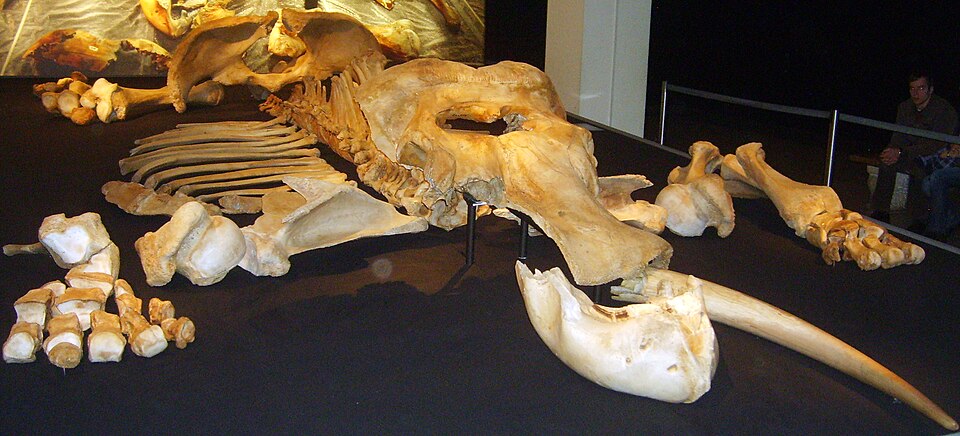
In the attic of a small museum in Verden, Germany, a truckload of mismatched cardboard boxes sat largely forgotten for decades. Inside them were the remains of a 125,000-year-old straight-tusked elephant — and the key to one of archaeology's most tantalizing cold cases.
The bones were originally unearthed in 1948 at Lehringen, a hamlet where a mining operation stumbled upon an ancient lakebed. What made the find extraordinary was a 2.3-meter-long yew spear lodged between the elephant's ribs — the only weapon ever found embedded in the skeleton of an extinct species. Since Neanderthals were the sole humans in Europe at the time, the discovery should have been paradigm-shifting proof that they hunted large game. Instead, it fell into obscurity.
The problems began immediately. As New Scientist reports, the excavation was led by Alexander Rosenbrock, a local school principal and amateur archaeologist who arrived at the site only after miners had already removed about half the bones. He had no camera and failed to sketch the positions of the bones and spear. A seven-year legal battle over ownership followed. Rosenbrock won the right to keep the finds in Verden but died in the 1950s before publishing his work. Over the next 75 years, doubts grew. Were the spear and bones found together only by coincidence? Researchers who accessed the collection twice assumed the bones had already been checked for butchery marks and came away empty-handed.
That changed in 2025, when Ivo Verheijen, a bones expert based at the Schöningen Research Museum — located near one of Europe's most important Paleolithic dig sites — finally took a fresh look at the Lehringen collection. He had been told to expect a couple of boxes. What he found was far more. The Schöningen site itself has yielded 10 spears roughly 300,000 years old, and together with the Lehringen spear and a fragment from Clacton-on-Sea in England, these represent the only definitively identified spears from the entire Paleolithic Age, a period spanning more than three million years.
The reexamination of the Lehringen finds promises to resolve longstanding debates about Neanderthal capabilities. If butchery marks or other evidence of intentional hunting are confirmed on the elephant bones, it would firmly establish that Neanderthals organized complex, coordinated hunts of the largest animals in their environment — a feat requiring planning, communication, and sophisticated weapon use that rivals anything attributed to early modern humans.