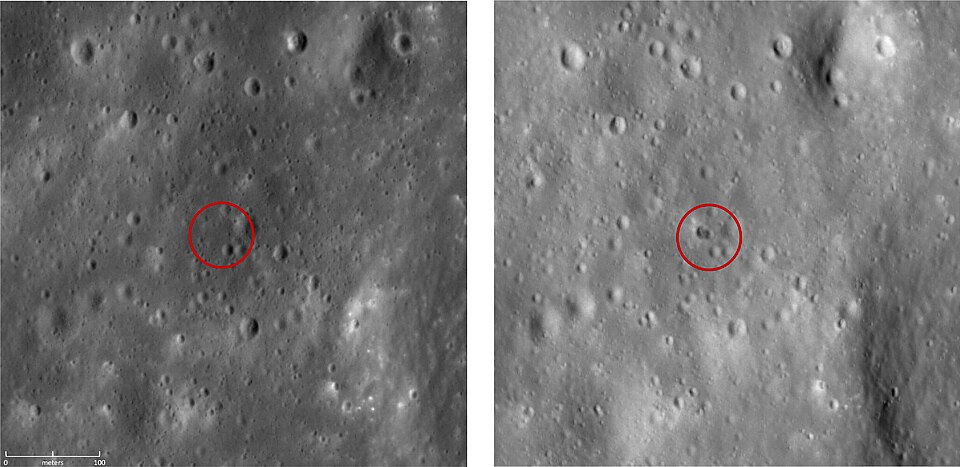
The Moon may look frozen in time, but it is still being reshaped. Scientists have identified a fresh crater roughly 22 meters wide — about the size of a large house — by comparing images captured by the Lunar Reconnaissance Orbiter Camera at different dates. Nobody witnessed the impact. By examining photos taken before December 2009 and after December 2012, researchers were able to narrow down when it occurred, according to Science Daily.
What makes the crater particularly eye-catching is its brightness. The collision blasted material outward for tens of meters, forming vivid rays that spread in a sunburst pattern across the darker lunar surface. This freshly exposed material is far lighter than the surrounding regolith, which has been darkened over eons by a relentless process called space weathering — the combined effects of solar wind, micrometeorite bombardment, and cosmic radiation.
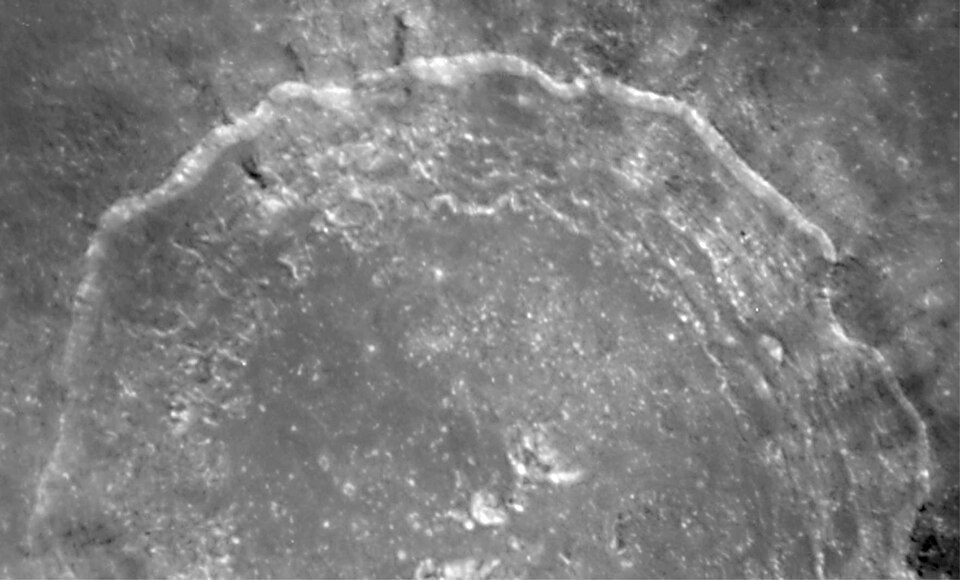
That brilliance is temporary. Over thousands to millions of years, the bright rays will gradually fade and blend into the older landscape. The same process explains why ancient craters appear uniformly dull, while relatively young features like the crater Tycho, formed about 108 million years ago, still display prominent streaks visible from Earth with a modest telescope.
The discovery is more than a curiosity. Cataloging fresh impacts helps scientists refine estimates of how often objects strike the Moon, a question with real consequences for spacecraft safety and the planning of future crewed missions. It also sharpens the tools researchers use to date different regions of the lunar surface, improving our understanding of the Moon's geological history. In a landscape billions of years old, even a small new scar can carry outsized scientific value.