Mars exploration has always been a slow, painstaking affair. Communication delays between Earth and the Red Planet can stretch from four to 22 minutes each way, and rovers must conserve energy while creeping across treacherous terrain. Most travel only a few hundred meters per day. But a new approach using a walking, semi-autonomous robot could dramatically change the pace of discovery.
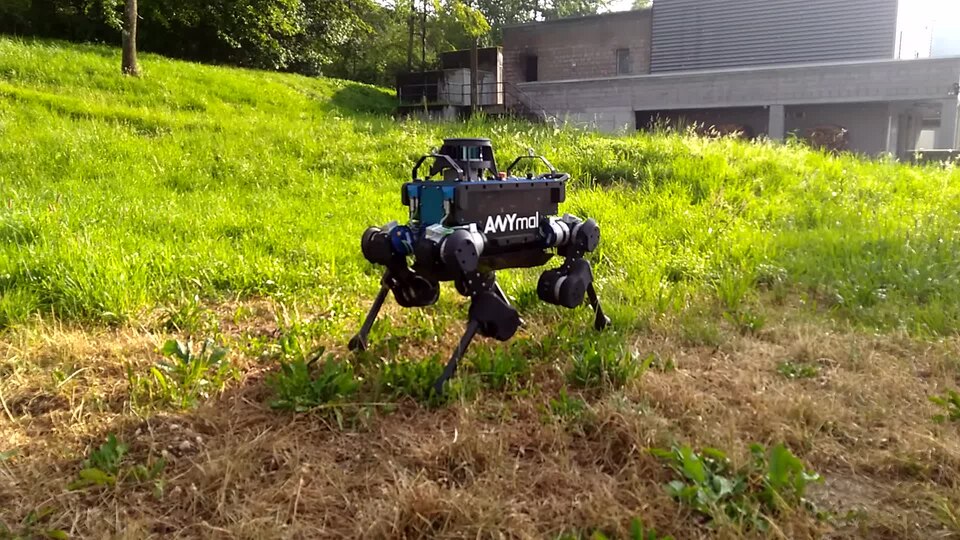
Researchers tested a four-legged robot called ANYmal, equipping it with a robotic arm, a microscopic imager, and a portable Raman spectrometer. Rather than waiting for step-by-step instructions from human operators, the robot moved independently from rock to rock, analyzing each one on its own. According to Science Daily, the system completed exploration missions up to three times faster than conventional methods while still accurately identifying geologically important targets.
The experiments took place at the University of Basel's "Marslabor," a facility designed to simulate planetary surface conditions with analogue rocks and regolith materials. The project brought together teams from ETH Zurich, the University of Zurich, and the University of Bern. Their central question was straightforward: could a robot carrying relatively simple instruments still produce meaningful science while working quickly? The answer was yes.
Even with compact tools, the robot successfully identified rocks relevant to astrobiology and resource exploration — the two primary goals of future Mars surface missions. The ability to scan multiple targets in sequence, without pausing for human approval at each step, represents a fundamental shift in how planetary science could be conducted.
The stakes are high. Finding biosignatures — physical or chemical evidence of life — requires examining large numbers of rocks across diverse terrain. A robot that can cover more ground independently doesn't just save time. It dramatically increases the odds of finding something worth discovering.