The massive system of ocean currents that keeps western Europe warm is weakening at an alarming rate, according to the most comprehensive direct measurements to date. The Atlantic Meridional Overturning Circulation — a conveyor belt that carries warm, salty water from the Gulf of Mexico northward before it cools, sinks, and flows back south along the ocean floor — has declined by roughly 10 percent between 2004 and 2023.
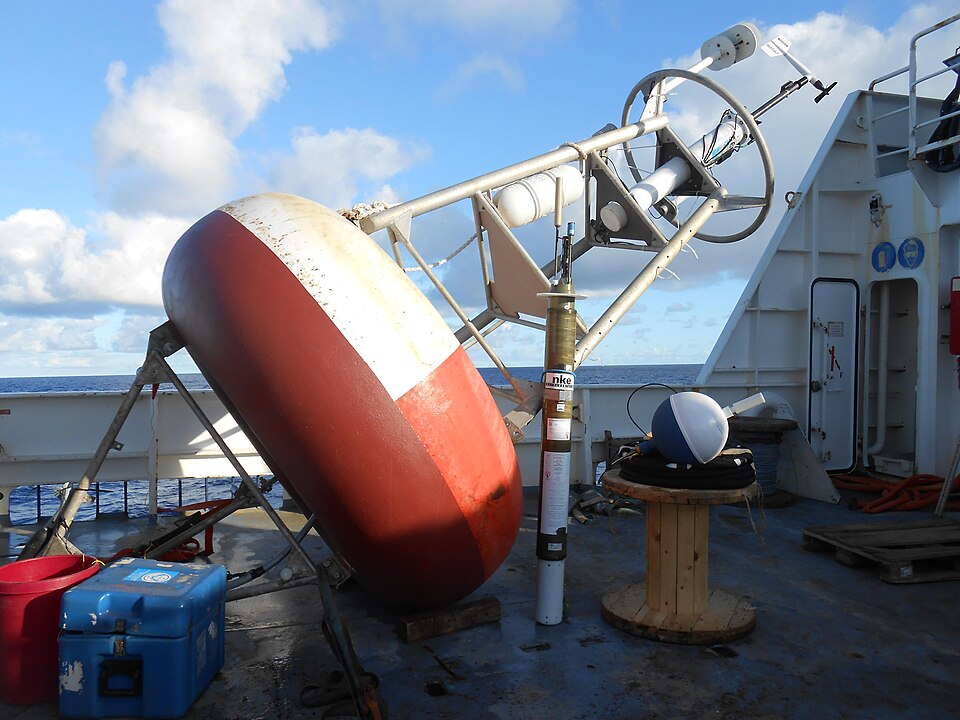
The finding, reported by New Scientist, comes from a study led by Qianjiang Xing at the University of Miami that analyzed data from multiple mooring arrays positioned across the western Atlantic. The flagship array, called RAPID-MOCHA, stretches from the Bahamas to the Canary Islands and has been tracking temperature, salinity, and water velocity since 2004. The new analysis shows the AMOC's flow is declining by about 90,000 cubic meters of water per second each year — a faster rate than previously observed.
Because the uncertainty in the RAPID-MOCHA measurements is nearly as large as the detected change itself, Xing's team bolstered the case by examining pressure data from three additional mooring arrays off the West Indies, the U.S. East Coast, and Nova Scotia. At those locations, they found even greater weakening, with much less uncertainty. "The Atlantic circulation is weakening at the western boundary, and we use multiple latitudes of the basin array data to confirm such a signal is consistent across the wider north Atlantic," Xing said.
Stefan Rahmstorf at the University of Potsdam in Germany, who was not involved in the research, called it "the strongest direct observational evidence so far" that the AMOC is weakening — something climate models have long predicted. Earlier analysis of historical ocean temperature readings had already suggested the circulation weakened by 15 percent since 1950, but direct measurements have only been available for about two decades, making it difficult to draw firm conclusions until now.
Scientists believe the culprit is freshwater pouring into the North Atlantic from the melting Greenland ice sheet, which dilutes the dense, salty water that normally sinks and drives the circulation. A shutdown of the AMOC would have profound consequences for weather patterns across Europe, disrupting the mild temperatures the continent has long enjoyed and potentially triggering dramatic shifts in rainfall and storm systems worldwide. The question now facing researchers is not whether the current is slowing, but how quickly — and whether a tipping point lies closer than anyone expected.