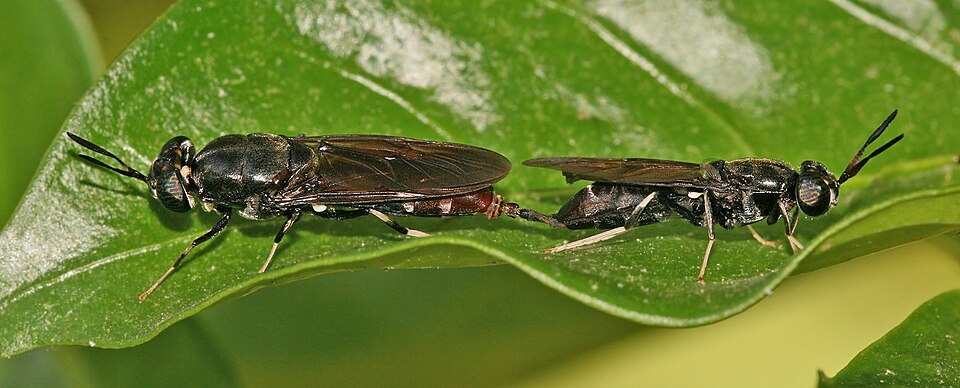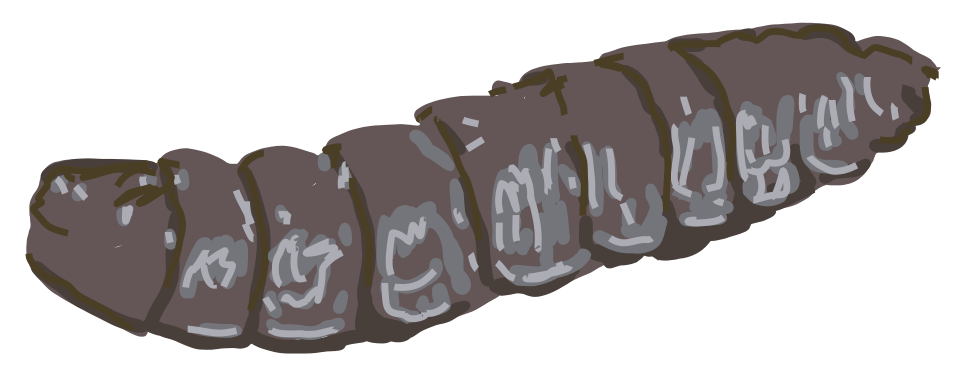
Canada geese leave behind large amounts of fecal waste in urban parks and sports fields every year, fouling public spaces and damaging local ecosystems. A new study from Concordia University suggests that waste could be redirected into agricultural supply chains as protein and fertilizer, using an insect already common in industrial food production.
Researchers tested whether black soldier fly larvae could develop on goose feces collected from 11 urban sites in southern Quebec and Ontario. The study, published in the Journal of Environmental Management, first confirmed a direct link between flock size and the volume of droppings left behind, establishing that these bird populations can rapidly contaminate public greenspace.
The larvae were then raised on three diets: a standard agricultural mixture of wheat bran, alfalfa, and corn meal; a 50-50 blend of that mixture with goose feces; and feces alone. All three diets sustained the insects, but with clear differences in performance.
Larvae on the mixed diet grew fastest, survived at higher rates, and reduced waste most efficiently. Those fed only feces developed more slowly and produced smaller adults. Even so, they consumed more than half of the available droppings. That figure matters for any practical application of the method, since it shows the process can function even without supplemental feed.
A separate trial compared larvae raised on raw feces against larvae raised on feces that had been sterilized with heat and pressure. The sterilized group performed worse across nearly every measure, suggesting that microorganisms naturally present in goose droppings may benefit larval development.
The research was led by Rassim Khelifa, an assistant professor in Concordia's Department of Biology, who said the goal was to determine whether a widely harvested insect could transform a common urban waste stream into something economically useful. The answer from the data, he said, is yes.