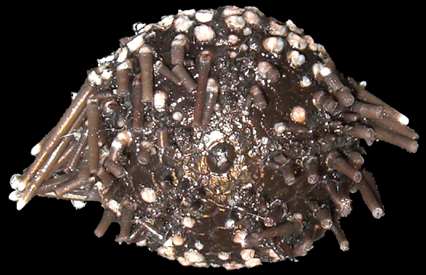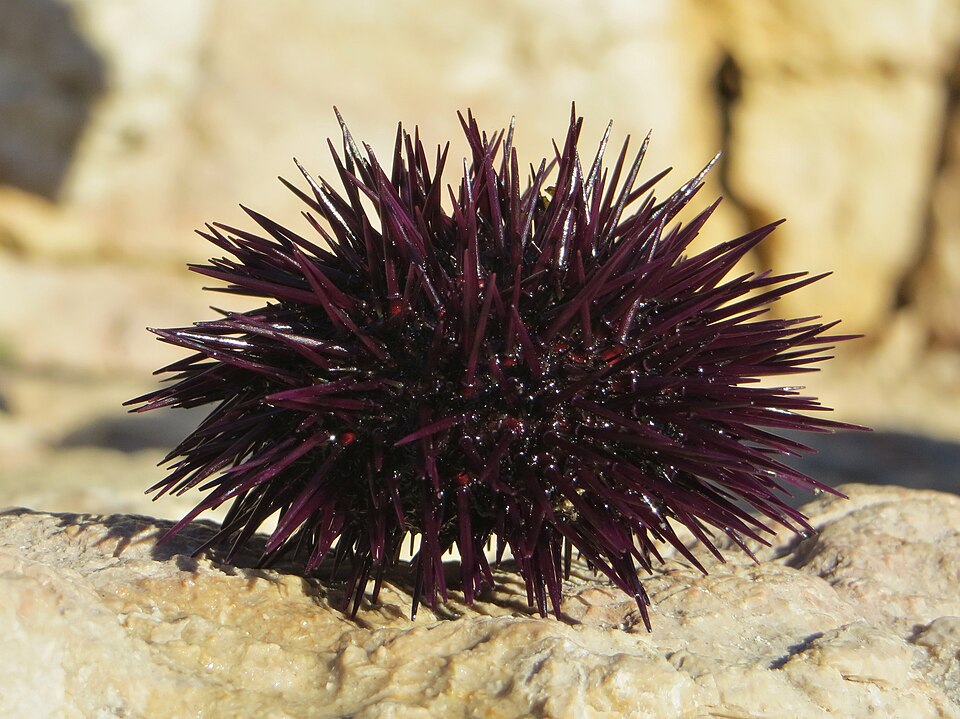
Sea urchin eggs have been found to incorporate components from plant and algae organelles called chromoplasts, a discovery that researchers say represents a previously unknown form of interaction between species and marks the first time plastid DNA has been detected inside an animal's germ cells.
The finding comes from a team at Kiel University and the GEOMAR Helmholtz Center for Ocean Research Kiel, working alongside colleagues from Spain and the United States. Their study, published in PLOS Biology, focused on the sea urchin species Arbacia lixula.
The researchers originally set out to investigate something more familiar: whether photosynthetic cyanobacteria living near sea urchin eggs might support larval development through photosynthesis. Marine larvae face a difficult start. Eggs released into open water are given only a fraction of the energy they need to survive. The rest must come from filtering food like phytoplankton from the surrounding water. Most potential offspring die before reaching maturity.
"We initially wondered whether these microorganisms could support larval development through their ability to perform photosynthesis," said Dr. Tyler Carrier, who led the research team and is now at the University of North Carolina at Charlotte.
When the team analyzed genetic material from sea urchin eggs, they did find what looked like foreign DNA tied to photosynthesis. But the sequences turned out not to be from bacteria. They came from plastids, the cellular structures found in plants and algae that are derived from chloroplasts.
Using microbiome sequencing and microscopic analysis, the team confirmed that sea urchin eggs were integrating specific components of chromoplasts, a type of plastid responsible for producing pigments. More specifically, the eggs were taking in carotenoid crystals, the same class of compounds that give carrots their orange color and are found widely across the plant kingdom.
Those carotenoid crystals, the researchers found experimentally, made the larvae more viable. The team believes this boost in survival may help explain the wide geographic distribution of Arbacia lixula across the Atlantic Ocean.
The discovery is notable for several reasons. Plastids are organelles with their own DNA, inherited from ancient photosynthetic bacteria that were absorbed by early eukaryotic cells over a billion years ago. Finding their genetic material inside animal reproductive cells is new territory. It suggests that the boundary between plant and animal biology, at the cellular level, may be more porous than previously understood.
Carrier and his colleagues worked under Professor Ute Hentschel Humeida at GEOMAR as part of the CRC 1182 collaborative research center in Kiel, with additional contributions from researchers at the University of La Laguna in the Canary Islands and the University of California San Diego.