Antonio has spent seven years running toward fires in the Brazilian Amazon. As a firefighter inside the Chico Mendes Extractive Reserve since 2019, he has watched one of the most biodiverse places on Earth change in ways that alarm him. "2024 was the most extreme year for fires," he said. "I had never seen anything like it. The forest burned like dry pasture."
What he witnessed matches the findings of a new study led by the University of Cambridge, published in the Proceedings of the National Academy of Sciences. The research concludes that policies which successfully reduced deforestation in Brazil over the past two decades have largely failed to address a different and potentially more dangerous problem: forest degradation.
Deforestation and degradation are not the same thing, and that distinction matters enormously. Deforestation removes trees entirely, clearing land for farming or infrastructure. Degradation is subtler. The trees remain standing, but the forest has been so damaged by fire, illegal logging, fragmentation, drought and over-hunting that it has lost most of its ecological function. The forest floor dries out, shade disappears, and the remaining vegetation becomes highly flammable.
"There's still a forest there, but it's so damaged that the carbon it once stored starts leaking, the animals have disappeared, and new grass species colonize the forest edges," said lead author Federico Cammelli from Cambridge's Department of Geography and Conservation Research Institute. "Tropical forest fires are low intensity, flames often go undetected under the canopy, but after one or two years, trees die while standing, and the forest transforms into a cemetery of dead standing trees."
Brazil's record on deforestation itself is genuinely significant. The first phase of the government's Plan for Prevention and Control of Deforestation in the Amazon, launched in the mid-2000s, cut tree clearing by an estimated 60 to 80 percent. Private sector agreements, including a moratorium on soybeans grown on deforested land and commitments from meat packers not to source cattle from newly cleared areas, reinforced those gains. By conventional measures, the country made real progress.
But the researchers examined four major anti-deforestation policies across three Brazilian states and found that none of them reduced degradation. When deforestation slows, some degradation slows with it, but the relationship is weak and incomplete. Degradation has its own drivers that standard forest protection policy does not reach.
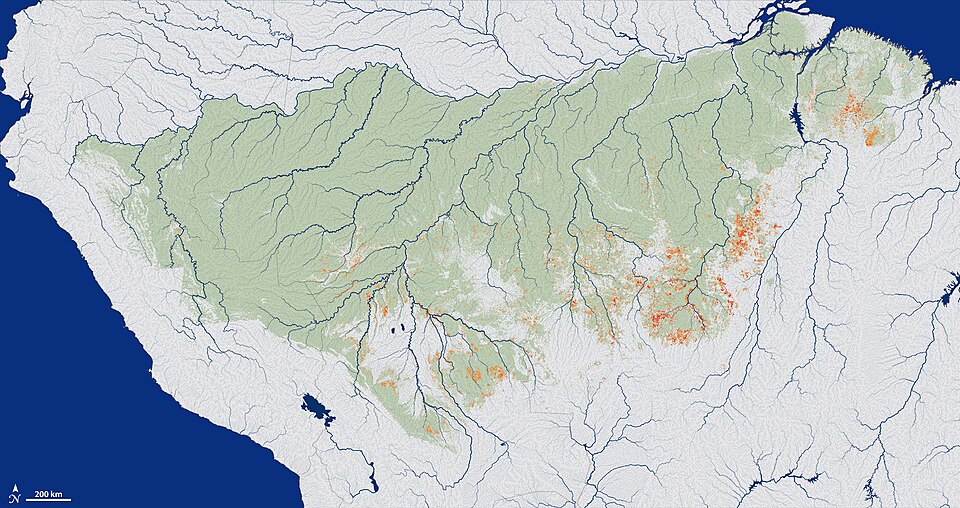
The numbers behind that gap are stark. Earlier research found that between 2001 and 2018, net carbon emissions from forest degradation in the Brazilian Amazon were comparable to, and in some periods higher than, emissions from deforestation itself. If current trends continue, degradation could affect the entire Brazilian Amazon by 2050. Yet it has barely featured in the policies designed to protect the forest.
The study points to a significant blind spot in how both governments and international climate frameworks measure and respond to forest loss. Satellite monitoring and policy enforcement have been calibrated primarily to detect cleared land. Degraded forests, which still register as green from above, largely escape that scrutiny, even as they release carbon and collapse biodiversity at rates that rival outright clearing.