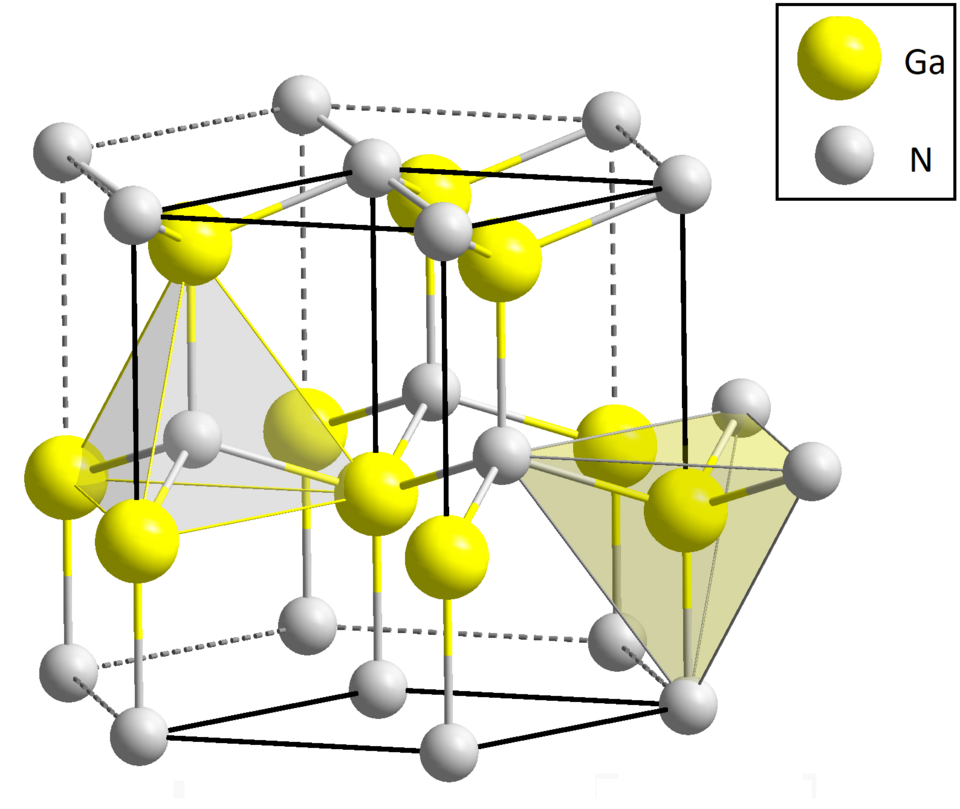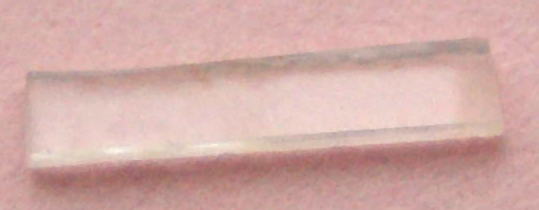
Physicists have long known that gallium nitride, the semiconductor at the heart of blue LEDs, can change its optical properties when chemically altered. A team at the University of Hong Kong has now shown it can do the same thing with nothing but mechanical force.
By stretching tiny bridge-like structures of single-crystalline GaN, researchers shifted the material's light emission from ultraviolet to visible blue without adding or removing a single atom. The work was published in the journal Physical Review X.
Led by Professor Yang Lu from the Department of Mechanical Engineering, the team used micro-nano processing technology to fabricate the GaN into microscale bridge shapes. When those bridges were stretched, the material achieved elastic deformation of up to 6.8%, withstanding a tensile strength of roughly 11 GPa. For a crystalline semiconductor, that is a remarkable degree of flex without fracturing.
The critical optical shift happened at 3.9% strain. At that point, researchers watching in real time through a cathodoluminescence system saw the emission color change. The material's bandgap, which determines what wavelengths of light it emits, dropped continuously from 3.41 electron volts down to 3.08 eV. The emitted wavelength moved out of the ultraviolet region and into visible blue light. Under maximum strain, the bandgap fell further to 2.96 eV, shifting the emission from roughly 365 nanometers to 420 nanometers.
What makes this more than a laboratory curiosity is what happens when the stretching stops. Release the force, and the material springs back to its original shape. The emission color reverts to ultraviolet. The entire process is fully reversible, which opens the door to devices that can switch or tune their light output dynamically, simply by applying or removing mechanical strain.
That is a significant departure from how engineers currently control GaN's optical behavior. The Nobel Prize in Physics 2014 was awarded for the development of blue LEDs using GaN, and for decades, the standard method for tuning what color that material emits has involved doping it with different chemical elements, a permanent change baked into the manufacturing process. Once the chemistry is set, the emission characteristics are fixed.
This research introduces a different paradigm. Rather than altering what the material is made of, engineers could alter what it is doing. A device under mechanical tension emits blue light. Relax the tension, and it emits ultraviolet. The implications reach beyond displays. The team noted potential applications in power transistors, radio frequency components, and optoelectronic devices, areas where GaN is already widely used.
To demonstrate practical potential, the researchers also designed and built a mechanically strain-fixed GaN device using a push-to-pull structure, locking in tensile strain to produce a stable blue emission without requiring continuous external force. That step moves the concept closer to something that could be integrated into real hardware.
The work adds to a growing body of research in what scientists call "deep strain engineering," the idea that mechanical deformation alone can serve as a design tool for tuning a material's electronic and optical properties. For semiconductors like GaN, which are already central to modern lighting, communications, and power electronics, the ability to dial in those properties mechanically rather than chemically could offer manufacturers a new lever of control.