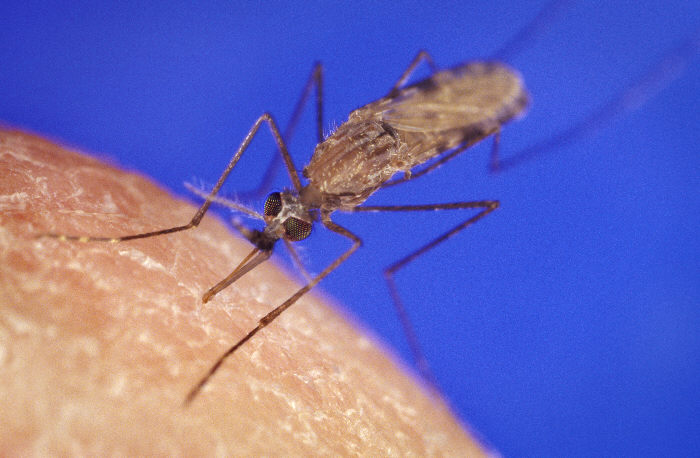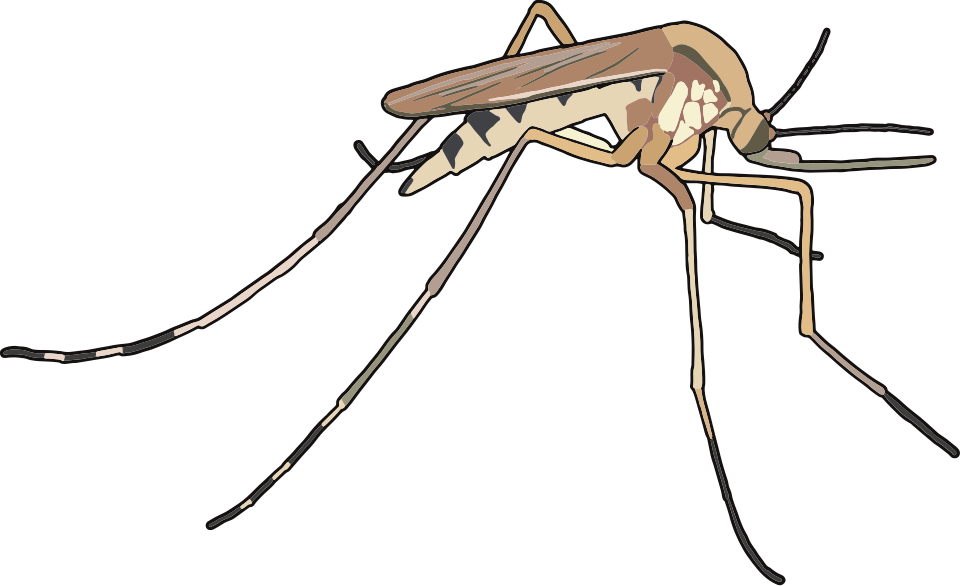
Prehistoric humans appear to have deliberately avoided regions with high malaria risk for at least 70,000 years, according to a study published April 22 in the journal Science Advances. The finding challenges a long-standing assumption that infectious disease only became a serious problem for human populations after farming took hold.
Researchers analyzed existing climate and environmental models to reconstruct where malaria was likely prevalent across sub-Saharan Africa over the past 74,000 years. They calculated a "malaria stability index" at intervals of 1,000 to 2,000 years, based on epidemiological data and the likelihood that a given area supported populations of Anopheles mosquitoes, whose bites transmit the malaria-causing parasite Plasmodium falciparum. They then compared those maps to records of early human settlements.
The pattern was striking. Prehistoric hunter-gatherers consistently avoided high-risk malaria zones, and this behavior had shaped human population structures by at least 13,000 years ago, several thousand years before the introduction of farming to the region.
"For a long time, it was thought that infectious diseases only really became a problem with the advent of farming, and this was particularly true of malaria," said co-author Eleanor Scerri, an archaeological scientist at the Max Planck Institute of Geoanthropology in Germany. The new results upend that view.
Co-author Andrea Manica, an evolutionary ecologist at the University of Cambridge, put it plainly: malaria "was already a bit of a problem before agriculture." He added that it likely worsened considerably once people settled in large, dense communities as a result of food production, creating better conditions for mosquito breeding and disease transmission.
The implications extend beyond ancient history. Farming in sub-Saharan Africa became widespread between roughly 3000 and 1000 B.C. Before that, the study suggests, early humans were already making movement decisions that factored in disease risk, even without any understanding of germ theory or mosquito biology. The avoidance behavior was likely driven by lived experience of illness and death in certain landscapes.
Scerri said the broader message of the research is that disease must be treated as a major force in shaping human prehistory. "Our work shows that we can no longer ignore diseases in the deep human past," she said. "They don't just have a small effect, they have, in the case of malaria at least, transformative impacts that have helped to shape who humans are today."
The findings open a new line of inquiry for archaeologists and evolutionary scientists: if malaria drove movement patterns for tens of thousands of years, what other diseases may have done the same?