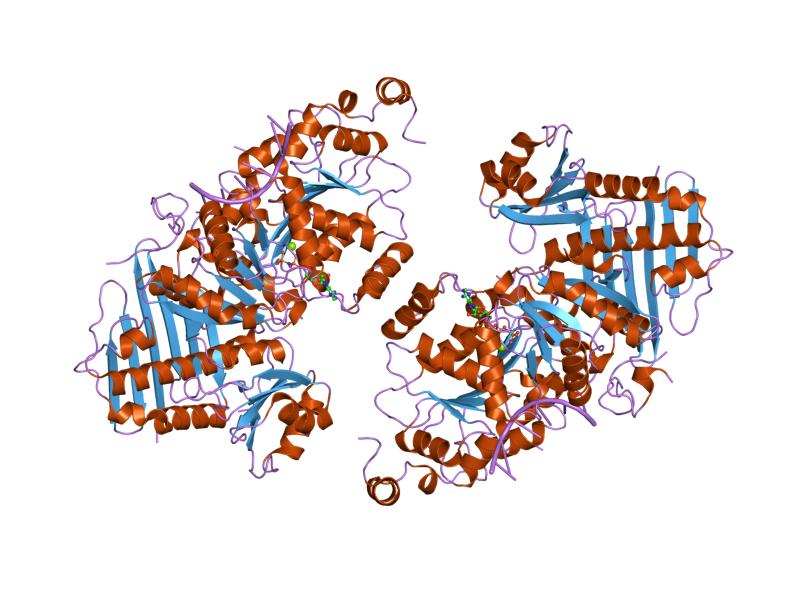
Inside every cell in the human body, a class of tiny molecular machines constantly patrols for damaged or tangled proteins, unraveling them before they can cause harm. For decades, scientists knew these machines existed but could not fully explain how they worked. A new study from the Weizmann Institute of Science has now cracked that mechanism, and the findings could eventually help explain why the system breaks down in diseases like cancer and neurodegeneration.
The machines belong to the AAA+ family, found in the cells of virtually all living organisms, from bacteria to humans. Each consists of six protein subunits arranged in a ring, forming a central channel. When a protein chain in the cell misfolds or becomes tangled, the AAA+ machine threads it through this channel to unravel it. The question researchers struggled to answer was: what force actually pulls the protein through?
The dominant theory had been a "hand-over-hand" mechanism, in which the machine uses repeated bursts of energy to thrust individual subunits forward, grasp the protein chain, and drag it through in steps. But this model never fully aligned with the available biophysical evidence.
To resolve the question, a team led by Dr. Remi Casier in the laboratory of Professor Gilad Haran at the Weizmann Institute developed a method to watch the process live, rather than relying on frozen structural snapshots taken under electron microscopes. They attached fluorescent sensors to casein, a protein found in milk, and to the AAA+ machine that processes it. A green sensor went on the casein, an orange sensor on the machine's entrance, and a red sensor at its exit.
The sensors worked by transferring energy to each other as the protein moved through the channel. When the casein was far from the machine, only green light appeared. As it passed through the entrance, orange lit up. As it emerged from the exit, red appeared. By measuring the intensity of each color at any given moment, the researchers could track the protein's exact location in real time.
The results, published in Nature Communications, revealed a mechanism that the researchers compared to a revolving door combined with a highly efficient engine, replacing the older hand-over-hand model with a more nuanced picture of how force is generated and applied at the molecular scale.
Understanding this process matters well beyond basic biology. When the cell's protein quality control fails, misfolded proteins can accumulate and form the kinds of aggregates associated with Alzheimer's disease, Parkinson's disease, and certain cancers. Knowing precisely how the AAA+ machines work, and how they might fail, could point toward new therapeutic targets. The Weizmann team also suggests their findings could inspire the design of artificial molecular machines engineered for similarly efficient mechanical work.