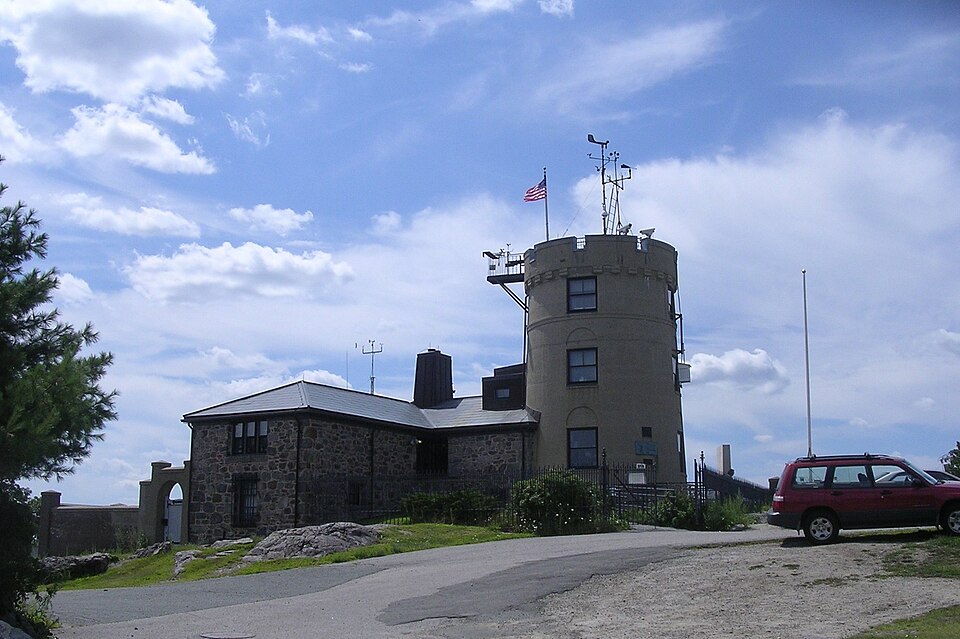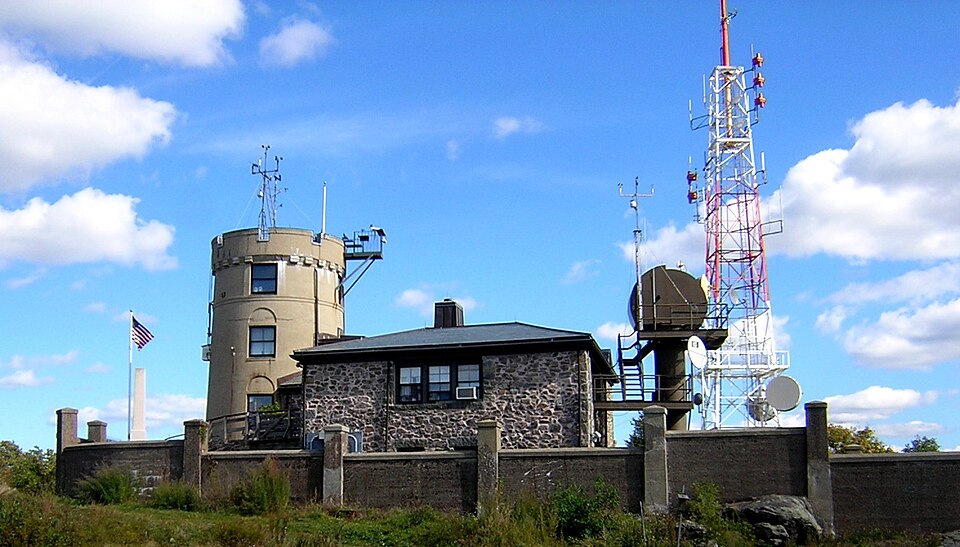
Every morning at Blue Hill Observatory, chief weather observer Matthew Douglas climbs a staircase to the roof of a hilltop tower and checks a heavy glass ball mounted in a metal cradle. The sphere burns a streak into a paper strip each day, recording hours of bright sunshine. It is a routine he has followed since 1997, and the observatory has followed since 1885.
Blue Hill, located 15 miles south of Boston, is the nation's oldest continually operating weather observatory. For 141 years, staff and volunteers have taken daily measurements of temperature, humidity, precipitation, wind, and sunlight using instruments that have remained largely unchanged. The same mercury and alcohol thermometers, the same human-hair hygrometers that detect moisture by the stretch of a strand of hair, the same glass sunshine recorder on the roof.
"My routine is the same every day," Douglas said. "The most thing that changes are the numbers and the weather itself."
That consistency is precisely the point. Keeping identical instruments in the same location over more than a century means that any change detected in the data reflects actual shifts in the climate, not artifacts introduced by switching to new equipment. Douglas described having a "tried and true database" as essential for climate research. If the thermometers changed, scientists could not be certain whether a temperature trend was real or simply a product of measuring differently than before.
Most American weather observatories, including those affiliated with the National Oceanic and Atmospheric Administration, moved to automated digital systems beginning in the 1990s. Blue Hill has not. The observatory sends a daily summary of its observations to the National Weather Service, which chief scientist Michael Iacono said may contribute to weather forecasts in some circumstances, along with monthly summaries to the National Centers for Environmental Information.
Similar manual methods are still used by volunteer networks across the country that supply data to the National Weather Service, but institutions like Blue Hill that have maintained uninterrupted manual records over more than a century are rare.
The observatory has also taken on an educational role. Its location and analog instruments make climate change visible and tangible to visitors in a way that automated systems cannot. Executive director Alex Evans said Blue Hill's work connects ordinary people to climate science directly, giving them a chance to see and understand the tools behind the data rather than receiving numbers from a remote sensor.
That mission has become more complicated in recent years. Since 2025, the Trump administration has overseen budget cuts and layoffs at federal weather and climate institutions, including agencies within NOAA. Blue Hill, as a private nonprofit, was insulated from those cuts. But Evans said funding opportunities remain limited in the current political environment, and the observatory's continued operation is not guaranteed.
The record Blue Hill holds is difficult to replace. A gap in the data, even a short one, would break a continuous 141-year thread that scientists rely on to distinguish long-term climate trends from year-to-year variation. That thread runs back to Grover Cleveland's first term as president, through two world wars, through the rise and fall of dozens of weather technologies, and up to this morning, when Douglas climbed through a hatch to check a burn mark on a strip of paper.