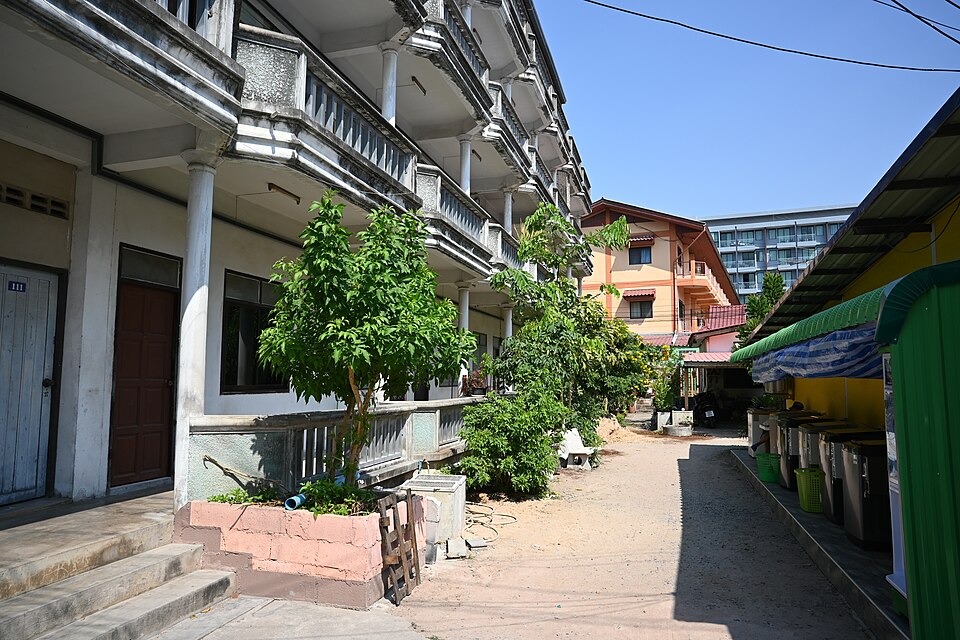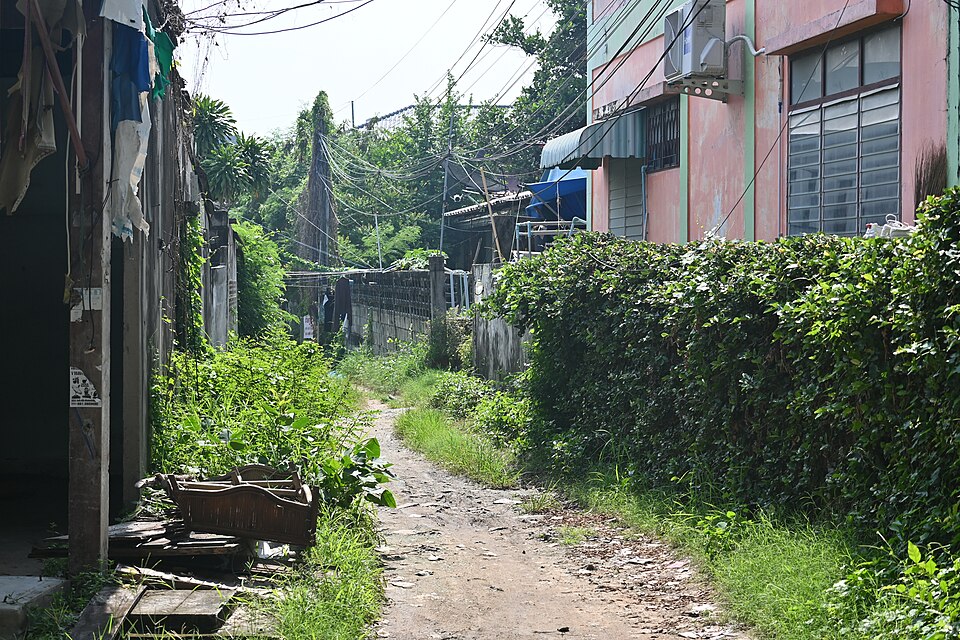
Green alleys are spreading across North American cities as a low-cost way to reclaim underused urban space. But a new study from Concordia University finds that not all green alleys deliver the same results, and the difference often comes down to who designed them and why.
The study, published in the journal Ecosystems and People, analyzed 53 green alleys across Montreal and Trois-Rivières, Quebec, comparing them to 23 conventional paved alleys and 76 nearby street segments. Researchers spent the summer of 2023 collecting on-the-ground data and interviewing residents.
The term "green alley" itself turned out to be slippery. In Montreal, where alley greening is largely resident-led, the label can describe almost anything. "A green alley can mean setting up a play area for children, or adding murals, or ripping up all the concrete and planting trees," said Isabella Richmond, who led the study as part of her Ph.D. at Concordia. The result is a wide spectrum of outcomes, with tree numbers, canopy cover, and cooling effects varying dramatically from one alley to the next.
Trois-Rivières took the opposite approach. Its program is run by the city and focused on a specific goal: managing stormwater while keeping alleys passable for vehicles, including garbage trucks. Vegetation in those alleys is more standardized, with grass cover and concrete strips for vehicle access. That consistency translated into more reliable cooling effects, including measurably lower nighttime temperatures.
The tradeoff, however, is responsiveness. Residents in Trois-Rivières expressed a desire for more trees and larger ones, but the standardized program was not built to accommodate those preferences. Shade and canopy cover, which residents often value most, were not priorities in a system designed primarily for drainage and accessibility.
Montreal's resident-driven model gave communities more control but produced more uneven results. Tree counts were sometimes higher in green alleys than in nearby streets, but the trees were often small, limiting the shade and cooling that larger canopy trees provide. In some cases, canopy cover in green alleys was actually lower than on adjacent streets. Temperature data showed cooling effects that were modest and highly variable, with some green alleys performing no better than gray alleys at certain times of day.
The study was supervised by Carly Ziter, an assistant professor of biology at Concordia, and conducted in collaboration with Université de Montréal and Université du Québec à Montréal. Alongside the physical measurements, the team recorded tree species, vegetation layers, canopy cover, and the presence of native and invasive plants. In Montreal, researchers also tracked firefly populations as an indicator of habitat quality.
The findings do not argue for one model over the other. A city-run program focused on stormwater may be exactly right for one context. A resident-led program that prioritizes social cohesion or play space may serve a different community better. What the study makes clear is that green alleys cannot be treated as a single category with a predictable set of benefits. The design choices made at the outset, and the goals those choices reflect, shape what the alley actually delivers.
For cities considering green alley programs, the study suggests the first question should not be how to build one, but what the alley is meant to do. Biodiversity, cooling, stormwater management, and social cohesion are all achievable, but they may not all be achievable in the same alley at the same time.