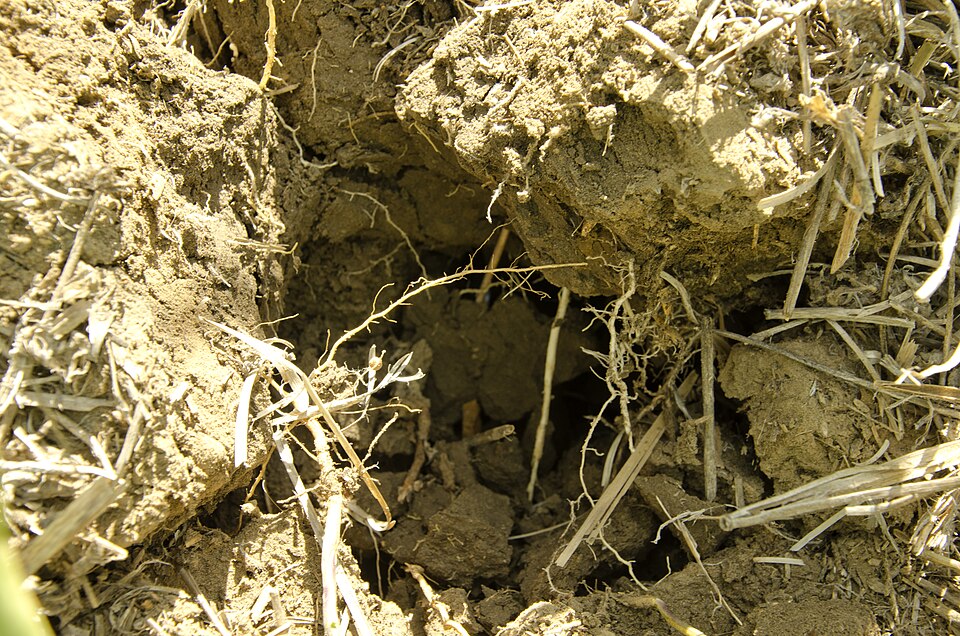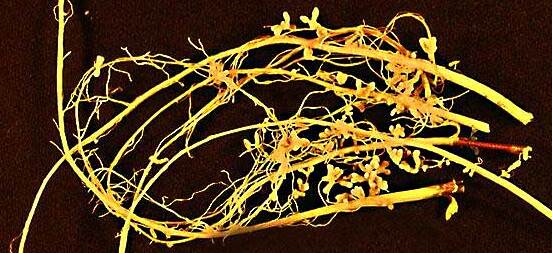
When a soybean plant pushes its roots into the soil, it is not just hunting for water. It is running a screening process, evaluating dozens of bacterial strains and deciding which ones get access to its root nodules. New research from Penn State shows that the plant's own genes are the primary mechanism behind that selection, a finding with direct implications for how farmers fertilize crops.
The study, published in The ISME Journal, focused on the relationship between legumes and rhizobia, the soil bacteria that convert atmospheric nitrogen into a form plants can absorb and use for growth. That process, called nitrogen fixation, is what allows legumes like soybeans, alfalfa, peas, and peanuts to thrive with less synthetic fertilizer than other crops. The partnership is mutually beneficial: the plant gets usable nitrogen, and the bacteria get shelter and nutrients inside specialized root structures called nodules.
But not every rhizobial strain is equally useful, and not every plant will accept every strain. The Penn State team wanted to understand the genetic mechanics behind that selectivity. To find out, they deliberately disrupted specific plant genes and then watched what happened to the bacterial competition outside the roots.
"When a legume plant puts out its roots, it isn't just reaching for water and nutrients — it is sending out chemical invitations to bacteria in the soil," said Sohini Guha, the study's first author and a postdoctoral scholar in Penn State's Department of Plant Science. "The plant doesn't let just any bacterium in. It screens candidates, and the outcome of that screening depends heavily on the plant's own genes."
When the researchers broke specific plant genes, the rankings among competing bacterial strains shifted. Strains that had been suppressed became more successful. Strains that had previously dominated lost their edge. The team identified a core set of rhizobial genes whose importance to bacterial survival changed depending on which plant genes were functional or disrupted.
"Our results reveal how genetic mutations in plant hosts alter which genes are important for bacterial strain success," said Liana Burghardt, the study's senior author and an assistant professor in Penn State's College of Agricultural Sciences. She said the findings set the stage for developing improved rhizobial strains for agricultural use and for breeding legume varieties better suited to field conditions where many bacterial strains compete simultaneously.
That practical goal matters because commercial farmers already apply rhizobial inoculants to their fields, essentially seeding the soil with specific bacterial strains to improve yields and reduce the need for synthetic nitrogen fertilizers. The problem is that field soils already contain diverse native rhizobial populations, and introduced strains often struggle to compete. Understanding how plant genetics shapes that competition could help breeders and agronomists stack the odds in favor of the most productive pairings.
The research adds a layer of complexity to what was already understood about the legume-rhizobia relationship. Scientists knew that the outcome of any pairing depended on the genetic makeup of both the plant and the bacterium. What this study clarifies is that the plant is not a passive partner. Its genes actively shape which bacteria can succeed, making the plant itself a key variable in designing more efficient biological fertilization systems.