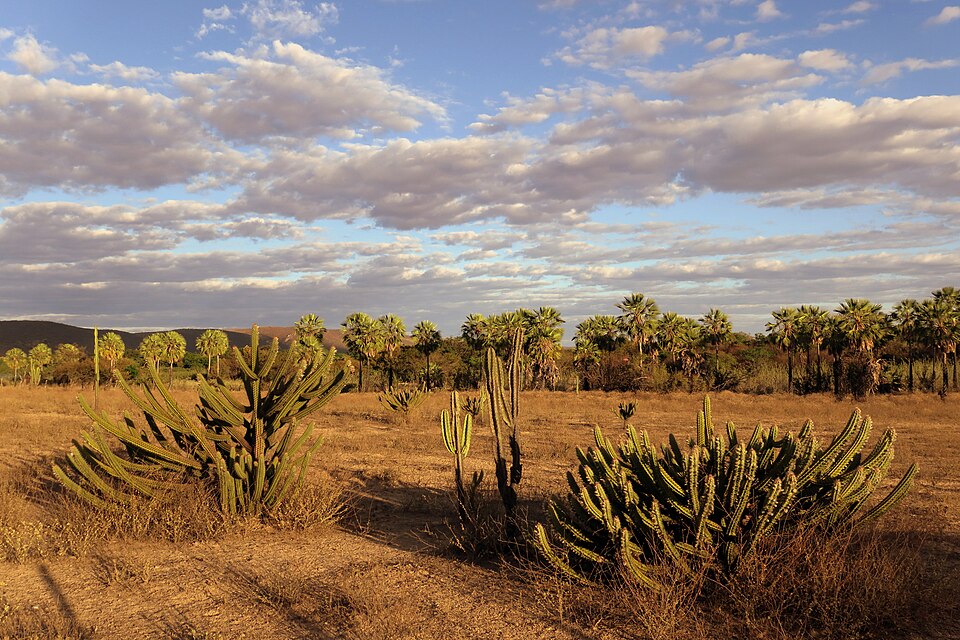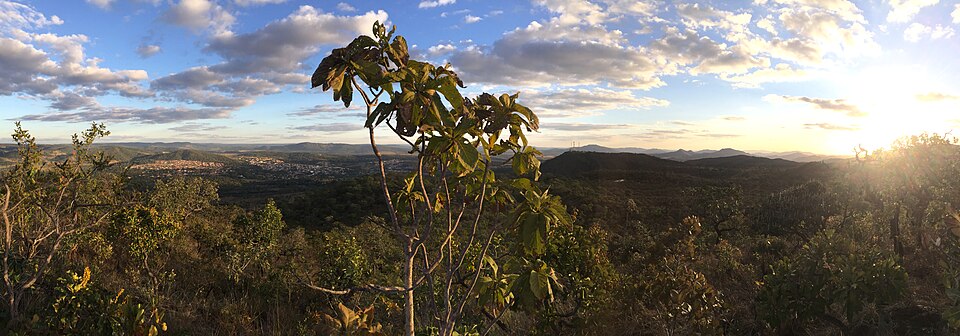
A stretch of Brazilian savanna covering 329,000 hectares has remained nearly untouched for four decades while the land surrounding it was converted to farms and ranches. A new study documenting that contrast has drawn attention to what one researcher called an island of ecological stability in a transformed landscape.
The Pimentel Barbosa Indigenous Territory, known by its Portuguese acronym TIPB, sits in the northeastern part of Mato Grosso state in Brazil's Central-West region. It is home to the A'uwẽ Xavante ethnic group, who received official recognition of the land through a government decree in 1986. A census by the Brazilian Institute of Geography and Statistics recorded 2,369 people living in the territory in 2022.
According to a report published in the journal Geocarto International, researchers analyzed land use changes both inside and within a 50-kilometer radius of the TIPB between 1985 and 2024. They used annual data from MapBiomas, a collaborative network of universities, nongovernmental organizations and technology startups that tracks land cover across Brazil. The analysis was combined with field research that included four research stays on indigenous land, participation in the Warã, which are daily community assemblies, and ongoing dialogue with the Xavante community.
The findings inside the territory were clear. Lead author Isabella Coelho de Oliveira described what the data showed. "Since then, over the course of these 40 years, the landscape of the TIPB has remained virtually unchanged, dominated by the natural vegetation characteristic of the Cerrado, with savanna formations, forest fragments and wetlands," she said. "Meanwhile, in the surrounding areas, a continuous and targeted transformation has taken place. The natural formations have almost disappeared, giving way to pastures and agricultural crops, primarily soybeans."
The Cerrado is one of the world's most biodiverse savannas, and the surrounding region has been under pressure from the expansion of livestock ranching, soybean farming and major highway construction. Brazil's BR-158 and BR-163 highways, built as part of the country's push to extend its agricultural frontier, run through the area around the territory.
The study introduced a concept the researchers call territorial isolation to describe the TIPB's situation. That term caught the attention of Anderson Targino Ferreira, a researcher at the Center for Lasers and Applications at the Institute of Energy and Nuclear Research and the Institute of Geosciences at the State University of Campinas, who contributed geotechnology and statistical analysis to the project. "When Isabella told me about 'territorial isolation,' I said to her, 'That term doesn't exist in the literature. You have a major study on your hands,'" he said.
The study also characterized the TIPB using a phrase that has since drawn attention in academic and environmental circles. A recent study called it "an island of biodiversity in a sea of monoculture," pointing to the sharp boundary between the protected land and the converted farmland surrounding it.
The research was awarded the Scientific Merit Award at the 32nd Congress on Scientific Initiation at the State University of Campinas in 2024. The contrast documented in the study adds to a broader body of research on the role indigenous-managed lands play in preserving ecosystems under agricultural pressure across South America.