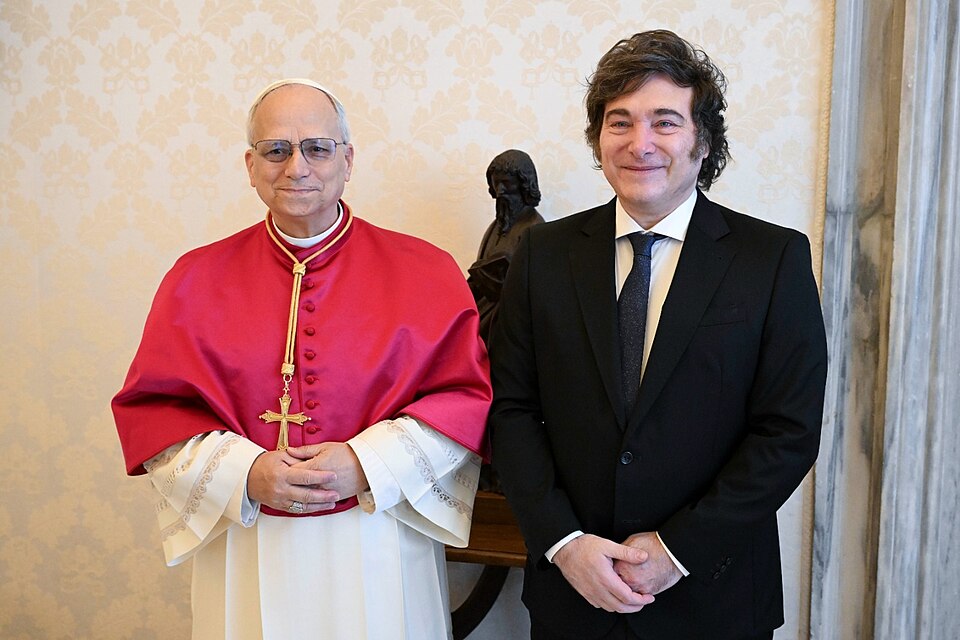
Pope Leo XIV released his first papal encyclical on Monday, a 42,300-word document calling for regulation of artificial intelligence and a moral framework to protect humanity. The document is titled Magnifica Humanitas, which translates to magnificent humanity. It calls for caution in deploying AI in warfare and the workplace, challenges the concentration of technological power among a small number of companies, and addresses AI developers directly in several passages.
According to a report by CNET, the 70-year-old American Pope, who is a mathematician by training, was elected to the papacy in May 2025 and has made "the safeguarding of the human person in the time of artificial intelligence" a central tenet of his first year in the role. The encyclical is the Catholic Church's most authoritative form of written teaching, a tradition nearly 400 years old.
One of the document's central warnings concerns the risk of confusing machine capability with human intelligence. Pope Leo stated that it is important to avoid "the misconception of equating this type of 'intelligence' with that of human beings." He elaborated directly on what separates AI systems from human minds. "These systems merely imitate certain functions of human intelligence. In doing so, they often surpass human intelligence in speed and computational capacity, offering tangible benefits across many fields," he stated.
He continued with a longer passage drawing a sharp line between artificial and human intelligence. "So-called artificial intelligences do not undergo experiences, do not possess a body, do not feel joy or pain, do not mature through relationships and do not know from within what love, work, friendship or responsibility mean. Nor do they have a moral conscience, since they do not judge good and evil, grasp the ultimate meaning of situations, or bear responsibility for consequences. They may imitate language, behavior and analytical skills, or even simulate empathy and understanding, but they do not understand what they produce, for they lack the affective, relational and spiritual perspective through which human beings grow in wisdom."
The encyclical also takes up the question of who should set the ethical rules for AI. Pope Leo argued that governments and societies, not the companies that build these systems, should define how AI is governed. He called for the ethics of AI to be subjected to shared standards of social justice and discussed openly among all people. "A more moral AI is not enough if that morality is determined by a few," he wrote. He also called on governments to establish adequate regulatory tools capable of upholding justice and curbing the distorting effects of technological power, and said leaders must ensure that humans, not AI, make all decisions related to weapons.
One phrase from the document already drawing wide attention is the Pope's call to disarm AI. The phrase reaches beyond military applications. "To disarm means discrediting the assumption that technical power automatically confers the right to govern," the Pope writes. "To disarm does not mean rejecting technology, but preventing it from dominating humanity. It means freeing technology from monopolistic control and opening it to discussion and debate, therefore making it human-friendly and restoring it to the plurality of human cultures and ways of life."
The document also addresses economic disruption. Pope Leo warned that AI profits should not be used to justify systematic job loss and encouraged retraining and employment protections for workers at risk. He called for an educational alliance for the digital age to teach young people to think critically about AI and to guard against apathy for seeking the truth. Regulations, he said, should also protect young people against violent or degrading AI-generated content and against grooming and sexual exploitation.
Despite the document's many warnings, Pope Leo stopped short of opposing AI outright. He stated it should not be seen as a force antagonistic to humanity and said that if carefully managed, it could open up a horizon extending in all directions. The encyclical was presented alongside Anthropic co-founder Christopher Olah. It is expected to become a reference point for policymakers and technology companies as they work through strategies for building and regulating AI in the years ahead.