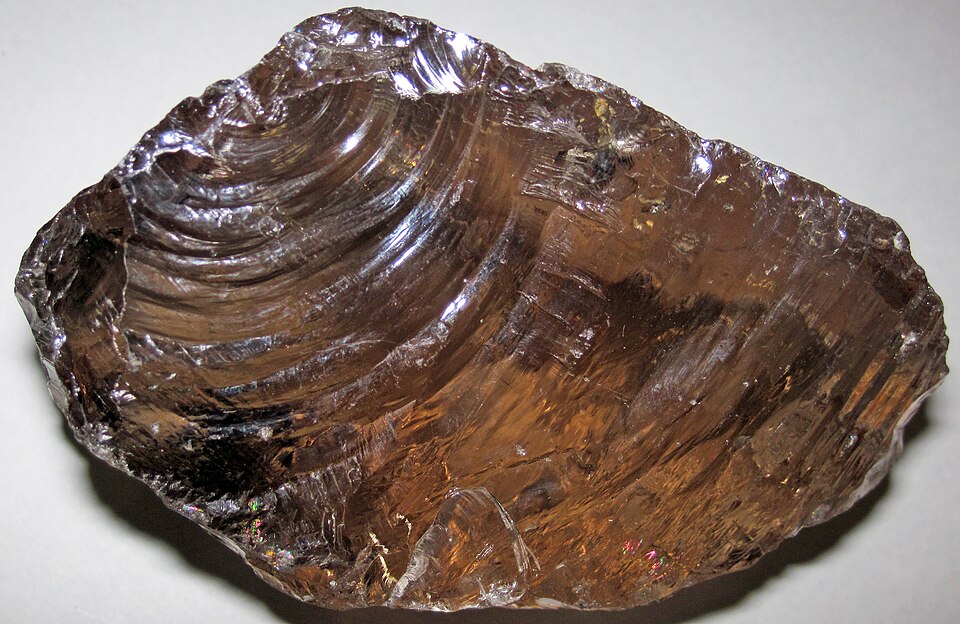
Whether a glass shatters or bends under pressure may come down to a single property: fragility. A new study published in Nature Communications finds that a glass material's fragility, a measure of how quickly it slows down during cooling, directly controls how it fails when force is applied.
Researchers Roni Chatterjee and Monoj Adhikari, working in Smarajit Karmakar's group at the Tata Institute of Fundamental Research in Hyderabad, used large-scale computer simulations to test different types of glassy materials across a wide range of temperatures, according to Phys.org.
When a liquid cools slowly to its freezing point, the particles inside arrange themselves into an ordered crystal structure. When it cools very quickly, the particles cannot organize in time, and the result is glass. Glassy materials show up everywhere, from window glass and metal alloys to polymers, foams, gels, emulsions, and colloids.
Scientists already classified glasses into two broad types: strong and fragile. In fragile glasses, the energy barriers that particles must cross to move around increase very rapidly as the material cools. Particle motion slows down dramatically with even a small drop in temperature, making the liquid highly viscous very quickly. In strong glasses, those energy barriers grow more gradually, and the material becomes viscous in a steadier, more gradual way.
The new research found that this distinction carries over into mechanical behavior. Fragile glasses show a rapid increase in yield strain, meaning the maximum deformation they can take before failing, as temperature drops. Strong glasses show almost no change in yield strain with cooling. Fragile glasses also turned out to be brittle, breaking suddenly without warning. Strong glasses failed in a ductile way, deforming slowly and smoothly rather than cracking.
The researchers used repetitive back-and-forth deformation in their simulations to test how different materials responded under strain. The results suggest that fragility is not only a description of how a glass cools, but a predictor of how it will behave when bent, stretched, or compressed.
Understanding what controls whether a material breaks or bends has long been a central question in materials science. The answer has practical consequences for engineering, since brittle materials can fail suddenly and without warning in real-world applications, while ductile materials give more visible signs before they give way.