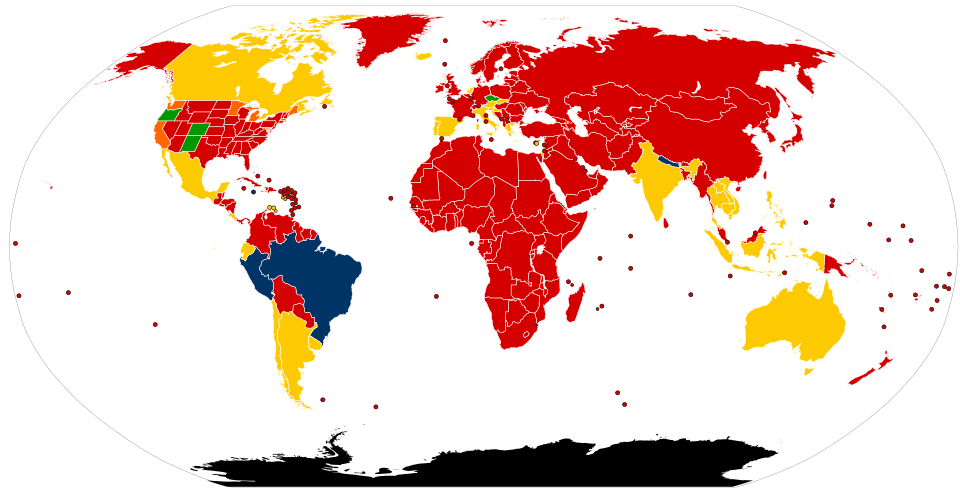
The Trump administration has reversed its earlier position and is now pushing to accelerate access to psychedelic drugs for mental health treatment, according to CNBC.
The shift covers substances including psilocybin and MDMA, both of which remain Schedule I controlled substances under federal law, meaning the government classifies them as having no accepted medical use. The administration's new direction would fast-track the process for getting these drugs into mental health care settings, a move that puts the White House closer to a position long held by some researchers and advocates who argue the existing evidence supports expanded access.
The reversal is notable because the administration had previously shown little interest in loosening restrictions on psychedelic substances. CNBC reported on the factors that drove the change in course, including pressure from veterans groups who have pointed to evidence that MDMA-assisted therapy can reduce symptoms of post-traumatic stress disorder. Veterans advocacy has been one of the more politically effective forces pushing for psychedelic research, crossing ideological lines in a way that few drug policy arguments have managed.
Clinical research on psychedelics has grown substantially over the past decade. Studies from institutions including Johns Hopkins and New York University have shown that psilocybin, the active compound in certain mushrooms, can produce significant reductions in depression and anxiety in controlled settings. MDMA-assisted therapy for PTSD reached late-stage clinical trials, though the Food and Drug Administration declined to approve it in 2024, citing questions about the study design.
The fast-track designation being pursued by the administration would not automatically approve any specific psychedelic drug. It would be intended to speed up the review process and potentially reduce the regulatory barriers that have slowed research and access. The details of exactly how the policy would be implemented had not been fully spelled out at the time of CNBC's reporting.
Mental health treatment in the United States has faced sustained criticism for leaving many patients without effective options, particularly for PTSD, treatment-resistant depression, and addiction. Proponents of psychedelic therapy argue that existing medications fall short for large numbers of patients and that the evidence now justifies moving faster. Critics have raised concerns about safety, the quality of existing research, and the risk of expanding access before regulators have fully evaluated the data.
No specific legislation or executive order had been finalized at the time of reporting.