A star more than eight times the mass of our sun does not fade quietly. It tears itself apart in one of the most violent events the universe produces, and scientists believe those explosions may hold answers to some of the deepest questions in physics.
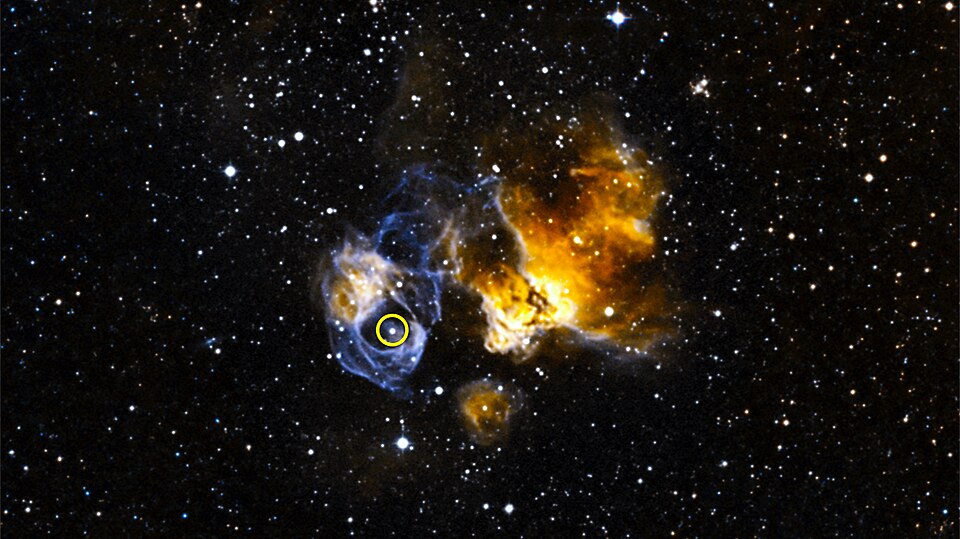
These events are called core-collapse supernovae. Once recorded as a mysterious guest star by ancient Chinese astronomers and feared as bad omens across medieval Europe, they are now understood as the deaths of massive stars, and as reported by Phys.org, researchers are building tools to extract information from them that no telescope can currently capture.
The process begins with nuclear fusion. Stars shine because they fuse lighter atoms into heavier ones inside their cores, but the fuel is finite. When it runs out, the outward pressure that holds a star up disappears, and the outer layers begin to collapse inward under the star's own gravity.
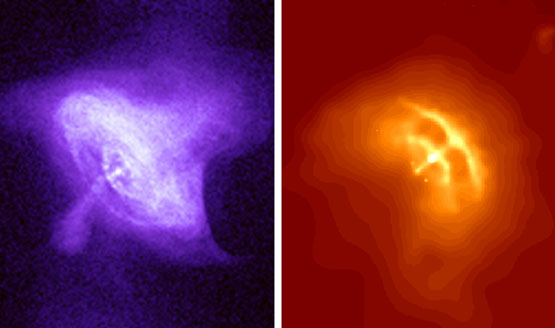
For stars at least eight times the size of our sun, that infalling material cannot be compressed indefinitely. A dense proto-neutron star forms at the core. The outer layers crash into it, rebound, and send a shock wave outward powerful enough to destroy the star entirely. The explosion lasts only a few seconds.
Those few seconds release an almost incomprehensible amount of energy. Enough, researchers say, to forge almost all the elements in the periodic table. Iron is the heaviest element a star can produce during its normal lifetime, but the violence of a core-collapse supernova generates the conditions needed to create heavier elements. Where those elements come from remains one of the open questions in astrophysics.
Electromagnetic observations, the kind made with conventional telescopes, capture only part of what happens during and after an explosion. They cannot see inside the event itself. Researchers believe gravitational waves, ripples in spacetime produced by the most extreme physical processes in the universe, could fill in the picture.
Gravitational waves have been detected before, from events like merging black holes and neutron stars. But none have ever been recorded from a core-collapse supernova. If and when one occurs close enough to detect, the gravitational wave signal could reveal details about the behavior of matter and gravity under conditions that cannot be recreated in any laboratory on Earth.
The current research effort focuses on making sure the tools are ready before that happens. Scientists are working to develop the analytical frameworks needed to decode whatever signal a nearby supernova produces. The window could be brief, and the data irreplaceable.
Core-collapse supernovae sit at the intersection of some of the largest unsolved problems in science: the origin of the heavy elements, the behavior of matter at nuclear densities, and the mechanics of stellar death. Researchers describe them as natural laboratories, extreme environments where the ordinary rules of physics are pushed to their limits, and where the raw material for planets and people was made.