The closest known black hole is roughly 1,560 light-years away. That is far too distant for any spacecraft we could build today. But a researcher at Fudan University in Shanghai thinks there may be one much closer, and he has published a paper outlining how we might reach it.
Cosimo Bambi recently released a preprint on arXiv describing what it would take to send a gram-sized probe to a nearby black hole. According to Phys.org, the paper begins with a striking statistical argument about how many black holes are actually out there.
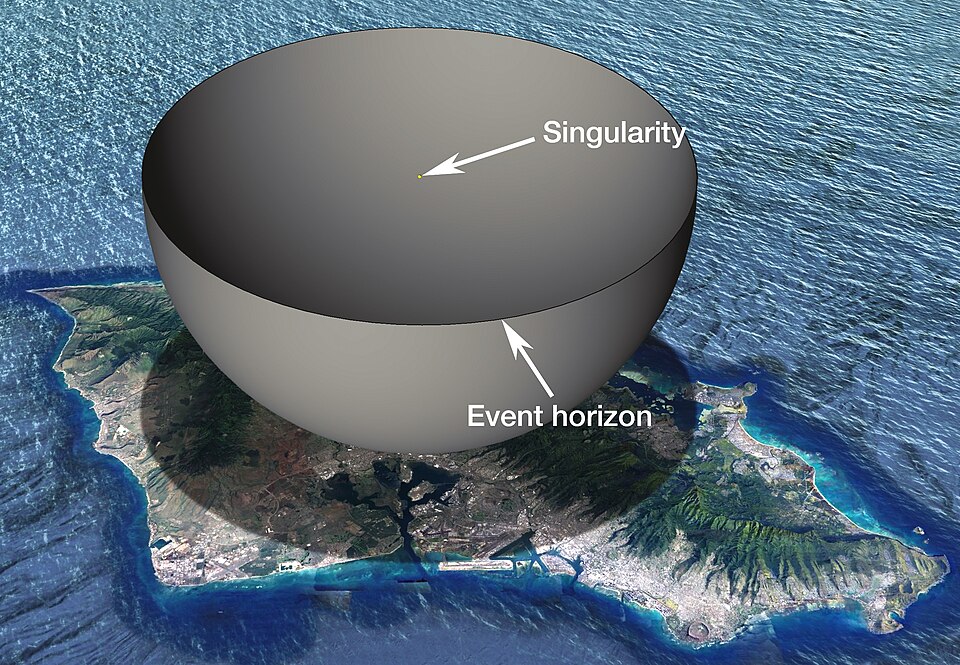
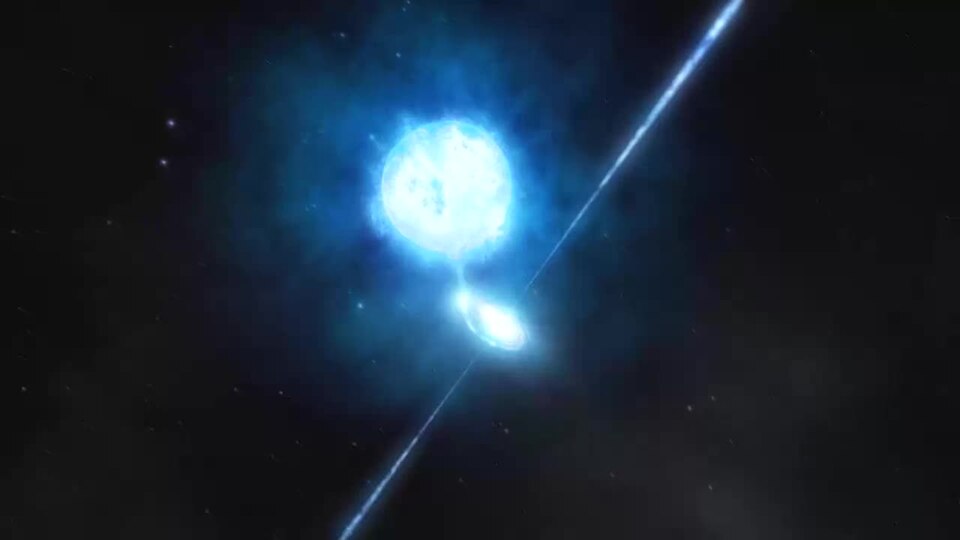
The Milky Way likely contains about 100 million stellar-mass black holes. That is not a small number. Bambi's paper notes that 92% of them are isolated, meaning they have no companion star nearby. That makes them essentially invisible, because they absorb all light directed at them rather than reflecting or emitting it. The currently known closest black hole, Gaia BH1, sits in the constellation Ophiuchus. It was detected only because its gravity tugs on a nearby star, which gave astronomers a way to find it.
Based on the estimated density of black holes in the galaxy, Bambi calculates there should be roughly one stellar-mass black hole for every 1,500 cubic parsecs, which works out to about 52,000 cubic light-years. Given those numbers, there is a real statistical possibility that an unseen black hole sits within 20 to 25 light-years of Earth. At that distance, it would pose no danger to the solar system. But it would be close enough to visit.
Finding such a black hole would be the first step. Bambi suggests it could be done by watching for radiation the black hole would give off as it consumed gas while moving through what are known as Local Interstellar Clouds. Current multiwavelength astronomical surveys could likely pick up that kind of signal.
Getting a probe there is a harder problem. Rockets are ruled out entirely. The physics of rocket propulsion, sometimes called the tyranny of the rocket equation, means a conventional spacecraft would take thousands of years to cross even a few light-years. The solution Bambi proposes is a laser-pushed solar sail, a technology also under development for other interstellar concepts.
The design would involve two major components. One is a chip, a gram-sized microchip carrying navigation, scientific and communication instruments. The other is the sail itself, which would be pushed by an Earth-based laser system. Lasers do not transmit much force, so the design of the sail and the power of the laser array would be critical to achieving the speeds needed to reach a black hole within a human lifetime.
The paper remains a preprint and has not yet gone through peer review. But it adds a concrete framework to a conversation that has so far been largely theoretical. Black holes are the strongest gravitational environments known to exist, making them ideal for testing the limits of Einstein's general relativity. Scientists can learn a great deal by observing them from a distance, but Bambi's point is that direct observation would offer something remote sensing cannot.
The next step, before any engineering problem can be solved, is finding the target.