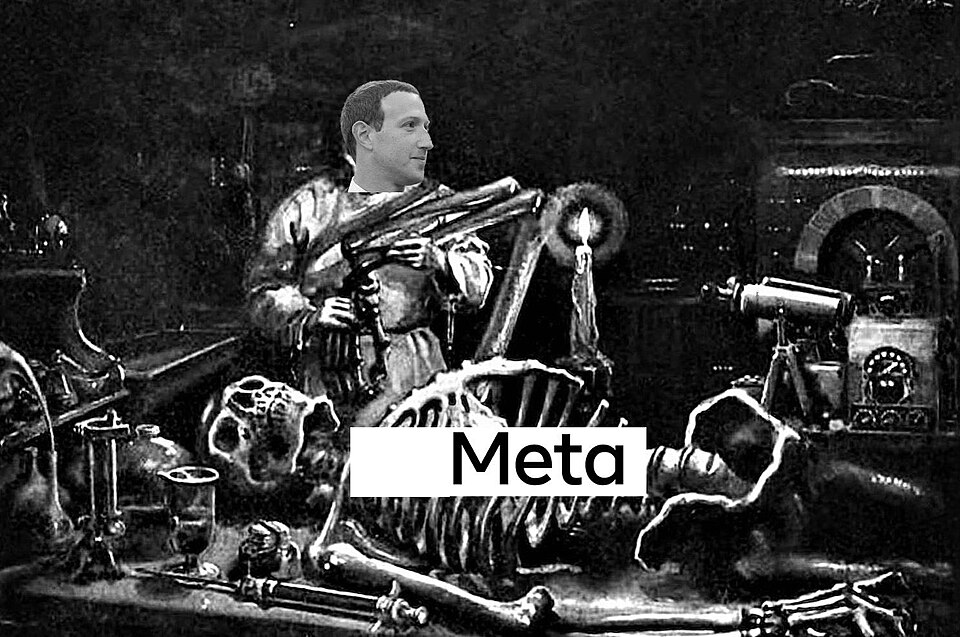
A year after Meta spent more than $14 billion to bring in AI entrepreneur Alexandr Wang and a group of his top engineers, the company has a new AI model. Now it has to sell it.
Wang's main deliverable was the Muse Spark AI model, released in April. It marked Meta's first move into proprietary foundation models, stepping away from the open-source approach the company had followed for years. The group Wang leads, called Meta Superintelligence Labs, was built to give the company standing in the most competitive corner of the tech industry, according to CNBC.
Wall Street has not been impressed so far. Meta's stock is down 18% over the past 12 months, making it the worst performer in the megacap group alongside Microsoft. That decline came even as Meta reported 33% revenue growth in the first quarter, the fastest rate of expansion for any period since 2021.
The problem, according to CNBC, started with what some industry experts called a strategic blunder. Meta built its reputation in AI on the Llama family of open-source models, which allowed developers to use them freely. The other major model makers charged for access. When Meta released Llama 4 in April of last year, it fell flat and failed to capture developer interest. Two months later, Zuckerberg announced the $14.3 billion investment for roughly half of Scale AI, along with Wang and his top lieutenants.
The new Muse Spark model was designed differently than Llama. Rather than targeting third-party developers, it was built to plug directly into Meta's own apps, including Facebook and Instagram, as well as AI-powered devices like the Ray-Ban Meta glasses, according to analyst Thomas Randall of Info-Tech Research Group. It also feeds into the standalone Meta AI app and website.
"There'll be a lot of these frontier model providers that will fundamentally change in lots of different ways, and Meta needs to have a consistent, reliable proprietary model that they themselves own," Randall told CNBC.
The financial challenge is now squarely on Zuckerberg. The company has used AI extensively to improve its advertising business, which has driven revenue growth. But investors want to see AI become a direct revenue source, not just a tool that makes ads work better.
"Meta needs to provide more proof points of both adoption and commercialization," said Ralph Schackart, an analyst at William Blair who recommends buying the stock. "Investors are looking for Meta to monetize a new AI-first product, beyond the substantial positive impact AI is having on enhancing the advertising models."
Meta still trails OpenAI, Anthropic, and Google in the AI market. Whether Muse Spark can close that gap, and whether it can do so in a way that generates revenue, will determine whether the $14 billion bet pays off.