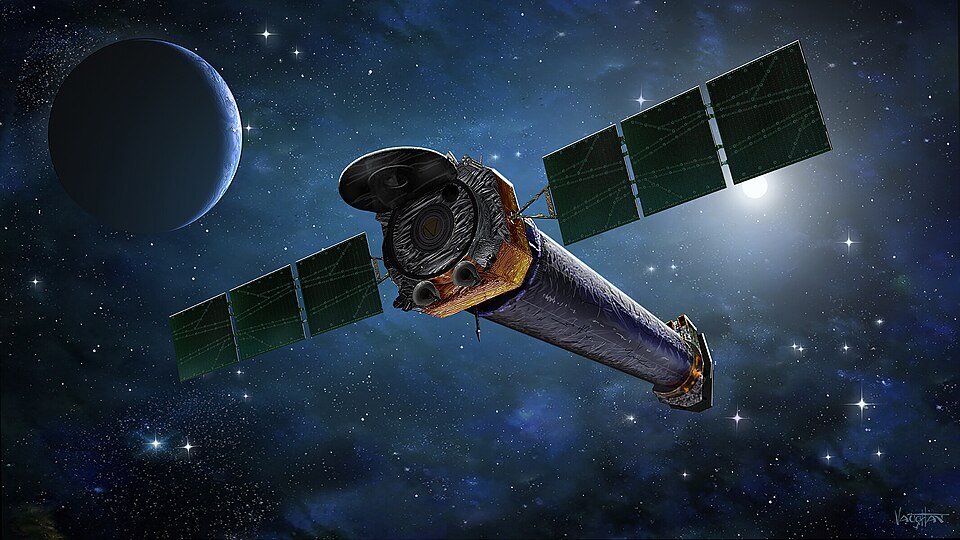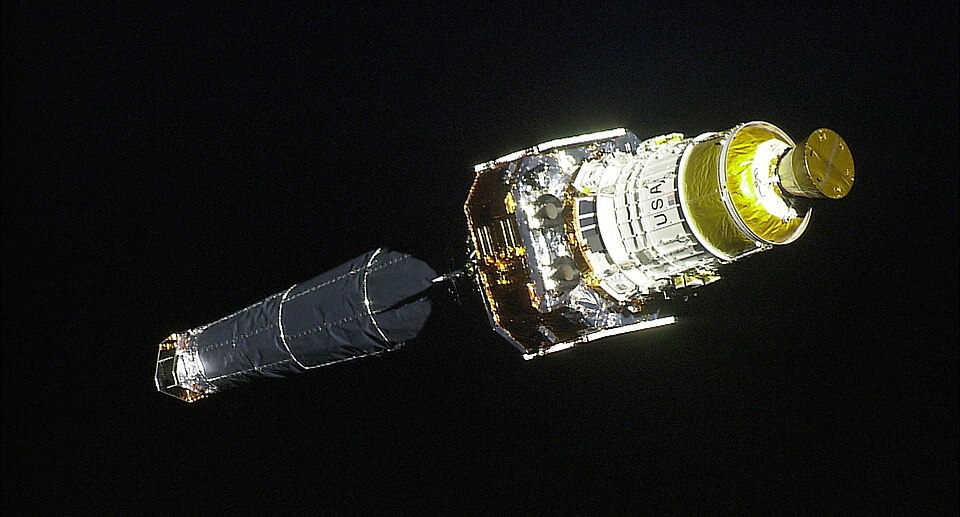
Astronomers using NASA's Chandra X-ray Observatory may have found a supernova remnant closer to the center of the Milky Way than almost any previously known. The finding, published in The Astrophysical Journal, adds a new piece to the puzzle of one of the most crowded and extreme neighborhoods in our galaxy.
According to Phys.org, the suspected remnant sits inside a region crammed with massive stars, long threads of magnetic fields, and dense clouds of gas orbiting rapidly around the Galactic Center. If confirmed, it would be one of the closest supernova remnants ever discovered to the supermassive black hole at the center of our galaxy.
The evidence comes from X-ray data gathered by Chandra and ESA's XMM-Newton mission. Researchers spotted a blob of X-ray emission that may be the remains of a massive star that destroyed itself as a supernova. The suspected remnant sits inside a bubble of gas surrounding a massive, young star, in an area known as Sagittarius C, which is a bright source of radio emission.
If the object is indeed a supernova remnant, it is expanding at about 3.2 million kph, or roughly 2 million mph, and is at least about 1,700 years old. Earlier observations by NASA's now-retired SOFIA mission had already shown evidence for an expanding shell of gas around Sagittarius C, giving astronomers a hint that a stellar explosion had occurred in the same location.
The new composite image of the region combines X-ray data from Chandra and XMM-Newton, shown in blue, with radio data from the MeerKAT telescope in South Africa, shown in red, and optical data from the Pan-STARRS telescopes in Hawaii. The plane of the galaxy runs horizontally across the image, with the central black hole off to the left.
Supernova remnants are more than just the scorched leftovers of dead stars. They are factories for the elements that make up planets and living things. The nuclear engines of stars build elements from the hydrogen and helium left over from the early universe. When a star explodes as a supernova, it scatters those newly forged elements, including iron, oxygen, and silicon, into interstellar space. That material becomes the raw ingredient for the next generation of stars and planets.
The team searched the X-ray data for signs of elevated amounts of key elements inside the remnant, which would help confirm its identity. The location of the suspected remnant is marked with a circle in the published image. The long filaments visible in the radio data are produced by energetic particles traveling along magnetic fields oriented mostly perpendicular to the galactic plane.