NASA's James Webb Space Telescope has captured one of the most dramatic temperature swings ever recorded on a planet outside our solar system. The target was HD 80606 b, a gas giant four times the mass of Jupiter that follows an extremely elongated orbit, swinging close to its host star and then racing far away over a 111-day cycle. As it made its closest pass, the planet's temperature jumped by 1,100 degrees Fahrenheit in a matter of hours.
According to Phys.org, researchers presented their preliminary findings Tuesday at the 248th meeting of the American Astronomical Society in Pasadena, California.
HD 80606 b falls into a category called hot Jupiters, which are large gas planets that orbit very close to their stars. Most hot Jupiters sit in nearly circular orbits, keeping their temperatures relatively stable. This planet is different. Its orbit is so stretched that conditions on and around it shift dramatically from one part of the orbit to the next.
"Hot Jupiters are already considered some of the most extreme exoplanets we know of, but even among that population, HD 80606 b is one of the most extreme," said Tiffany Kataria, the study's principal investigator at NASA's Jet Propulsion Laboratory in Southern California. "We typically think of hot Jupiters as hot gas giants sitting right next to their stars, but this planet's highly eccentric orbit creates a completely different beast."
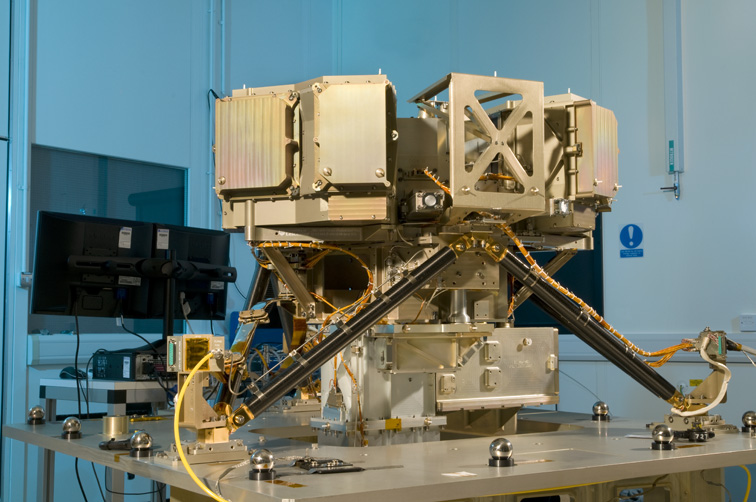
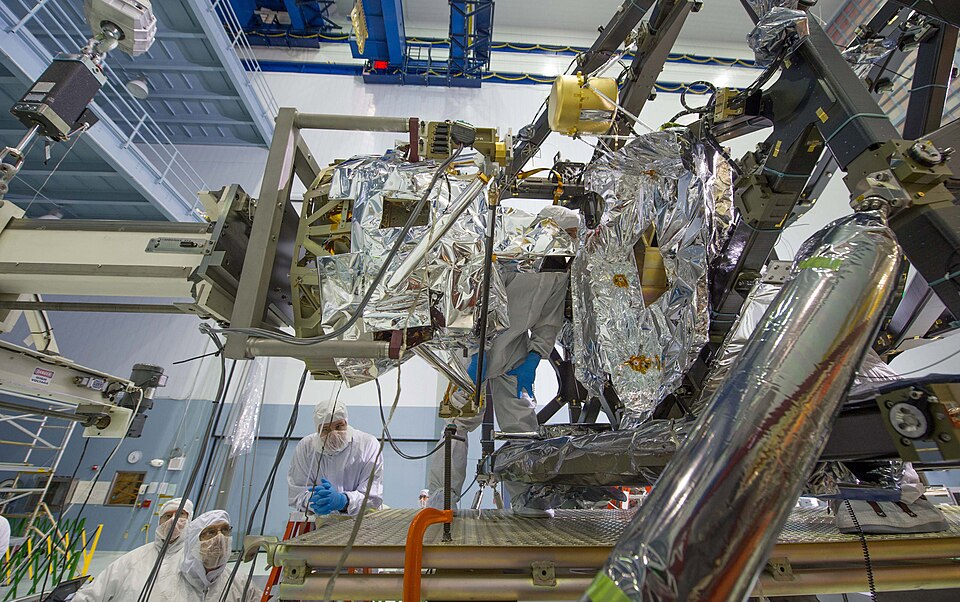
The research team used Webb's MIRI instrument, which stands for Mid-Infrared Instrument, to observe the planet before, during, and after its closest approach to the star. At that closest point, called periastron, the planet also passed behind the star from Webb's perspective in what scientists call a secondary eclipse. Researchers used spectroscopy to measure temperature and chemical composition. The technique breaks light into its component colors to reveal information about what a planet is made of, how hot it is, and how it moves.
Planning the observation took years. The planet's 111-day orbit, combined with restrictions on where Webb can point based on Earth's own position around the sun, made scheduling the observation window a complex problem.
Co-investigator Laura C. Mayorga, an exoplanet astronomer at the Johns Hopkins Applied Physics Laboratory in Laurel, Maryland, said the unusual orbit actually makes the planet a highly efficient research target. "Observing a planet like HD 80606 b is actually very efficient because its unusual orbit, with the corresponding swings in temperature and chemical composition, allows us to gather data under varying conditions in just hours and apply those findings to other hot Jupiters or more conventional exoplanets," Mayorga said.
Previous observations of HD 80606 b were made with the Spitzer Space Telescope, which operated from 2003 until it was retired in 2020. Webb's data has already pushed past what Spitzer recorded. "Webb has shown that the planet's increase in temperature was even more extreme than we anticipated based on Spitzer data," said Kataria.
Researchers say they have only begun working through what they describe as an incredibly rich data set. Prior studies have shown that rapid temperature changes on exoplanets can alter their chemistry and cloud cover in real time. The team expects the HD 80606 b data to shed light on those processes in ways that more stable planets cannot. The findings were presented as preliminary, and the full study is ongoing.