

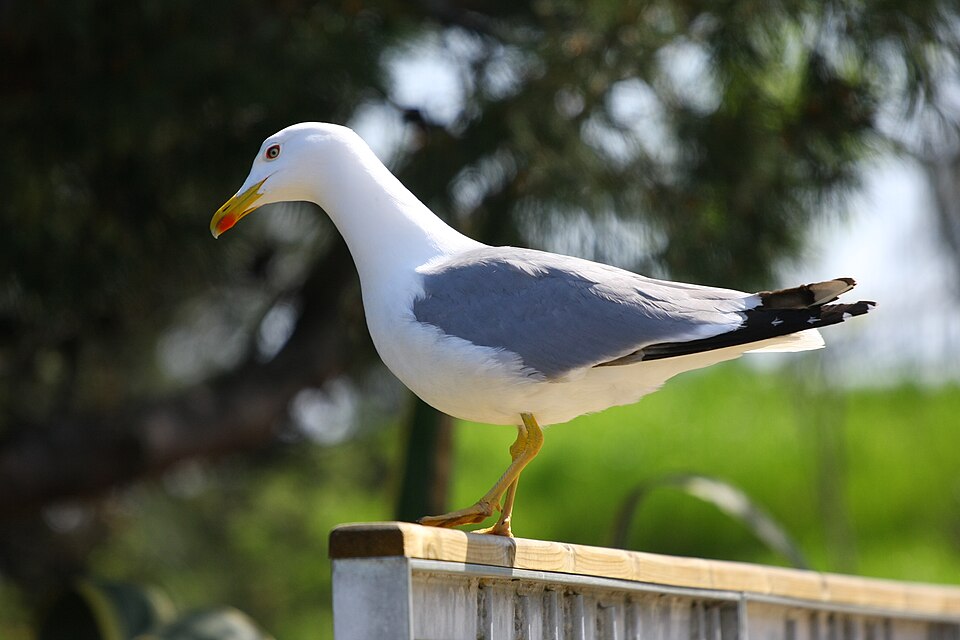
Adult herring gulls are 48 percent less likely to attack a young bird than one with adult feathers, according to new research published in the journal Animal Behaviour. The finding suggests that the mottled brown plumage of juvenile gulls serves as a social signal, telling territorial adults that the younger bird is not a competitor for mates or nesting sites.
The research was reported by Phys.org. It focused on the American herring gull, a species that takes several years to develop its adult feathers, a process called delayed plumage maturation. Scientists had long wondered whether that extended adolescent appearance served a protective function, but the question had not been clearly tested in seabirds.
To find out, researchers traveled to Kent Island, Canada, home to a breeding colony of up to 6,000 gulls. They selected 120 nests where adult birds were sitting on eggs and introduced plastic decoys representing different types of intruders. Using decoys gave the researchers precise control over what each model looked like, removing the variable of a live bird's own behavior.
The decoys represented four types of birds: the youngest gulls, with mottled brown feathers like a one-year-old; adolescent gulls with intermediate plumage; and adults. The results showed clearly that adult gulls directed far less aggression toward models that resembled young birds.
Scientists had previously observed similar patterns in small songbirds, where juvenile plumage helps younger birds avoid conflict by signaling low social status. It was not known whether the same logic applied to larger seabirds living in dense colonies. This study suggests it does.
The behavior fits a broader pattern seen across the animal kingdom. Orangutans delay the growth of male face flanges to avoid conflict with older, more established members of their group. Fish and some songbird species also remain in nonadult states longer than their natural development would require, apparently as a strategy for surviving in competitive social environments.
Social living pushes species to develop signals that reduce unnecessary conflict. For gulls nesting in dense colonies, those signals appear to be written in feather color. The brown plumage of a young gull, far from being a random phase of development, may be one of the bird's most useful early survival tools.