The center of the Milky Way is not a place anyone would expect new stars to be born. The vast cloud of gas wrapped around the galaxy's core churns so fast and so chaotically that the conditions for star formation should not exist there. Astronomers have now found evidence that they do.
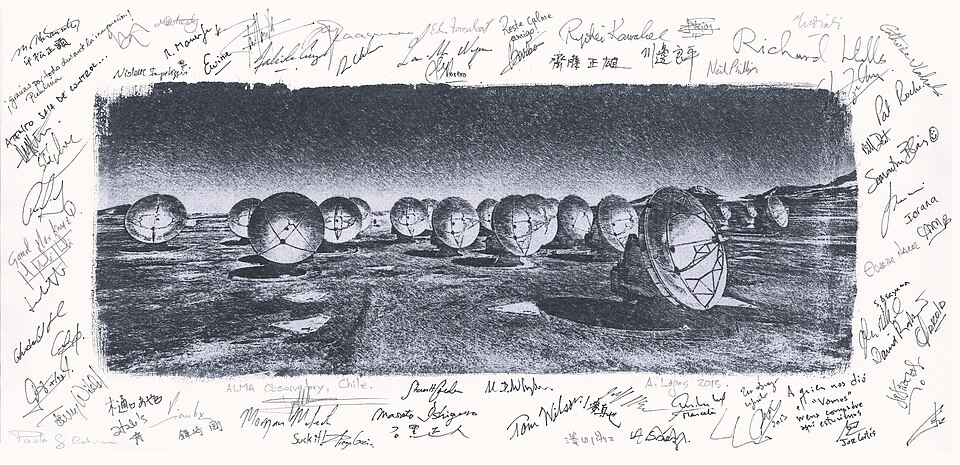
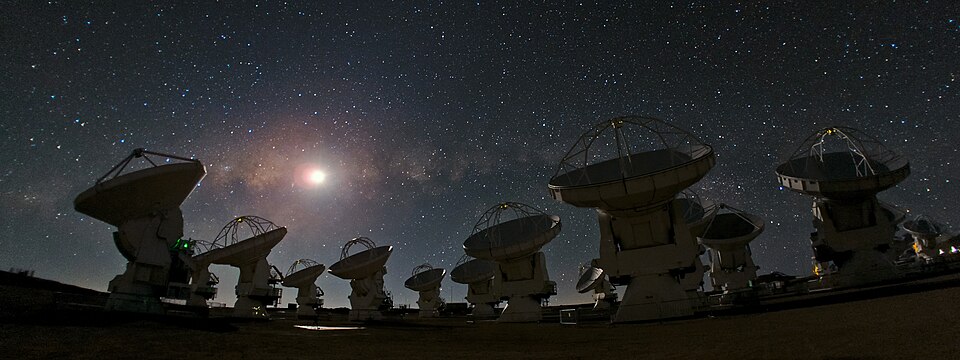
A team led by Rojita Buddhacharya mapped the galactic center in extraordinary detail using the ALMA array in Chile, according to a report by Phys.org. Their survey produced the largest image the telescope has ever made, charting dozens of different molecules across the region known as the Central Molecular Zone.
Inside that turbulent region, they found something unexpected: a small, quiet pocket where the gas had slowed below the speed of sound and was moving gently and smoothly. Surrounding gas in the Central Molecular Zone typically races faster than the speed of sound, making it far too chaotic for gravity to draw material together into the dense knots where stars are born.
Threaded through that calm pocket was a long filament of gas. Slender filamentary structures are the kind of formations where material can begin to clump together, and in this particular filament, gravity was strong enough to hold it in place. Slow gas motion and sufficient gravitational pull are precisely the two conditions a cloud needs to begin building a star.
What surprised the team most was how quickly the transition happened. The gas shifted from chaos to calm across remarkably short distances, with no gradual boundary between the two states.
Until now, such quiet star-forming regions had only been observed in the calmer outer areas of the galaxy, far from the violent center. Finding the same conditions in the galactic core suggests that star formation may follow a single universal process, regardless of the surrounding environment.
Scientists note that the gas which eventually became our own sun, billions of years ago, very likely passed through a similar quiet phase before collapsing into a star. That makes this newly discovered pocket a possible window into the early conditions of our own solar system's formation.
The discovery also opens a wider search. With machine learning tools now capable of processing the enormous maps ALMA produces, astronomers say they expect to find many more of these hidden calm regions scattered through the galactic center. The next step is combing through the existing data to see how common they are.