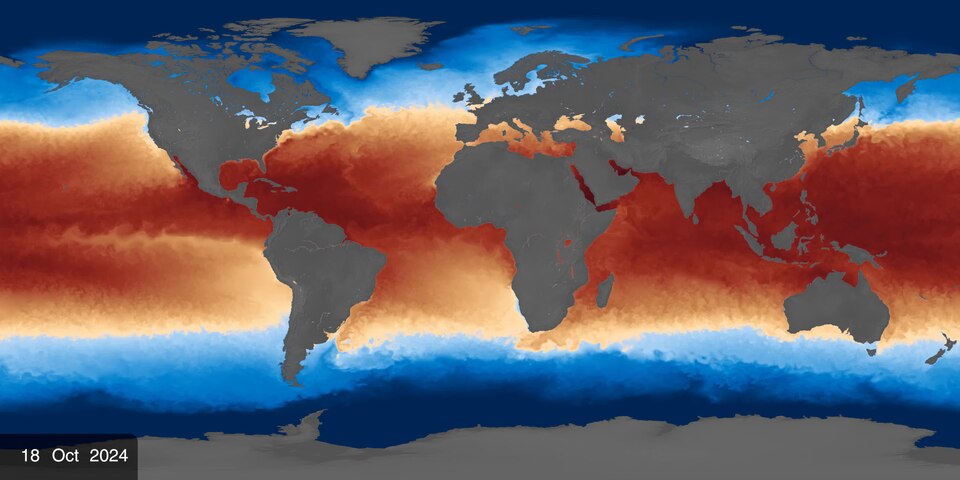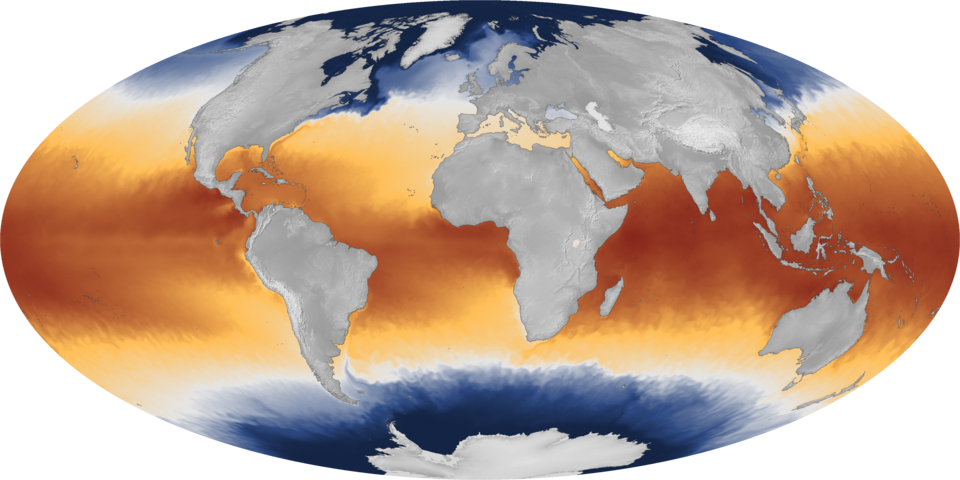
The world's oceans hit their hottest recorded temperatures for June, surpassing records set during the 2023–24 El Niño years. The average sea surface temperature is now just under 21 degrees Celsius across the world's tropical and temperate oceans. Before widespread industrialization in 1870, that figure stood at about 19.6 degrees Celsius.
According to a report by Phys.org, heating the oceans to this degree requires a staggering amount of energy. More than 90 percent of the extra heat trapped by greenhouse gases from burning coal, gas, and oil has gone directly into the world's oceans. In 2025 alone, the heat added to the oceans was the equivalent of about 12 Hiroshima-scale nuclear bombs exploding every second of every day.
To find a historical comparison for what is happening now, scientists say they would need to go back roughly 120,000 years, before the last ice age. Back then, slow shifts in Earth's orbit led to gradual warming over thousands of years. Humans have produced a comparable result in just over a century.
The heat is not staying in the water. Hotter oceans fuel stronger cyclones, a more humid atmosphere, more intense rainfall, and greater heat in air masses over the seas. That in turn makes heat waves over land more likely and more intense.
The El Niño now forming in the tropical Pacific is expected to be a large one. Sea surface temperatures across a wide area of the central eastern Pacific are already about 1.24 degrees Celsius warmer than average. Subsurface conditions in the eastern Pacific are more than 6 degrees Celsius above average, a figure that points to what is building beneath the surface.
Europe is currently experiencing a record-breaking heat wave. The seas surrounding the continent are also running exceptionally hot. Parts of the Mediterranean are up to 6 degrees Celsius above their long-term average. Parts of the North Sea are running up to 3 degrees Celsius warmer than average.
A typical El Niño lasts about a year, and its full effect on atmospheric temperatures becomes clearest toward the end of the cycle. That pattern means 2026 is likely to be extremely hot, possibly setting a new record. But 2027 may be even hotter, as ocean heat moves back to the surface. The same dynamic played out during El Niño events in 2023–24 and 2015–16.
The sustained warming also threatens marine ecosystems. Steady ocean heating combined with longer and more intense marine heat waves poses serious risks to coral reefs, seagrass meadows, and coastal reef systems. Research following the 2023–24 El Niño and the warm conditions of 2024 already documented widespread damage across those ecosystems. With a stronger event now developing, scientists are watching closely for what comes next.