

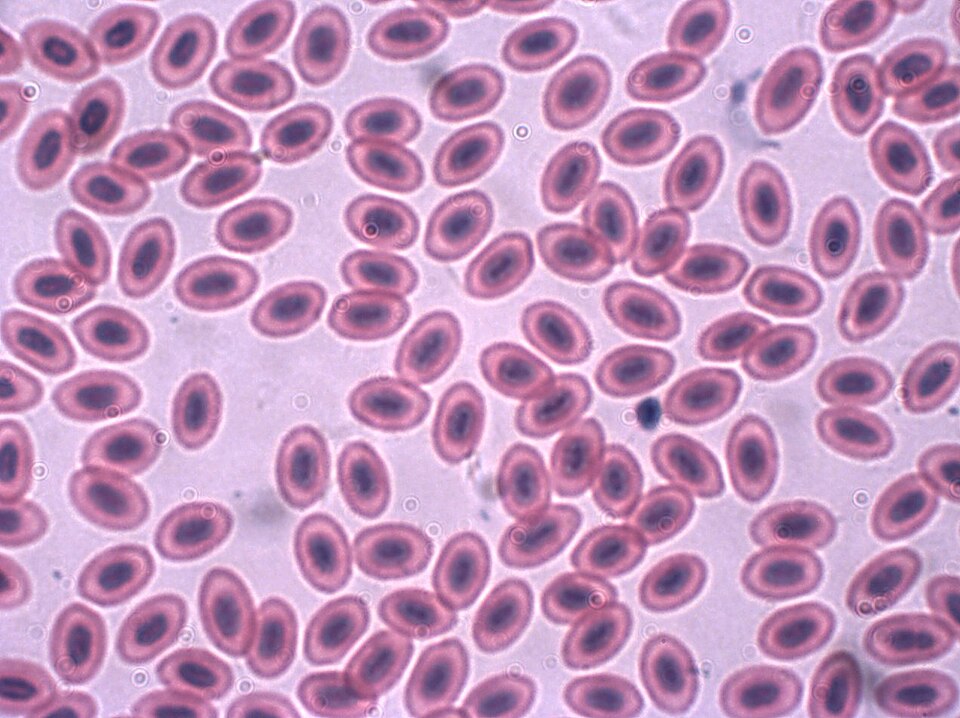
Bird red blood cells can convert lactate, long considered a waste product of exercise, into fuel that rapidly restores their ability to carry oxygen. That finding comes from research presented at the Society for Experimental Biology conference in Florence, Italy, and it points to a fundamental difference between how birds and mammals manage their blood chemistry.
According to Phys.org, the research centers on methemoglobin, a form of hemoglobin that cannot carry oxygen. Hemoglobin, the protein responsible for delivering oxygen to tissues, naturally converts to methemoglobin over time. When too much of it accumulates, the blood loses its ability to do its job. The question the researchers wanted to answer was how bird red blood cells repair this damage so effectively.
The answer turns out to involve mitochondria. Mature mammalian red blood cells lose their mitochondria and cell nuclei during development. Birds and other non-mammalian vertebrates keep them. Yi Yang, a Ph.D. student at the University of Auckland in New Zealand, led the research team. "This raises an important question: What benefits or costs does the loss of mitochondria incur?" Yang said.
Her team focused on lactate as a possible fuel source. During high-intensity exercise, the body produces lactate through anaerobic metabolism, and it has traditionally been dismissed as a byproduct with no further use. But that view has shifted in recent years. Lactate is now recognized as a signaling molecule that carries energy and can generate NADH, a molecule that plays a key role in recharging antioxidant systems and restoring hemoglobin function.
The pathway works like this: lactate is processed by an enzyme called lactate dehydrogenase, which produces both NADH and pyruvate. The NADH can then convert harmful methemoglobin back into functional hemoglobin. But there is a catch. If pyruvate builds up, the reaction stops. This is where birds have an advantage. "Birds, however, can oxidize and remove the resulting pyruvate, which helps sustain NADH production and maintain hemoglobin in its functional state," Yang said.
Mammalian red blood cells cannot do this. Because they lack mitochondria, they have no way to burn off the pyruvate. The reaction stalls. "Our study shows that lactate helps protect avian RBCs' hemoglobin by harnessing mitochondrial metabolism," Yang said. "As mature mammalian RBCs lack mitochondria, they are unable to fully utilize this pathway."
To test the difference directly, the team measured lactate dehydrogenase activity in red blood cells from chickens and rats. The chicken cells outpaced the rat cells in their ability to process lactate and sustain hemoglobin repair. Birds have exceptionally high energy demands compared to mammals, and their respiratory and circulatory systems have evolved to extract more from every breath. The mitochondria in their red blood cells appear to be part of that broader adaptation.
The research also adds to a growing body of work reconsidering what lactate actually does in the body. Rather than something the body simply gets rid of, lactate may serve as a mobile energy source that cells with the right machinery can tap into. For birds, that machinery is right inside their red blood cells.
The team plans to continue investigating how this pathway functions under different conditions, including during the intense physical demands of flight.