An invasive beetle responsible for killing hundreds of millions of ash trees across North America has pushed into five more Texas counties.
The Texas A&M Forest Service confirmed the emerald ash borer in Delta, Erath, Hardin, Walker, and Wood counties, bringing the total number of newly confirmed Texas counties in 2026 to eight. The detections came through the agency's statewide monitoring program, which uses purple traps to identify new infestations and track the insect's movement.
The beetle was first detected in Texas in 2016. Since then it has continued to expand its range, threatening all 16 native ash species found in both urban and rural environments across the state.
One detection stood out. Hardin County, in Southeast Texas, marks the current southernmost boundary for the insect in the United States. Demian Gomez, Texas A&M Forest Service regional forest health coordinator, said the location sends a clear signal. "As the current southernmost boundary for this insect in the U.S., Hardin County signals a clear message: Where ash trees extend south, this pest has been able to follow," he said.
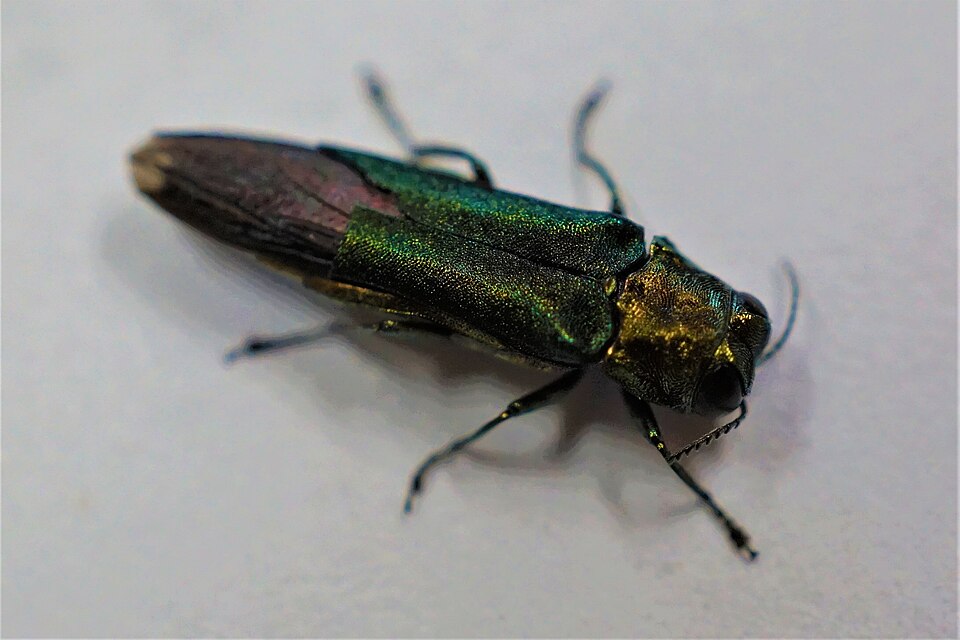
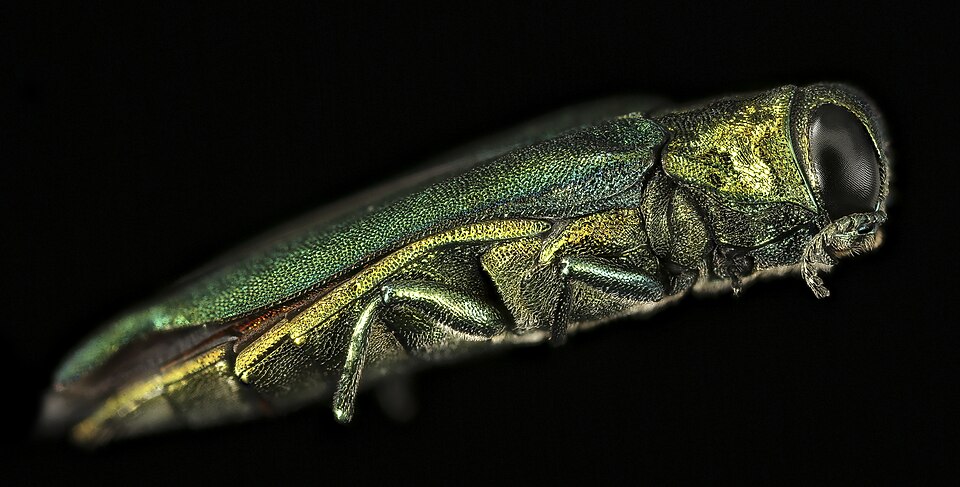
Adult emerald ash borers are metallic green and approximately one-half inch long. Ash trees in the early stages of infestation often show few or no external signs, which makes early detection difficult. As infestations advance, trees may show canopy thinning, bark splitting, increased woodpecker activity, and distinctive D-shaped exit holes left by emerging adult beetles. Larvae feeding beneath the bark create winding S-shaped galleries that cut off the tree's ability to move water and nutrients.
Traps used in the 2026 monitoring season were deployed starting in February or early March and remained in place through late summer. Trapping for the year has now concluded, though monitoring for signs of infestation continues year-round.
The beetle can spread on its own, but human movement of infested firewood, logs, and other ash wood products can accelerate that spread significantly. The Texas A&M Forest Service is encouraging residents to buy firewood at or near where they plan to burn it and to avoid transporting untreated wood over long distances. The agency also works with the Texas Department of Agriculture on quarantine areas intended to limit the movement of potentially infested wood products.