

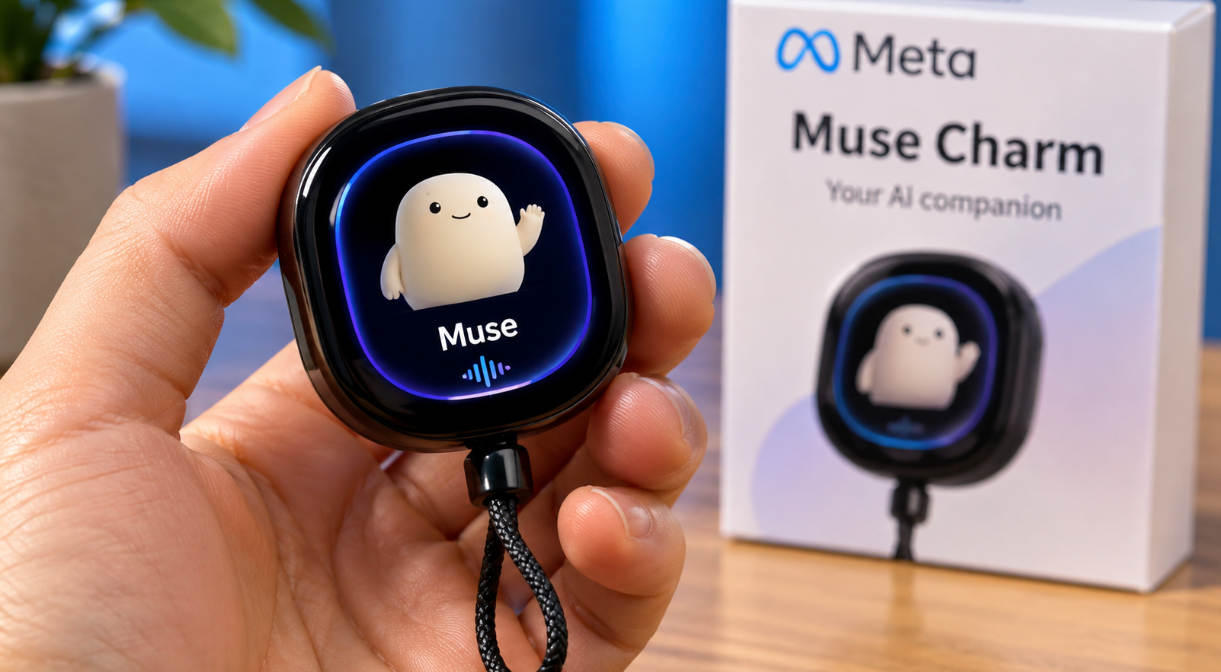
Meta Platforms is reportedly planning to sell its upcoming Muse Charm AI device for $300, bringing a new competitor into the developing market for portable artificial intelligence companions. The price was reported Thursday, November 19, 2026, by The Information, citing a person familiar with the company's plans. Buyers may also receive up to 12 months of complimentary 5G data service through Verizon. Meta has confirmed the device's existence but has not publicly announced its final price.
The Muse Charm is designed as a small, pocket-sized device that allows people to interact with Meta's Muse artificial intelligence assistant without opening an application on their smartphones. CEO Mark Zuckerberg introduced the product during Meta Connect in September, describing it as a new way to make AI assistance available throughout the day. The company expects to begin shipping the device during the December holiday shopping season. Its introduction represents another step in Meta's efforts to create consumer hardware built around its own AI services.
What Is the Meta Muse Charm?
The Muse Charm resembles a small electronic companion rather than a conventional smartphone or smartwatch. It features a screen measuring approximately two inches, with an animated Muse character displayed at its center. Users can navigate the device with their thumb and interact with the assistant through spoken commands. Its compact design allows it to be carried in a pocket or attached to a keychain.
The device is intended to provide direct access to Muse, Meta's personalized AI agent, which can respond to questions and assist with everyday activities. A fingerprint sensor allows users to verify their identity before interacting with certain features. The hardware also incorporates real-time voice technology and animated avatars that help make conversations feel more personal.
Unlike AI applications that require users to unlock a smartphone and launch software, the Muse Charm is intended to provide a dedicated connection to the assistant. This approach could appeal to people who want quicker access to information or help with routine tasks. However, Meta has not yet demonstrated how the device will perform during extended everyday use, and important details about battery life remain unavailable.
Reported $300 Price Includes Verizon Connectivity
Reuters reported that the proposed $300 price would include up to one year of complimentary Verizon 5G connectivity. The built-in cellular modem would allow the Charm to communicate with Meta's AI services without requiring a nearby Wi-Fi network. That feature could make the device useful while traveling, commuting or spending time away from home.
Despite its cellular connection, the Muse Charm is not designed to function as a conventional telephone. It cannot make ordinary phone calls, according to the reported specifications. Its main purpose is to maintain access to the Muse assistant and the services the AI agent can use.
Meta spokesperson Tyler Yee responded to questions about the reported price by saying the company would have more information to share soon. That response stopped short of confirming the $300 figure or the Verizon promotion. The final retail package, subscription requirements and availability details therefore remain subject to an official announcement.
The potential price also raises questions about how consumers will evaluate the device against AI services already available on smartphones. A dedicated AI companion offers a different experience, but buyers will need to decide whether its portability and simplified access justify the additional expense. The cost of cellular service after the complimentary period could also affect that decision.
Muse Brings Personalized AI Into a Physical Device
Meta introduced Muse as a personal AI agent designed to carry out activities rather than simply answer questions. The assistant can help users research products, organize information and interact with supported online services. The company has also developed voice and avatar technology intended to make conversations with Muse more natural.
At Meta Connect, the company demonstrated how users could customize their AI assistant's voice and interact with expressive digital characters. These features are particularly relevant to the Muse Charm, which uses an animated avatar as part of its interface. The device offers a physical location for an assistant that people can otherwise access through software.
Meta has been expanding Muse's ability to work with external services. Announced integrations include shopping platforms, productivity applications and payment providers, with additional services planned. These connections are intended to allow the assistant to complete activities such as finding products, arranging purchases and managing information across different applications.
The company has also introduced real-time conversations with Muse avatars across supported devices. Those interactions are available through several software platforms, with additional hardware support planned. Muse Charm would extend the experience to a dedicated portable product that is designed primarily around conversations with an AI agent.
Meta Expands Its AI Hardware Strategy
The Charm is part of a broader effort to bring Meta's artificial intelligence technology into products beyond smartphones and computers. The company already sells smart glasses that combine cameras, microphones and AI assistance with familiar eyewear designs. It is also developing additional wearable devices and virtual reality products.
Meta's growing hardware portfolio provides an opportunity to build services that do not depend entirely on applications distributed through Apple and Google. Smartphones remain the main way many people access Meta's platforms, including Facebook, Instagram and WhatsApp. Dedicated AI hardware could give the company more control over how customers interact with its services.
Meta has also made development resources available for people interested in creating their own Muse-compatible gadgets. In October, the company released open-source guidance intended to help developers experiment with hardware connected to the AI assistant. These efforts suggest that the Charm is part of a wider initiative rather than an isolated product.
The company is reportedly developing a smartwatch as another possible way to access its AI services. However, The Information reported that the smartwatch's introduction has been delayed until 2027. For now, the Muse Charm appears to be Meta's next major step toward delivering its personal AI assistant through dedicated hardware.
AI Wearables Face a Competitive Market
Meta is entering a category where several companies have already experimented with devices built around conversational AI. Products such as the Friend pendant have attempted to create portable digital companions that users can interact with throughout the day. Other devices have focused on handling tasks, retrieving information or reducing reliance on smartphone screens.
The results have been mixed, and the market has not yet demonstrated that dedicated AI companions can achieve the same broad acceptance as smartphones or smartwatches. Some products have faced criticism over limited capabilities, reliability and the practical benefits they offer. Privacy and data security are also important concerns when devices are designed for frequent voice interaction.
Meta's existing software platforms and consumer hardware experience could provide advantages over smaller competitors. The company can connect the Muse Charm to an established AI ecosystem rather than building an entirely new service around a single product. Nevertheless, success will depend on whether consumers find the device useful enough to carry regularly.
Meta Also Expands 3D Entertainment on Quest
In a separate announcement Thursday, Meta introduced more than 150 three-dimensional movies available to rent or purchase through the TV app on Quest 3 and Quest 3S headsets in the United States. The collection includes Avatar, Spider-Man: Far From Home, Jurassic World Rebirth and Wicked: For Good. The expansion gives headset owners another way to watch immersive entertainment without visiting a movie theater.
One of the featured releases is Billie Eilish – Hit Me Hard and Soft: The Tour (Live in 3D), a concert film co-directed by Billie Eilish and filmmaker James Cameron. The three-dimensional version will be available exclusively to rent or purchase through Meta Quest until December 31, 2026. The production used specialized 3D filming equipment to capture the concert without disrupting the audience.
Meta is also introducing a Theater view designed to make watching movies inside a headset more comfortable and immersive. The feature displays content on a large virtual screen while reducing distractions from the surrounding environment. Disney+ subscribers can separately access selected 3D movies through the streaming service's Quest application.
The company plans to expand its movie catalog and international availability when its Meta VR Glasses arrive in spring 2027. Although the Quest entertainment announcement is separate from the Muse Charm pricing report, both developments reflect Meta's continuing investment in consumer technology beyond social media.
Official Launch Details Remain Pending
Meta has already presented the Muse Charm publicly and described its main features, but several important purchasing details remain unresolved. The company has not officially confirmed the reported $300 price, announced a specific release date or published complete information about ongoing cellular costs. Those details will be important for consumers considering the device.
The reported Verizon promotion could make the first year of ownership more attractive, particularly for users who want to communicate with Muse away from Wi-Fi networks. Long-term demand will depend on how reliably the device performs and whether its AI features offer advantages over existing smartphone applications. Meta's next official announcement is expected to clarify pricing, availability and the final features of its upcoming AI companion.