A cup of river water contains more information than researchers once thought possible to extract. According to a report by Phys.org, scientists can now use a single small water sample to track wildlife, monitor pollution, and detect pathogens all at the same time, using a technique called environmental DNA analysis.
DNA is contained in every cell of every plant, animal, fungus, and microbe. Each species carries a unique genetic signature, and organisms shed that DNA constantly into their surroundings through skin cells, spores, pollen, or even a cough or sneeze. Researchers call this shed genetic material environmental DNA, or eDNA.
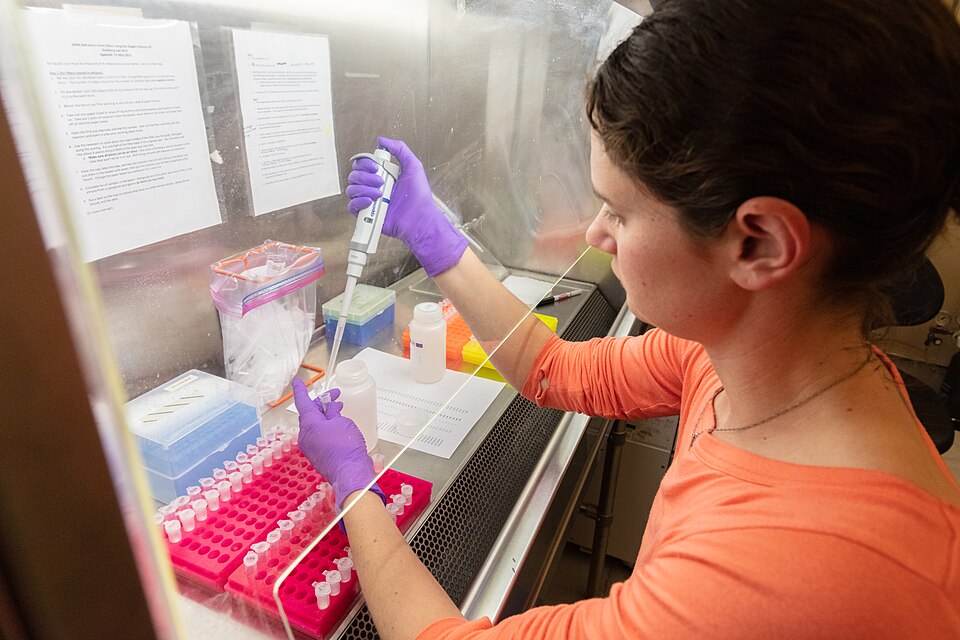
Traditional wildlife monitoring methods, such as field observation and trapping, can be difficult, intrusive, and time-consuming. Tracking an elusive species might mean hours or days in remote terrain without a single sighting. Trapping wildlife can stress the animals and requires expert handling. With eDNA, researchers can collect information about a species without ever seeing or interacting with it. A cup of water, a few fluid ounces of sand, or air pulled through a filter can hold enough genetic material to reveal what has been in an area, including people, wildlife, and infectious pathogens.
Most eDNA research to this point has relied on a method called metabarcoding, which creates copies of specific short genetic markers to identify particular species. The method is powerful, but it is selective by design. It finds only what it is built to find and ignores everything else. Because the DNA fragments are so short, it is also difficult to link pieces of information together. A single barcode cannot cover all species in an area, and it cannot provide information about the genetic traits of those species.
Researchers at the Duffy Lab at the University of Florida took a different approach. Rather than targeting one short region of DNA, they used long-read shotgun metagenomic DNA sequencing, which reads each fragment of DNA in long, continuous sections. All the DNA and traits in one long fragment come from the same individual, which means researchers can sequence all of the DNA from every species present in a sample, from viruses to vertebrates.
That distinction matters for several reasons. Longer reads allow scientists to connect genetic information that short-read methods would leave fragmented and unlinked. The approach can identify not just what species are present but also provide information about genetic traits, including traits related to disease resistance, pollution tolerance, or invasive behavior.
The implications for conservation and public health monitoring are broad. Water systems are central to both wildlife habitat and human health. A tool that can simultaneously survey biodiversity, flag the presence of invasive species, and detect pathogens in the same sample could make large-scale environmental monitoring faster and less expensive than methods that require separate surveys for each concern.