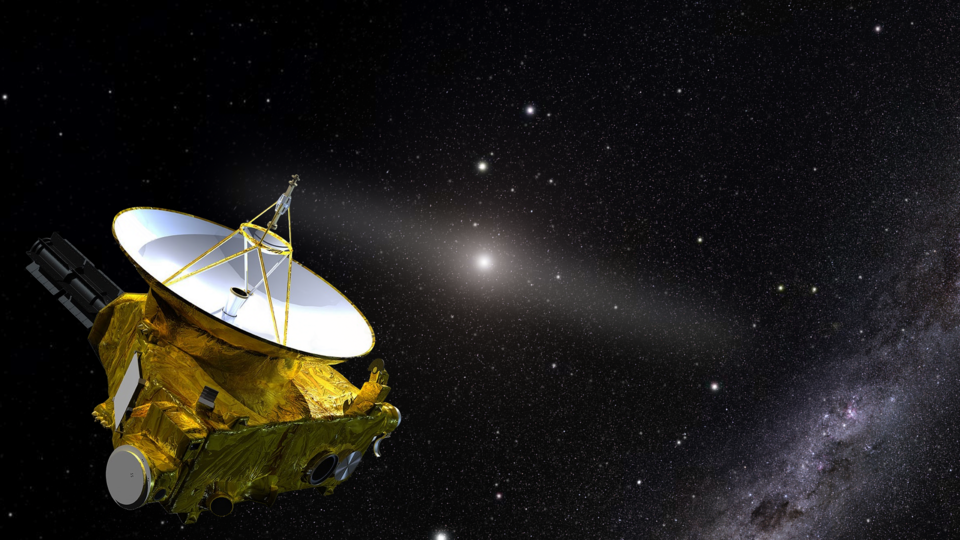
NASA's New Horizons spacecraft woke itself up on June 23 after sleeping for 321 days, the longest hibernation the probe has ever taken. Flight controllers at Johns Hopkins Applied Physics Laboratory had put the spacecraft to sleep on Aug. 7, 2025, setting what amounts to the world's longest sleep timer on a spacecraft.
According to CNET, NASA confirmed the spacecraft survived the long sleep without any issues and is described as healthy. The agency reported that all weekly status checks during the hibernation period came back clean.
"Every status report through this hibernation period was 'green,' meaning all was well aboard New Horizons each and every week," said Alice Bowman, New Horizons mission operations manager at APL, in a statement released Tuesday.
APL operators are now downloading and analyzing health and safety data from the spacecraft. After that review, scientists will look at science data collected by three onboard instruments while New Horizons was in its dormant state.
This was far from the first time the spacecraft has gone dark. New Horizons originally launched in 2006 and has been hibernating on and off for nearly two decades. "Since 2007, New Horizons has hibernated 23 times, for periods ranging from just days to many months," NASA said. "Hibernation is a way to extend spacecraft life and reduce mission operation costs. During hibernation, New Horizons remains in a stable spinning mode with much of the spacecraft unpowered."
The spacecraft currently sits in the Kuiper Belt, a doughnut-shaped region around the outer solar system that contains Pluto and other icy bodies. The belt is much larger than the asteroid belt between Mars and Jupiter, and it is made up mostly of ice rather than rock.
New Horizons made history in 2015 when it became the first spacecraft to study Pluto up close. It was in hibernation in the lead-up to that flyby and was put back to sleep as it traveled toward its next target, the distant object Arrokoth, which it reached in January 2019. Exploring both Pluto and Arrokoth was the spacecraft's primary mission.
NASA has since extended the mission, with the goal of keeping New Horizons operating for as long as the spacecraft can continue waking itself up from these long, periodic naps. The agency has not announced a specific next target for the probe.