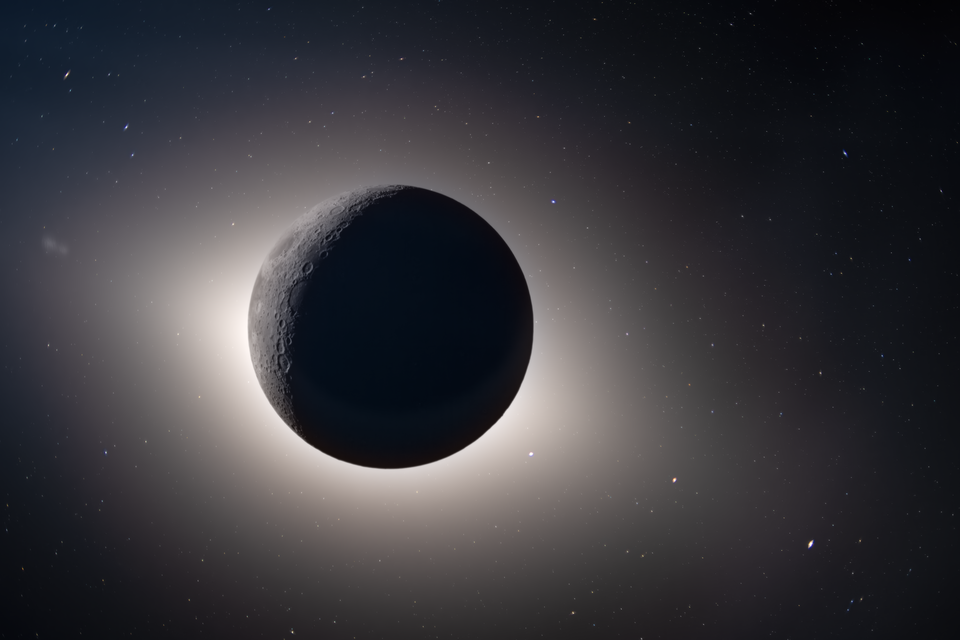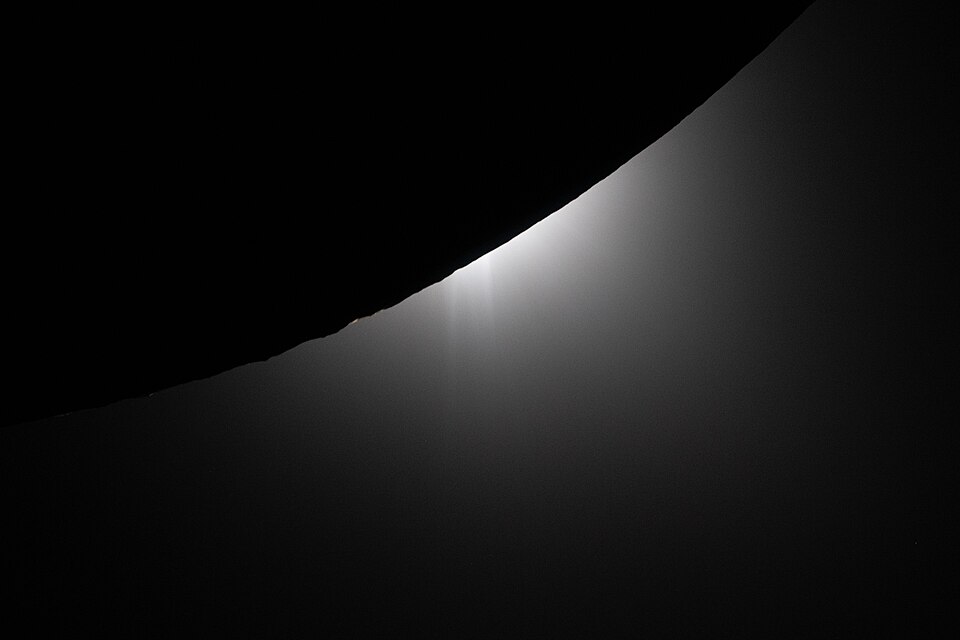
The Artemis II crew brought a consumer camera to the moon and came back with something scientists could actually use. Researchers from Tokyo City University published a study in June using photographs of a total solar eclipse taken during the Artemis II lunar flyby to investigate the properties of the F-corona, which refers to interplanetary dust particles that scatter sunlight when the moon is viewed with the sun directly behind it. The phenomenon gives the moon a halo-like glow.
According to a report by CNET, one of the mission's most recognized photographs, called "Artemis II in Eclipse," captured a 54-minute total eclipse and offered a view of the F-corona that had not been seen before. Using a JPEG image from that shot, the Japanese researchers obtained reliable measurements and confirmed the F-corona's structure. The findings showed that simple consumer imaging can yield valuable astrophysical data.
The camera in question was a Nikon Z9 mirrorless camera paired with a 35mm f/2D lens. It captured the image at an aperture of f/2, an exposure time of 2 seconds and an ISO of 1600. Those are not exotic settings.
Kohji Tsumura, an associate professor at Tokyo City University and co-author of the study, said he was initially skeptical about using JPEG images. Most space imagery used for research relied on raw, uncompressed data or highly specialized codecs. But the results surprised him. "I was amazed to learn that this remarkable image was captured by an astronaut using a commercially available Nikon Z9 with an exposure time of just two seconds," Tsumura said.
The study's other co-author, Ko Arimatsu, pointed to what the findings could mean for future missions. "The findings demonstrate that scientifically valuable data can be extracted from consumer camera images when properly calibrated and analyzed," Arimatsu said.
The Nikon Z9 was not originally part of the mission plan. The crew had been set to use NASA-certified Nikon D5 cameras, which are built to better withstand deep-space radiation. Commander Reid Wiseman pushed to include the Z9 as a test platform for future Artemis missions, and NASA approved it. "We did some training on the Z9, and it's a great piece of gear," Wiseman said.
NASA has worked with Nikon for more than 50 years. The two organizations are currently developing the Handheld Universal Lunar Camera, which is expected to travel to the moon with astronauts on Artemis IV.