Two major earthquakes struck Venezuela 39 seconds apart on June 24, leaving thousands dead and thousands more injured. Now researchers say the unusual sequence, called an earthquake doublet, may carry a specific warning for California.
According to Live Science, the first earthquake, a magnitude 7.2, struck near San Felipe in north-central Venezuela. The second, a magnitude 7.5, hit near Yumare less than a minute later. Large earthquakes typically produce smaller aftershocks, but in some cases a major quake can shift stress on nearby faults and trigger another large event almost immediately.
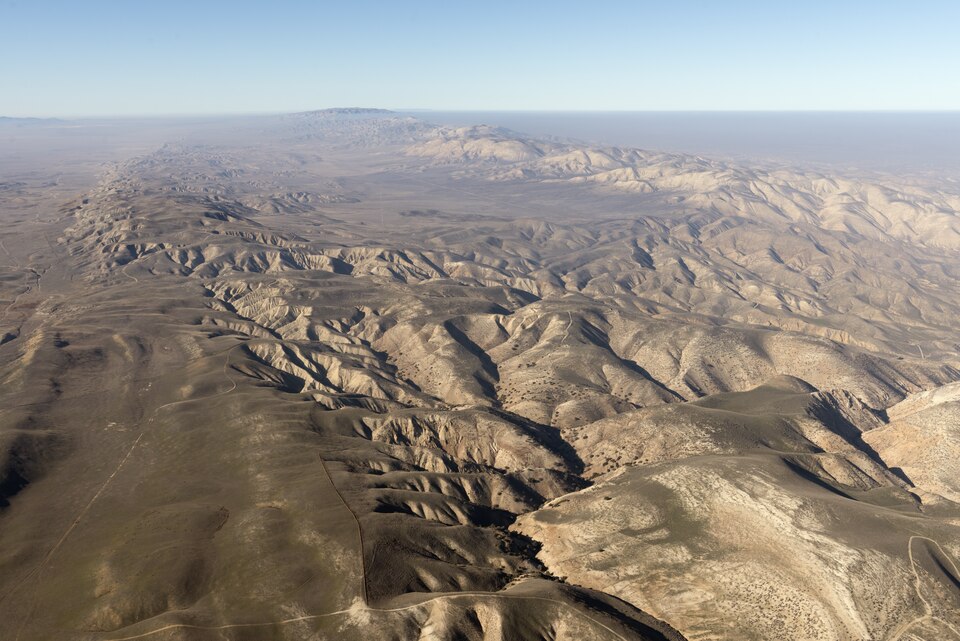
That kind of cascading failure across connected faults is exactly what concerns scientists watching California's San Andreas Fault system. Many seismic hazard models used in California treat individual faults as isolated structures. The Venezuelan doublet suggests that approach may underestimate the actual danger in regions where multiple faults meet and interact.
The fault network involved in the Venezuelan sequence includes the Boconó, Morón, San Sebastián and El Pilar faults. That system shares key characteristics with the San Andreas. Both are right-lateral strike-slip systems, meaning crustal blocks slide horizontally past each other, and both sit along the boundary between two tectonic plates.
Researchers caution that the two systems are not identical. Julián García Mayordomo, a senior scientist at the Geological and Mining Institute of Spain, told Live Science that "the main difference is that the Venezuelan plate boundary has a much more complex fault architecture." Much of that complexity comes from the Maracaibo block, a distinct chunk of crust whose interactions with surrounding faults make the Venezuelan boundary more intricate than California's.
Plate movement speed also differs. In Venezuela, the plates slide past each other at about 0.8 inches, or 20 millimeters, per year. Along the San Andreas, that rate is roughly 1.2 inches, or 30 millimeters, per year. García Mayordomo also pointed out that the speed at which the plates move is another important difference between the two systems.
The Venezuelan doublet is not the first of its kind. The 2023 earthquake sequence in Kahramanmaraş, Turkey, and a 1997 doublet in Harnai, Pakistan, are both well-known examples of one large earthquake triggering another major event in quick succession. But each new case adds data that researchers say is needed to better understand how multi-fault systems behave and how hazard models should account for them.
Scientists are treating the Venezuelan sequence as a natural laboratory. The event reinforces an emerging consensus among seismologists that faults in complex tectonic regions should not be studied or modeled in isolation.