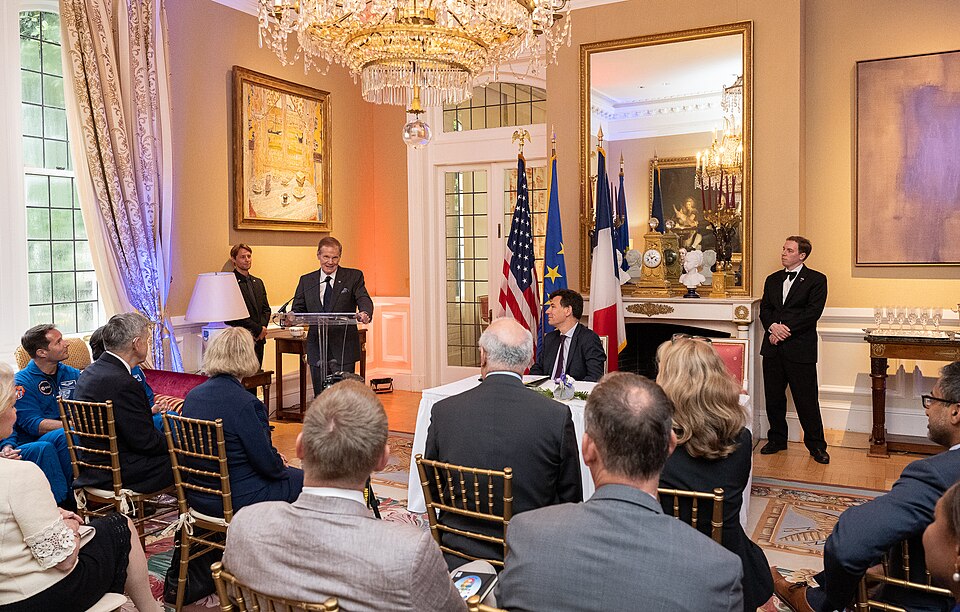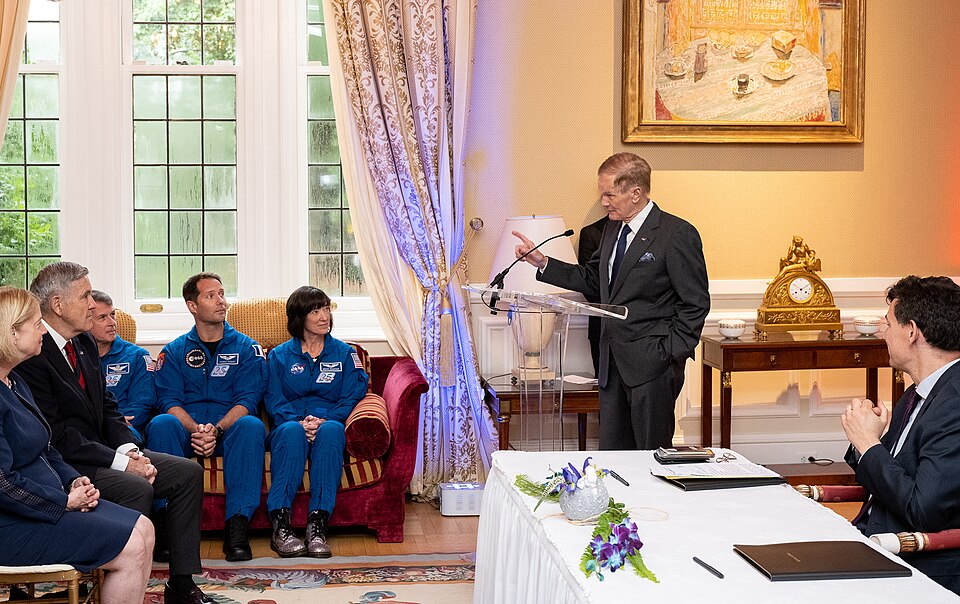
Serbia signed the Artemis Accords on Thursday, becoming the 69th nation to join the international agreement governing peaceful and transparent space exploration. The signing ceremony was hosted by NASA at its headquarters in Washington.
Serbia's Minister of Foreign Affairs Marko Đurić signed on behalf of the country. Also present were Serbia's Ambassador to the United States Dragan Šutanovac, State Secretary for Serbia's Ministry of Science Marija Gnjatović, and U.S. Department of State Assistant Secretary Wesley Brooks.
NASA Deputy Administrator Matt Anderson spoke at the ceremony and drew a direct line between Serbia's newest commitment and its contributions to American space history. "Serbia's connection to NASA reaches back to the Apollo program, when the work of Serbian engineers helped make some of humanity's greatest achievements in space possible," Anderson said. He specifically cited Milojko "Mike" Vučelić, who received the Presidential Medal of Freedom for his role in bringing the Apollo 13 crew safely home.
A broader group of Serbian American engineers contributed to the Apollo era across systems engineering, propulsion, power systems, spacecraft docking, electronics reliability, and mission coordination. Their work supported functions ranging from lunar landing analysis to safe docking procedures.
Minister Đurić referenced that history in his remarks at the signing. "We come from a nation of great minds like Nikola Tesla and Milutin Milanković, but also from the legacy of David Vujic, one of the pioneers of the Apollo missions and a member of the 'Serbian Seven,' a group of engineers and technicians whose contributions to NASA helped make the Moon landing possible," he said.
The Artemis Accords were established in 2020 by NASA and the U.S. Department of State along with seven founding nations, in response to growing interest in lunar activity from both governments and private companies. The accords introduced practical principles aimed at enhancing safety and coordination in space.
Nations that sign the accords open the door to potential participation in future lunar exploration efforts, including providing science and technology payloads for the U.S.-led Moon Base and CubeSats for upcoming Artemis missions.