The United States and Iran traded strikes for an eighth consecutive day after an Iranian attack on a military base in Jordan killed two American service members and left another missing. The US death toll in the conflict has now risen to 16, following an American Navy pilot who went missing earlier this month being declared dead.
Iranian media reported that an under-construction nuclear power plant in the south-western city of Darkhoveyn was struck overnight, along with Qeshm Island. In Kuwait, an electricity and water plant was hit for the second time in two days, with local officials confirming it caused a fire.
Later on Sunday, Jordan's military shot down three Iranian missiles, and a fourth fell in a remote area, according to Jordan's state news agency. The interceptions came after a US warning that the Jordanian port of Aqaba could be targeted.
The US military said its eighth successive night of strikes on Iran were designed to further degrade Iran's ability to threaten commercial shipping in the Strait of Hormuz and to punish Islamic Revolutionary Guard Corps forces who launched attacks against American service members in Jordan. Verified footage from inside the Jordanian facility showed at least two impacts and an explosion.
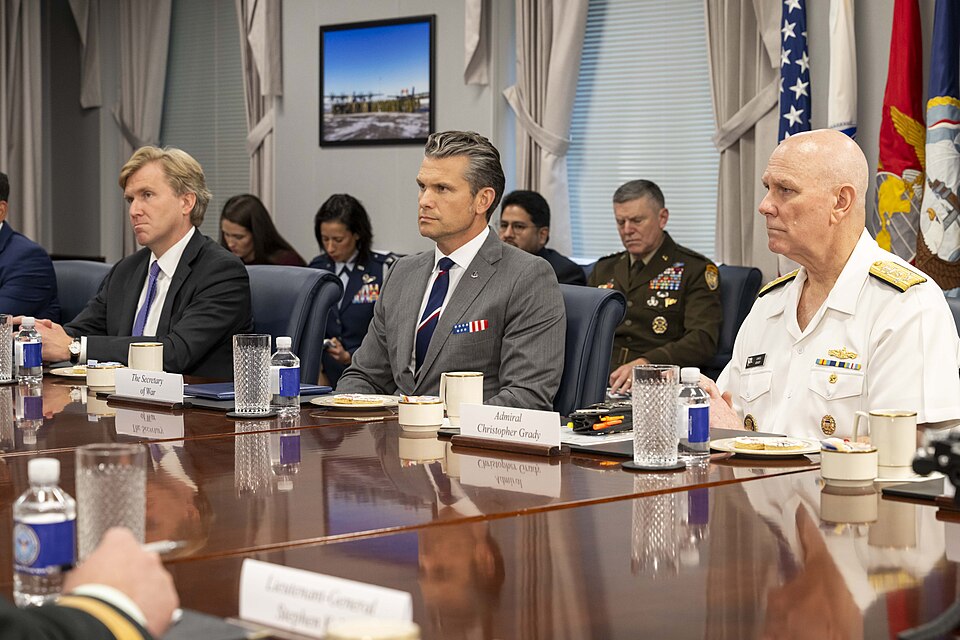
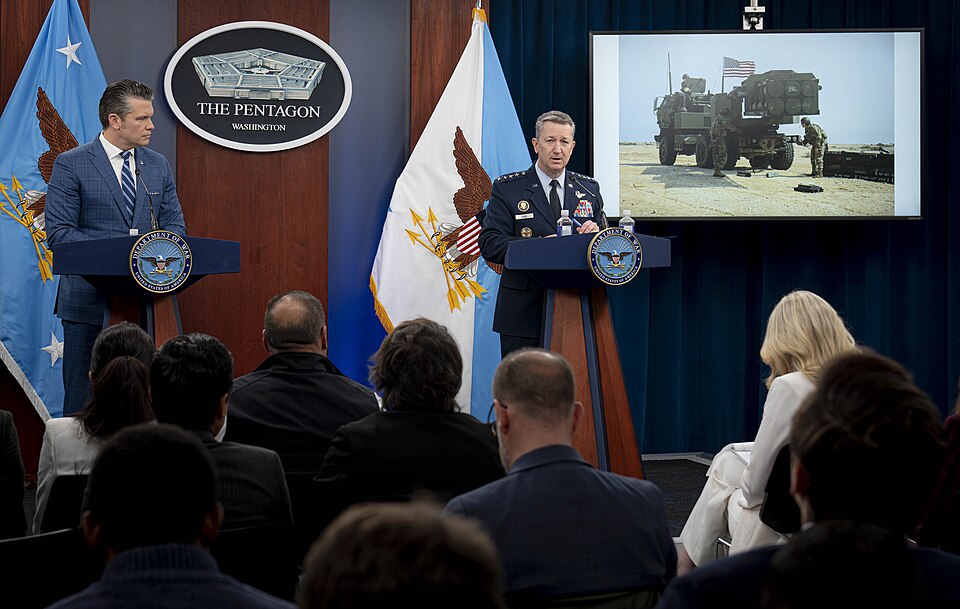
Responding to the deaths of the soldiers, Defense Secretary Pete Hegseth said: "Godspeed, heroes. Their sacrifice only stiffens our resolve."
In Iran, at least 50 people have been killed and more than 500 injured in US strikes over the past three weeks, according to the country's health ministry. Washington has reimposed its blockade of Iranian ports, and Tehran has declared the Strait of Hormuz, a key oil shipping route, closed. A preliminary ceasefire between the two countries collapsed less than a month after it began.
On Sunday, Iran's Islamic Revolutionary Guard Corps said two vessels had ignored warnings not to transit the Strait and were consequently involved in what it described as "an accident." The IRGC warned that all vessels that are "influenced" by the US and "use unsafe routes" will "certainly face accidents."
On Saturday, the Gulf Cooperation Council, an alliance including Bahrain, Kuwait, Oman, Qatar, Saudi Arabia, and the United Arab Emirates, accused Tehran of targeting civilian infrastructure after the first strike on a Kuwaiti power plant and a water distillation plant. Iran said it also targeted an air base and a depot used by US forces in Kuwait on Saturday. The US said it "carried out strikes exclusively on military targets, including military logistics infrastructure."
A US citizen who had been trapped in Iran also returned home this week. According to a report by CBS News, Dena Karari, a US-Iran dual citizen held under an exit ban since December 2024 on allegations of espionage and collaborating with a hostile state, departed Iran earlier this week and arrived back in the United States. Her attorney, Jared Genser, announced her return on Sunday morning. She suffered a heart attack on July 8, two sources told CBS News. Two sources said Karari's name was on a list of Americans the US State Department had given to special envoy Steve Witkoff to press for her release. The release of detained Americans was not part of the memorandum of understanding signed last month, which had extended the two countries' ceasefire for 60 days.