Two of astronomy's most stubborn puzzles may share one answer. A new study led by astronomers at the University of Texas at Austin proposes that Little Red Dots, mysterious objects first detected by the James Webb Space Telescope in 2022, are actually the earliest stage of what eventually become globular clusters.
Little Red Dots appear in observations from roughly 600 million years after the Big Bang. They are compact, luminous, and emit a distinctive mix of red and ultraviolet light. They then seem to vanish from the record about 1.5 billion years later. What they are and where they go has puzzled astronomers since JWST first spotted them.
One existing theory holds that Little Red Dots are supermassive black holes wrapped in dense clouds of gas, pulling young stars to dramatic ends. That scenario fits many of the observed properties. But the UT Austin team, publishing in The Astrophysical Journal Letters, argues something else also fits: an early globular cluster built around a supermassive star at its core.
Lead author John Chisholm framed the idea as a bridge between the early universe and the present. "These may not be just a strange new JWST population with no connection to the universe around us today," Chisholm said. "Instead, Little Red Dots may persist past the early universe, evolving into something relatively familiar."
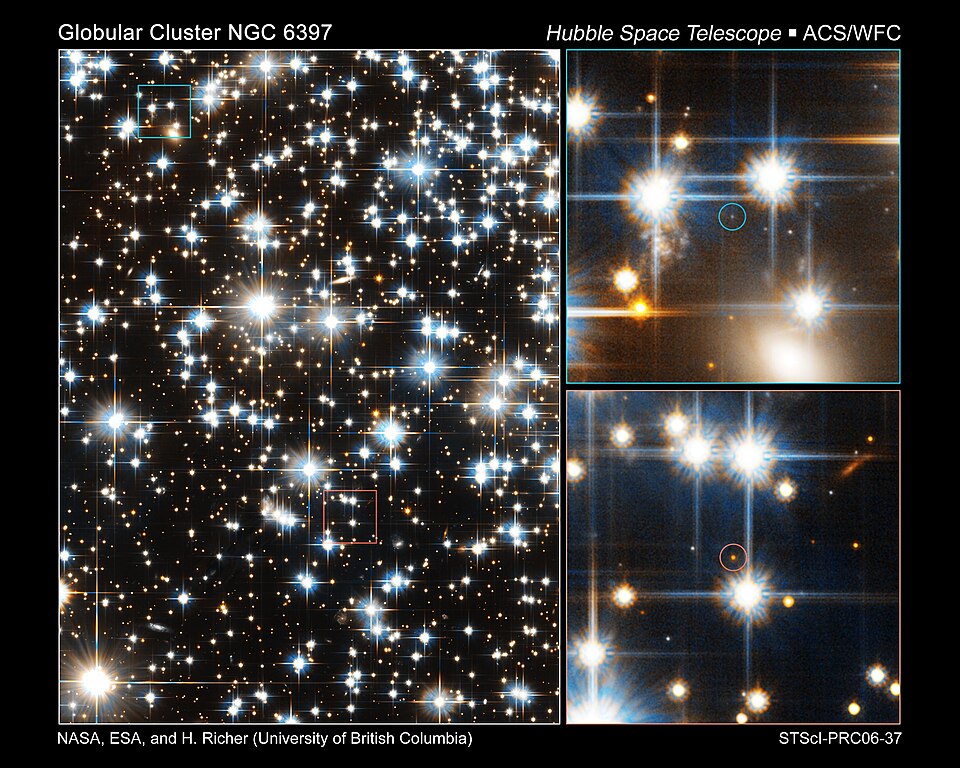
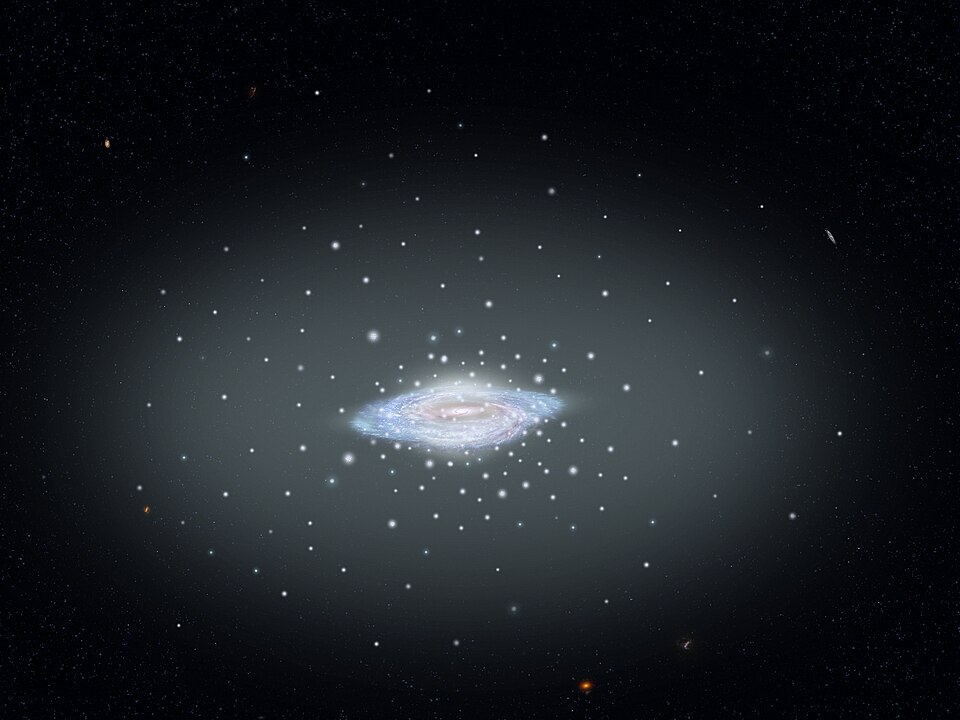
Globular clusters are dense, ancient groupings of stars that orbit galaxies. The Milky Way alone contains around 150 of them, some hosting hundreds of thousands or even millions of stars. Despite over a century of study, how globular clusters originally formed remains an open question. Co-author Danielle Berg described the core difficulty.
"We usually see them after billions of years of evolution, at a time when their massive stars are gone, their gas has been cleared out, and dynamical processes have changed their masses and structures," Berg said. "That makes it very hard to reconstruct the original conditions they formed in."
One clue comes from the unusual chemistry found in some globular cluster stars. They contain elevated levels of helium, nitrogen, sodium, and aluminum, while running low in carbon, oxygen, and magnesium. That specific combination points to nuclear fusion happening at extremely high temperatures, higher than what occurs inside even the most massive ordinary stars. Co-author Mike Boylan-Kolchin said a supermassive star is exactly the kind of environment that could produce it. "A supermassive star is precisely the kind of environment that could produce this combination," he said.
The theory proposes that Little Red Dots are young globular clusters in the act of forming, with a supermassive star driving their intense brightness. As that star eventually exhausts itself and disappears, the surrounding cluster of stars would remain, its chemistry already shaped by what came before. What JWST sees as a fleeting bright dot in the early universe may be the same kind of object astronomers study today, just seen billions of years before it settled into its familiar form.